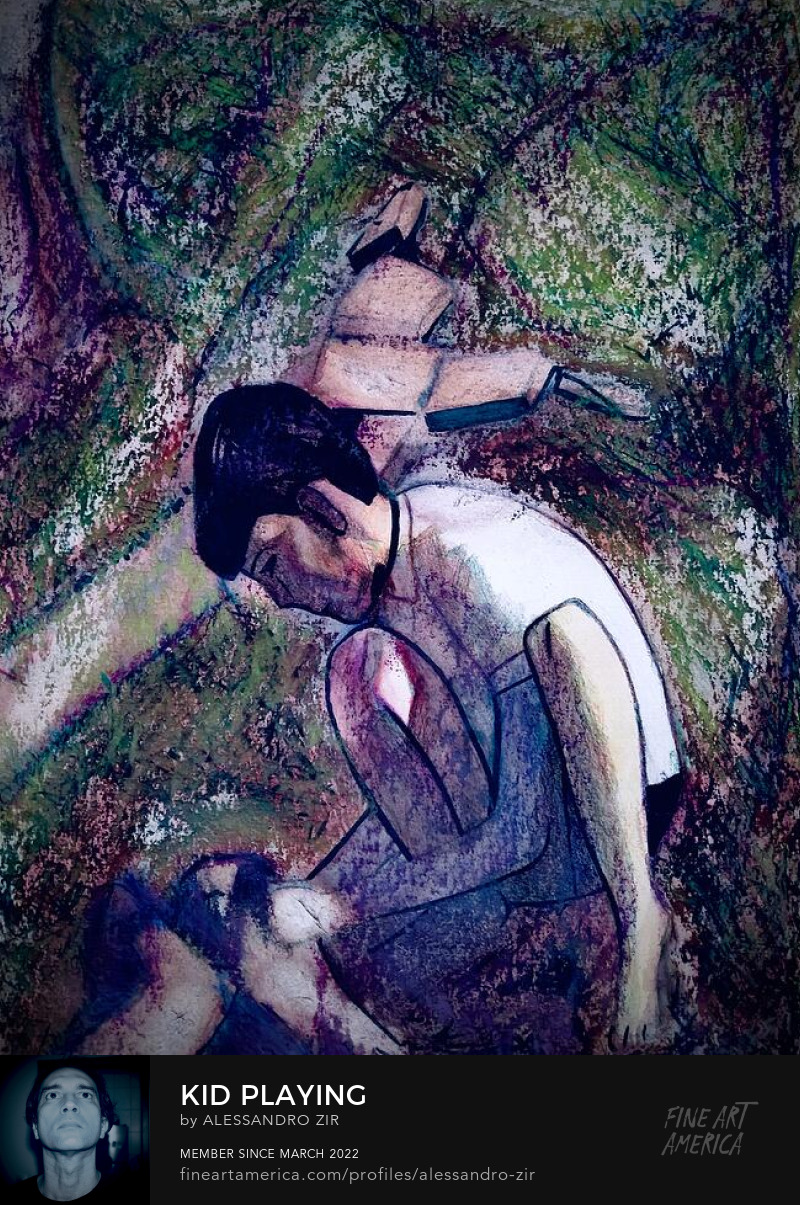
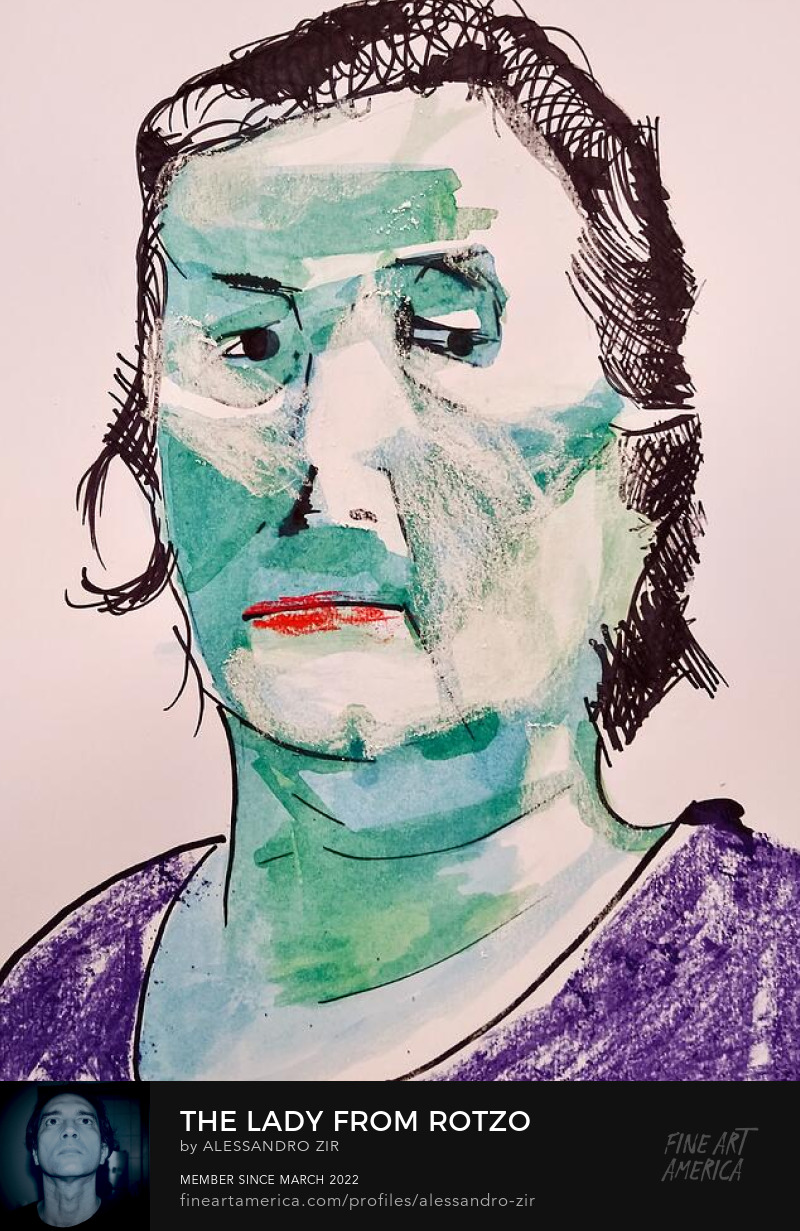
pictures by A/Z;
Bach transcriptions by Kúrtag (Márta and György Kúrtag, Youtube);
Julia Kristeva: Prélude à une étique du féminin (Librairie Mollat/Youtube 2024);
A Suavidade do Vento/Cristovão Tezza (AZ Youtube);
O Caso Morel/Rubem Fonseca (AZ Youtube);
"Frau Cosima Wagner ist bei Weitem die vornehmste Natur..."
"Ich selbst bin immer noch Pole genug, um gegen Chopin den Rest der Musik hinzugeben..."
Nietzsche
"... the Emperor himself made the final choice, presenting the girl with an apple. Fantastic as it may seem, it was in this manner that Justinian selected Theodora..."
"And then, according to the legend, two missionary monks were dispatched by Theodora herself to China and returned bringing with them a number of silkworms in a hollow cane."
James Laver (Costume and Fashion)
"Man muß schon taubstumme Eltern haben oder mit einer namhaften feministischen Schriftstellerin zusammenarbeiten, um als Komponist die Aufmerksamkeit der Öffentlichkeit auf sich zu ziehen."
"Erneuerung, auch die am Beginn des 21. Jahrhunderts, kommt nie aus den Machtdispositiven, sondern von dort, wo der Leidensdruck am stärksten ist."
"Bei einer solchen 'Deterritorialisierung' bleibt auch ein zweiter Komponistentypus auf der Strecke, obwohl er doch typisch für das 20. Jahrhundert ist: der zurückhaltende, aus dem Selbstzweifel schöpferische, der skrupulöse, wenig produzierende. Varèse, Webern, nicht zuletzt Kurtág sind Beispiele. Solche unter den Jüngeren werden aber einfach überfahren."
"So schaut man vor allem nach Frankreich: Dort, so scheint es, wird ein Projekt fortgesetzt, das vor 30 Jahren in Deutschland abbrach, eine radikal gegenwartsbezogene, an Kultur und Kunst ausgerichtete Intellektualität; deswegen ist das poststrukturalistische und dekonstruktivistische Denken für die zeitgenössische Musik bedeutsamer als Aspekte der Theorie des kommunikativen Handelns oder auch systemtheoretische Überlegungen."
Claus-Steffen Mahnkopf (Das Generationsproblem der Neuen Musik)
"... comissioni, borse di studio, forme di sostegno e promozione vengono quasi interamente erogate per ricompensare il carrierismo, l'opportunismo e ogni mancanza di vigore..."
Claus-Steffen Mahnkopf (La Neue Musik in Germania)
"Für den Intellektuellen ist unverbrüchliche Einsamkeit die einzige Gestalt, in der er Solidarität etwa noch zu bewähren vermag."
"La corde tendue de l'intelligence au-dessus d'un abîme de malaise, de confusion."
Olga (Les Samouraïs)
Olga (Les Samouraïs)
"By obscuring himself he never meets disaster."
Daodejing/16 (Edmund Ryden's translation)
"... l'artiste, dans ces périodes, n'a pas besoin de dire grand-chose et un simple 'autrement' le fait remarquer et apprécier de certains petits cercles de mécènes et de connaisseurs, qui le prônent (ce qui n'exclut pas des avantages matériels parfois fort importants)... Chaque 'centre d'art' voit vivre des milliers et de milliers d'artistes de ce genre dont la plupart ne cherchent qu'une nouvelle manière et fabriquent sans enthousiasme, le coeur froid et l'âme endormie, des millions d'oeuvres d'art. La 'concurrence' se fait plus vive. La chasse au succès rend la recherche toujours plus superficielle. De petits groupes, qui ont, par hasard, réussi à s'écarter de ce chaos d'artistes et d'images, se retranchant sur les positions conquises."
Kandinsky (Du Spirituel dans l'art, traduction Nicole Debrand et Bernadette du Crest)
"La lontananza nostalgica utopica futura (1988-89), concebida para a execução do violinista Gidon Kramer, oito fitas magnéticas e de oito a dez estantes, é subtitulada madrigal para mais 'caminantes'. As fitas, totalmente independentes entre si, constituem, na expressão do compositor, 'oito caminhos', e resultaram da reelaboração eletrônica de improvisações de Gidon (sons livremente escolhidos apenas com formas de ataque ou de dinâmica sugeridas ocasionalmente pelo compositor.). Sobre elas se processa o solo ao vivo do violinista, segundo a partitura de Nono, distribuída em pontos diferentes do palco por oito estantes pelas quais o intérprete deve caminhar sem qualquer predeterminação. Não é curiosa mais essa afinidade com Scelsi, um obcecado do número 8?"
Augusto de Campos (Musica de Invenção)
"... admettons un instant que le haschisch donne, ou du moins augmente le génie; ils oublient qu'il est de la nature du haschisch de diminuer la volonté, et qu'ainsi il accorde d'un côté ce qu'il retire de l'autre, c'est-à-dire l'imagination sans la faculté d'en profiter..."
"... cet état charmant et singulier, où toutes les forces s'équilibrent, où l'imagination, quoique merveilleusement puissante, n'entraîne pas à sa suite le sens moral dans de périlleuses aventures, où une sensibilité exquise n'est plus torturée par des nerfs malades... est aussi imprévu que le fantôme. C'est une espèce de hantise, mais de hantise intermittente, dont nous devrions tirer, si nous étions sages, la certitude d'une existence meilleure et l'espérance d'y atteindre par l'exercice journalier de notre volonté..."
Baudelaire (Les Paradis artificiels)"Die zwei physiologischen Tatsachen, auf denen er ruht und die er ins Auge fasst, sind: einmal eine übergrosse Reizbarkeit der Sensibilität, welche sich als raffinierte Schmerzfähigkeit ausdrückt, sodann eine Übergeistigung, ein allzu langes Leben in Begriffen und logischen Prozeduren, unter dem der Person-Instinkt zum Vorteil des Unpersönlichen Schaden genommen hat... Aufgrund dieser physiologischen Bedingungen ist eine Depression entstanden: gegen diese geht Buddha hygienisch vor. Er wendet dagegen das Leben in Freien an, das Wanderleben; die Mässigung und die Wahl in der Kost; die Vorsicht gegen alle Spirituosa; die Vorsicht insgleichen gegen alle Affekte, die Galle machen, die das Blut erhitzen; keine Sorge, weder für sich, noch für andre."
Nietzsche, Der Antichrist (24)
"... J'ai trouve bon de citer tout d'abord deux noms inconnus ou peu connus. La fleur oubliée ou ignorée ajoute à son parfum naturel le parfum paradoxal de son obscurité..."
Baudelaire
"... et voilà justement le plan où le pauvre Van Gogh était chaste, chaste comme un séraphin ou une vierge ne peut pas l'être..."
Artaud
"Sans savoir d'où vient la chose et ce qui nous attend, nous sommes livrés à la solitude absolue, Personne ne peut parler avec nous, personne ne peut parler pour nous, nous devons prendre sur nous, chacun doit prendre sur soi."
Jacques Derrida (Donner la mort)
"... o que você sentiu... talvez tenha sido apenas à custa de não ter opinião precisa sobre os grandes homens..."
Clarice Lispector/o professor (Perto do Coração Selvagem)
"Ein Andres ist die schauerliche Stille, die man um sich hört..."
Nietzsche
"... es ist etwas an ihm, was wirklich den Glauben verdient..."
Freud
"Don't poke your nose into my papers. The smell of ink will poison you."The New Saying
"'Bloom is at the telephone...'
'Tell him go to hell...'"
Herr Satan
"La vraie gloire c'est d'être connu par les conducteurs d'omnibus."
Gauguin
"La vraie gloire c'est d'être connu par les conducteurs d'omnibus."
Gauguin
"Volitional effort is effort of attention."
William James
"Nenhum colega saiu em minha defesa, a classe musical só é solidária quando paira a ameaça de perderem benefícios próprios. A falta que faz uma Elis."
Rita Lee
"Call him back. We have everything to gain and nothing to lose."
Xenia Kashevaroff
"Il y a plusieurs modalités ou tonalités du oui téléphonique, mais l'une d'elles revient à marquer simplement, sans rien dire d'autre, qu'on est là, présent, à l'écoute, au bout du fil, prêt à repondre mais sans rien répondre d'autre pour l'instant que la préparation à repondre..."
L'Oui du Collecteur de Prépuces, Carte Postale à Guillaume Lapâtre [?]
"... il semble bien que la simplicité crue, sinon cruelle, des interprétations kleiniennes opère une réconciliation dans l'espace psychique de Richard. Peut-être parce que la thérapeute elle-même ne se sépare jamais de cette bonté qui était chez elle un mélange de tact dans l'écoute et d'acharnement à comprendre toujours au plus près de l'incompréhensible..."
J. Kristeva
"C'est fou comme le silence du certaines femmes peut vous donner du calme et même des rêves, des pensées, une sorte de vie mentale que vous croyiez clouée, peut-être même morte?"
Carole (en train d'être soignée par Joëlle-Olga [moi, en train d'être soignée par Soraya Koch Hack])
" ... we will not feel the need to be competitive, for as in those silences that occur when two people are confident of each other's friendship, there is no nervousness, only a sense of at-one-ness."
John Cage (Lecture on Something)
"La nomination à laquelle se réfère Françoise Dolto, quand elle dit comment le langage humanise les sons dans lesquels vit l'enfant et qui peuvent l'inquiéter, est un autre problème. Elle consiste non seulement à identifier et à nommer la cause (ce que tu entends, c'est l'aspirateur, c'est la chasse d'eau), mais aussi à permettre de comprendre et de lever l'inquiétude que ces sons peuvent susciter. Nommer les sons en ce sens, les 'mamaïser', comme dit Françoise Dolto, n'est donc bien sûr pas les décrire en eux-mêmes. C'est à cette 'humanisation' des bruits par la parole que fait allusion le poète Rilke, lorsque dans sa Troisième élégie, il s'adresse à une mère, et fait l'éloge de la façon dont elle a rendu pour son enfant le monde 'amical', et la nuit moins inquiétant."
"La discipline consistant, avant de décrie un son, à chercher si le mot lui correspondant, mêne approximativement, existe et lequel est le bon, le moins ambigu, est une discipline qui fait travailler la perception parce qu'elle oblige à choisir. Cette exigence que nous posons va, bien sur, à contre-courant de beaucoup de tendances que l'on constate et même enseigne dans la société actuelle, qui est de se servir du mot dans son halo de connotations, et — sous l'influence de la publicité — de rechercher celui qui convoi l'ambiguïté maximale."
Michel Chion (Le Son)
"Cette réunion, bien que limitée cette fois au salon de Mme Verdurin, ressemblait à beaucoup d'autres, dont le gros public ignore les ingrédients qui y entrent, et que les journalistes philosophes — s'ils sont un peu informés — appellent parisiennes, ou panamistes, ou dreyfusardes, sans se douter qu'elles peuvent se voir aussi bien à Pétersbourg, à Berlin, à Madrid et dans tous les temps; si en effet le sous-secrétaire d'état aux Beaux-Arts, homme véritablement artiste, bien élevé, et snob, quelques duchesses et trois ambassadeurs avec leurs femmes étaient ce soir chez Mme Verdurin, le motif proche, immédiat, de cette présence résidait dans les relations qui existaient entre M. de Charlus et Morel, relations qui faisaient désirer au baron de donner le plus de retentissement possible aux succès artistiques de sa jeune idole, et d'obtenir pour lui la croix de la Légion d'honneur; la cause plus lointaine qui avait rendu cette réunion possible, était qu'une jeune fille entretenant avec Mlle Vinteuil des relations parallèles à celles de Charlie et du Baron, avait mis au jour toute une série d'oeuvres géniales et qui avaient été une telle révélation qu'une souscription n'allait pas tarder à être ouverte, sous le patronage du ministre de l'Instruction publique, en vue de faire élever une statue à Vinteuil. D'ailleurs, à ces oeuvres, tout autant que les relations de Mlle Vinteuil avec son amie, avaient été utiles celles du baron avec Charlie, sorte de chemin de traverse, de raccourci, grâce auquel le monde allait rejoindre ces oeuvres sans le détour, sinon d'une incompréhension qui persisterait longtemps, du moins d'une ignorance totale qui eût put durer des années."
"Mme de Mortemart ne voyait là qu'une occasion de donner une soirée particulièrement élégante, et déjà calculait qui elle inviterait et qui elle laisserait de côté. Ce triage, préoccupation dominante des gens qui donnent des fêtes (ceux-là mêmes que les journaux mondains ont le toupet ou la bêtise d'appeler 'l'élite'), altère aussitôt le regard — et l'écriture — plus profondément que ne ferait la suggestion d'un hypnotiseur. Avant même d'avoir pensé à ce que Morel jouerait (préoccupation jugée secondaire et avec raison, car si même tout le monde, à cause de M. de Charlus, avait la convenance de se taire pendant la musique, personne en revanche n'aurait l'idée de l'écouter), Mme de Mortemart, ayant décidé que Mme de Valcourt ne serait pas des 'élues', avait pris par ce fait même l'air de conjuration, de complot qui ravale si bas celles mêmes des femmes du monde qui pourraient le plus aisément se moquer du qu'en-dira-t-on."
Marcel Proust (le narrateur, La Prisonnière)
"The clothes of innovative Japanese designers, who continued to show in Paris, offered a stark and often startling alternatives to Western styles. The second wave of Japanese designers, including Yohji Yamamoto and Rei Kawakubo of Comme des Garçons, began to show their collections in Paris in teh late 1970's and early 1980s. Their oversize garments for men and women were often cut asymmetrically, with oddly positioned sleeves and pockets. Predominant colours were black, ink blue, neutral creams and beige with a hint of bright red. Some garments were inspired by traditional Japanese ceremonial clothes and workwear, while others celebrated modernity..."
"Drawing on 1970s styling and early 1980s Japanese designer collections, avant-garde designers spearheaded a new movement, popularly known as deconstructivism. Deconstructivist garments were generally black and were designed either oversize or shrunken, or so as to appear to be inside-out, with uneven hemlines and (beautifully finished) exposed seams and slashes..."
James Laver (Costume and Fashion)
"Perdi-me de novo na cidade. Atravessei o viaduto velho, custei a estacar. Um endereço me enlaçava. Aquela deusa tinha me mandado dizer que viesse vê-la. Mas como? Ousaria a temerosa empresa? Quem era eu diante da deidade boêmia e esvoaçante que, em plena decadência bailarica, restaurava a dança e abrira para o seu século o prenuncio de um renascimento patético da plástica e do ritmo? Quem era eu, o menino que vivia das sopas de Cerqueira César, para afrontar de perto, sozinho e a horas mortas, o gênio andejo da mulher despida que levara o escândalo de seu espírito e o fascínio de sua carne às cinco partes do mundo? Quem era eu, o filho bem educado de D. Inês, o rapaz que tinha família em Caxambu, o matriculado na Lógica do padre Sentroul e no Direito Romano do professor Porchat, para suportar aquele sopro de tempesade shakespeariana! Era evidente que ir ao hotel, antes dela ter chegado, seria a pior das gafes. Um xereta, um penetra inominável, um madrugador de festins. Rodei desarticulado pelas vizinhanças. A fria madrugada paulista anunciava-se quando me tomei de coragem, a coragem dos suicidas, e me dirigi à portaria da Rôtisserie Sportsman. — Madame voas dit de monterl"
Oswald de Andrade (Homem sem Profissão)
**************************************************************
"Outside the central chamber lies the subliminal mind, almost impersonal at its melting fringe, but crystalizing, as the phenomenal self is approached, into the personal subconscious with its accumulations of septic rubbish, its swarms of rats and black beetles and its occasional scorpions and vipers. This is the haunt of our indwelling criminal lunatic, the locus of Original Sin. But the fact that the ego is associated with a maniac is not incompatible with the fact that it is also associated with the divine Ground. We are born with Original Sin; but we are also born with Original Virtue... Freudian psychologists pay far more attention to Original Sin than to Original Virtue. They pore over the rats and the black beetles, but are reluctant to see the inner Light..." (A. Huxley, Devils of Loudun).
"... To attend the Sabbath was to profess openly that one preferred the Dianic cult to Christianity. Moreover, the witches' organization was a secret society which might be used by ambitious leaders for political purposes... Elizabeth and her Privy Council were convinced, rightly or wrongly, that foreign and native Catholics were employing witches and magicians to take the Queen's life. In France, according to Bodin, the sorcerers constituted a kind of Mafia, with members in every class of society and branches in every town and village... The spectacle thus evoked of a pupil of the Jesuits solemnly renouncing his baptism..." (Ibid.).
"Sometimes people are so awfully good that their very goodness hides them from other people. They really cannot be on a level with others, and they feel that the others are far below them. Consequently their 'selves' are blinded or hidden by their 'goodness.' It is a sad end to come to! And sometimes it happens that very 'bad' people—just because they are so bad—do not erect any screens or veils between themselves and others. Indeed they are only too glad if others will recognize them, or if they may be allowed to recognize others. And so, after all, they come nearer the truth than the very good people" (Edward Capenter).
"By the Freudian era, the alternate consciousness posited by Spiritualists from the outset was thoroughly medicalized and stuffed into the basement: the higher trance state which made spirits accessible became the lower constant state which made pathology possible. In short, Freud successfully inverted a model of consciousness which the Mesmerists and Spiritualists had handed him—the alternate consciousness was now omnipresent and a danger to consciousness" Cathy Gutierrez, From electricity to ectoplasm: Hysteria and American Spiritualism (Aries, vol. 3, issue 1/ 2003).
["... et je serais maintenant d'humeur à écrire encore autre chose, si le dégoût que j'ai de voir combien il y a peu de personnes au monde qui daignent lire mes écrits ne me faisait être négligent... (espérant alors avoir l'audience des gens du monde, il est heureux d'intéresser, par l'intermédiaire du Résident français à Stockholm, la reine Christine à ses recherches)... Car d'autant que je ne l'avais composé ceci que pour être lu par une Princesse dont l'esprit est tellement au-dessus du commun, qu'elle conçoit sans aucune peine ce qui semble être le plus difficile à nos docteurs...
Les passions de l'âme enfin sont causées, entretenues et fortifiées par quelque mouvement des esprits animaux, eles sont presque toutes accompagnées de quelque émotion qui se fait dans le coeur, et par conséquent, aussi en tout le sang et les esprits..." envoyé par Monsieur Des Lettres, avec qui nous avons eu l'oportunitè d'écrire le célèbre Abrégé de musique;]
Les passions de l'âme enfin sont causées, entretenues et fortifiées par quelque mouvement des esprits animaux, eles sont presque toutes accompagnées de quelque émotion qui se fait dans le coeur, et par conséquent, aussi en tout le sang et les esprits..." envoyé par Monsieur Des Lettres, avec qui nous avons eu l'oportunitè d'écrire le célèbre Abrégé de musique;]
See also:
And also:
**************************************************************
From The Book of Thoth (Aleister Crowley):
From The Book of Thoth (Aleister Crowley):
The Sephirot (plural name) or Tree of Life:
- 0/Ein Sof (not as "absence-of-anything" but as "any quantity that one may choose," "space-time continuum") [only abstract] [similar to Tao, similar to Shiva (?)];
- 1/The Point ("annihilation of two imaginary opposites," "position") [only abstract];
- 2/The Line ("but position does not mean anything at all unless there is something else") [only abstract];
- 3/The Surface ("measure of lenght," "near each other" or "far apart," "the triangle," "the whole plain of geometry") [only abstract];
- 4/The Solid ("matter") [existential, real] [for Crowley, the zodiac begins here, with the number 4, which is for him Áries (according to the diagram "The Double Loop in the Zodiac")] [four, one should note, is also the number of the suits of the Tarot itself (and of the Court carts)];
- 5/Motion ("active existence");
- 6/Self-Consciousness;
- 7: has to do with memory (in the zodiac, this is Cancer) (bliss) [?];
- 8: has to do with the existence of good and evil and the idea of justice (Libra);
- 9: has to do with being in its indestructible multiplicity;
- 10: has to do with the Point building up "the previous nine successive development from Zero";
[the meaning of these numbers manifest themselves in the small cards of the Tarot]
The Tetragrammaton (the Court carts):
- The King: "plus something," "active" (fire in alchemy) [somewhat equivalent to Yang in the Chinese arrangement];
- The Queen: "minus something," "passive" (water in alchemy) [somewhat equivalent to Yin in the Chinese arrangement];
- The Son: a positive substance (like a chemical substance) (earth in alchemy {?});
- The Daughter: a substance like light &/or heat produced in a chemical reaction (air in alchemy {?}) (Crowley says "the phenomenon called the Daughter is ambituous");
[interesting: "the ductability of iron is a watery quality," "its magnetic virtue is fiery, its conductivity airy, and its weight and hardness earthy... yet, weight is but a function of... curvature"; the student "must discover for himself by constant practice what (these terms referring to alchemical elements) mean to him"] [the same symbolism is related to the four suits: Wands/Fire, Cups/Water, Swords/Air, Disks/Earth, and it reapplies to the sephiroth: 1/Fire, 2,3/Water, 4-9/Air, 10/Earth] ["It is by going through all these confusing (and sometimes seemingly contradictory) attributions, with unwearying patience and persistent energy, that one comes at the end to a lucid understanding... This is a fundamental exercise in the way to initiation. If one were a shallow rationalist, it would be quite easy to pick holes in all these attributions and semi-philosophical hypotheses, or near-hypotheses..."]
The Trumps:
["... it will be noticed that twenty-two lines are employed to complete the structure of the Tree of Life..."; "... the Sephiroth, which are emanations of the number 1... are things-in-themselves in almost the Kantian sense... the lines joining them are forces of nature... less abstruse, less abstract..."; twenty-two are the number of the letters of the Hebrew alphabet... paths of the Sepher Yetzirah...]
- 0/The Fool [troubadour, a foreigner who marries the king's daughter, foolish & holly, a gangster, the dove as the bird of Venus & symbol of the Holly Ghost, Mohammed as an epileptic camel driver, Napoleon as "a megalomaniac provincial upstart," Karl Marx ("three-parts learned, one-part crazy, attic-dweller in Soho"), Percival, crocodile ("maximum innocence developing into maximum fertility, maximum creative energy"), atrophied gills, Harpocrates (god of secrets), Buddharupa, Shiva, Pan ("all-devourer, all-begetter"), devouring as initiation (Jonah & the Whale), "contradiction" between Hegel and Nietzsche, "a gay, careless youth, with a sack full of follies and illusions, dancing along the edge of a pre cipice, unaware that the tiger and crocodile shown in the card are about to attack him," Bacchus ("his constant attendant is the tiger... in all the best extant examples of the card, the tiger or panther is represented as jumping upon him from behind, while the crocodile is ready to devour him in front... a young virile but effeminate man"), the Baphomet, early-Christian obscene representations of the Virgin Mother, mathematical paradoxes...];
- 1/Le Bâteleur (The Magician) [will, electric charge, Mercury, ibis, cunning, ambiguity, letter Beth] [above the abyss];
- 2/The High Priestess [Moon, connection between father and son, "the most spiritual form of Isis the Eternal Virgin," Artemis, "she is huntress, and hunt by enchantment," symbol of "the intelligible radiance of the holy guardian angel," "the highest initiation"] [above the abyss];
- 3/The Empress [Venus, love, the alchemical symbols of salt, "a living form of the holy grail," "sparrow and dove," "the pelican of tradition feeding its young from the blood of its own heart," "the white eagle of the alchemist," "there is no break between light and darkness, natura non facit saltum," quantum theory of fields (?)] [above the abyss];
- 4/The Emperor [the sign of Aries, "energy in its most material form," the ram ("wild and courageous animal, lonely in lonely places"), the alchemical symbol of sulfur, paternal power, the bee, "suden, violent but impermanent activity" that "burns and destroys if persist too long"] [bellow the abyss];
- 5/The Hierophant [Taurus, magical pentagram, Venus, sadismo (Phasiphae)];
- 6/The Lovers [divergent series, Gemini ruled by Mercury (relation to card one), the arch of swords, solve et coagula, Cain (& Abel), Lilith, "the Protean element of carbon, the seed of all organic life... the essence of all that life which comes under this formula of male and female... a complete glyph of the equilibrium necessary to begin the great work... but the nature of life is concealed, dependant upon the influences attendant on gestation," Cupid];
- 7/The Chariot [Cancer (moon, relation to card two), summer solstice (Northern hemisphere), water, the Holy Grail, full moon];
- 8/Adjustement [Libra, Venus/Saturno, adjustment ("the daughter, redeemed by her marriage with the Son, is thereby set up on the throne of the mother"), "the feminine complement of the Fool," "the secret course of judgment whereby all current experience is absorbed, transmuted, and ultimately passed on, by virtue of the operation of the Sword, to further manifestation," "at the corner of the card, are indicated balanced spheres of light and darkness, and constantly equilibrated rays from these spheres form a curtain, the interplay of all those forces which she sums up and adjudicates," "equilibrium stands apart from any individual prejudices... Nature is scrupulously just, it is impossible to drop a pin without exciting a corresponding reaction in every star," "she is the ultimate illusion which is manifestation; she is the dance, many-coloured, many-wiled, of Life itself, constantly whirling, the phantom show" (***wasn't Nietzsche a Libran? Yes! He was born 15 October {"Zur Aufgabe einer Umwerthung der Werthe waren vielleicht mehr Vermögen nöthig, als je in einem Einzelnen bei einander gewohnt haben, vor Allem auch Gegensätze von Vermögen, ohne daß diese sich stören, zerstören dürften..."}; in what matters A/Z himself, the regents of solar sign and ascendent are in Libra, and almost everything is in the VII house, see here), karma (Eastern philosophy), "Saturn represents above all the element of time... all action and reaction take place in time" (phenomena are compensated by time)];
- 9/The Hermit [the Hand ("tool or instrument par excellence"), the letter Yod (which is "the foundation of all the other letters of the Hebrew alphabet, merely combinations of it in various ways, and also "the first letter of the name Tetragrammaton," symbolizing the Father, "the highest form of Mercury, and the Logos, the Creator of all worlds," "the spermatozoon"), the sign of Virgo, corn, wheat, Persephone (queen of underworld) (concealed within Mercury is a light which pervades all parts of the Universe equally... one of his titles is Psychopompos, the guide of the soul through the lower regions") ("these symbols are indicated by his Serpent Wand, which is actually growing out of the Abyss, and is the spermatozoon developed as a poison, and manifesting the foetus... following him is Cerberus... this trump is shewn the entire mystery of Life in its most secret workings... the method")];
- 10/Fortune [Jupter, luck ("the incalculable factor"), "a wheel of ten spokes, according to the number of the Sephiroth, and of the sphere of Malkuth, indicating governance of physical affairs," "the lightnings which destroy, also beget, the wheel may be regarded as the Eye of Shiva... whose opening annihilates the Universe"];
- 11/Lust ["the joy of strength exercised" (vigour), "I am the Snake that giveth Knowledge & Delight and bright glory, and stir the hearts of men with drunkenness," "these be grave mysteries; for there are also of my friends who be hermits," the sign of Leo ("the most powerful of the twelve Zodiacal cards, and represents the most critical of all the operations of magick and of alchemy"), marriage as it occurs in nature (as opposed to Atu VI, more artificial), incarnation ("the essential of all such stories was to deny human fatherhood to the hero"), the woman & the lion/serpent), "divine drunkness" or "ecstasy," "energy of the primitive, creative order" {remember the mathematical relation to Atu II}];
- 12/The Hanged Man [water, "spiritual function of water in the economy of initiation" (baptism), triangle surmounted by the cross ("descent of light into the darkness in order to redeem it"), the colour green, Venus, rose & cross, "in this inferior darkness of death, the serpent of new life begins to stir," "the whole idea of sacrifice is a misconception of nature... but water is the element of illusion," "the moribund god," "to treat animals and children with absolute respect... worship," "return to the nuit" ("this card is therefore specially sacred to the mystic"), "intrauterine existence," the ark & the flood, "the sword slays the god that his head may be offered on a plate," wine on chalice];
- 13/Death [the letter Nun, fish ("life beneath the waters"), Scorpio ("one of the two most powerful signs in the Zodiac," but which is divided in three parts: scorpio {which willingly commits suicide when the strain of the environment becomes intolerable}, snake, {the sacred lord of life & death, undulation, male energy, completion of the Atu XI}, eagle {"exaltation above solid matter," vapour}), Mars' "fiery energy in its lower form," putrefaction (essentially represented by the three parts of Scorpio), the dance of death (Saturn, however not overtly connected with Scorpio), related also to Atu XV (misunderstood by the corrupted tradition), secret doctrine ("Christ was represented as a fish," "fish is sacred to Mercury, because of its cold-bloodedness, its swiftness and its brilliance"), sexual symbolism, "a compendium of universal energy in its most secret form"];
- 14/Art ["the complement and the fulfilment of Atu Gemini, VI," Saggitarius, the archer, Diana the huntress (a form Isis, Atu II, Atu III), "satisfaction of desire"... assimilation of an "equal opposite," "the mingling of contradictory elements in the cauldron," "the fertility of earth is maintained by rain and sun," "the marriage of water and fire," fallow earth, two rainbows, vitriol];
- 15/The Devil [Capricornus ("the zenith, most exalted of signs," "goat leaping with lust upon the summits of earth"), Saturn ("selfhood and perpetuity"), Mars exalted, the Baphomet, Pan ("the complete appreciation of all existing things... the rugged and the barren no less than the smooth and the fertile," "transcends all limitations), creative energy in its most material form, "pure will, unassuaged of purpose" ("rough, harsh, dark, even blind"), "male creative energy," Satan, barren places, high places, the highest things, the most remote, spiral horns, spiral forces];
- 16/The Tower [Mars, "cosmic energy in its grossest form," "Shiva... dancing over the bodies of its devotees," "emancipation from the prison of organized life," the eye of Horus, the eye of Shiva ("on the opening of which the universe is destroyed")];
- 17/The Star [Aquarius ("the water bearer"), the great mother ("the great sea is upon the shore of the fertile land... between sea and land is the abyss... hidden by the clouds, which whirls as a development of her hair," "the blindness of humanity to all the beauty and wonder of the Universe is due to the illusion of straightness"), "the scarlet woman, the sacred harlot who is the lady of Atu XI," "peace unutterable, rest, ecstasy" {remember the mathematical relation to Atu VIII}, daughter of sunset ("the naked brilliance of the voluptuous night-sky")];
- 18/The Moon [Pisces, the last of the signs, the last stage of the winter, gateway to resurrection, midnight, the sacred Egyptian beetle (which "bears the sun in his silence through the darkness of the night, and the bitterness of the winter"), "sinister and forbidden landscape," waning moon, moon of witchcraft, "the poisoned darkness which is the condition of the rebirth of light," "prejudice, superstition, ancestral loathing," "the howling of wild beasts," the threshold, "the dreadful madness of pernicious drugs," the dark night of the soul ("an horror of great darkness came upon me," said Abraham)] [from Nietzsche's Ecce Homo: "Rechne ich dagegen von jenem Tage an vorwärts, bis zur plötzlichen und unter den unwahrscheinlichsten Verhältnissen eintretenden Niederkunft im Februar 1883 — die Schlußpartie, dieselbe, aus der ich im Vorwort ein paar Sätze citirt habe, wurde genau in der heiligen Stunde fertig gemacht, in der Richard Wagner in Venedig starb — so ergeben sich achtzehn Monate für die Schwangerschaft. Diese Zahl gerade von achtzehn Monaten dürfte den Gedanken nahelegen, unter Buddhisten wenigstens, daß ich im Grunde ein Elephanten-Weibchen bin." Also, Das Nachtlied: "... Ein Hunger wächst aus meiner Schönheit: wehethun möchte ich denen, welchen ich leuchte, berauben möchte ich meine Beschenkten, — also hungere ich nach Bosheit..."];
- 19/The Sun ["one of the simplest of the cards," "the lord of light, life, liberty and love," "the complete emancipation of the human race" ("the male and female, eternally young, shameless and innocent"), the "broadening of the idea of the rose and cross" ("the restriction of such ideas as sin and death in their old sense has been abolished," "the limitation of mundane law has disappeared," "the creative energy of the cross expands freely")];
- 20/The Aeon [the stele of revealing, "around the top of the card is the body of the star-goddess, who is the category of unlimited possibility; her mate is... the ubiquitous point-of-view, the only philosophically tenable conception of reality... as a result of the marriage of these two, the child Horus is born... double god," the birth of the Aeon (1904) ("the time seems to be indicated by great concentration of political power with the accompanying improvements in the means of travel and communication, with a general advance in philosophy and science, with a general need of consolidation in religious thought... it is a thought far from comforting to the present generation, that 500 years of Dark Ages are likely to be upon us... fortunately, today we have brighter torches and more torch- bearers")];
- 21/The Universe [complement of the Fool, nothing (which is not absence of anything, see "0" above) in complete expansion, blackness attributed to the sun, Osiris as a black god (Saturn, the old god, the god of fertility, the sea, the great mother) {remember mathematical relation to Atu 3}, equilibrium/identification between change and stability," "manifestation and accomplishment of the Fool, ready to return" (between the Fool and the Universe, all the cards "exhibit the great work")];