Showing posts with label 80's. Show all posts

Monday, July 25, 2016

Darkwaves beyond the 80's (toujours under construction)

Sell Art Online


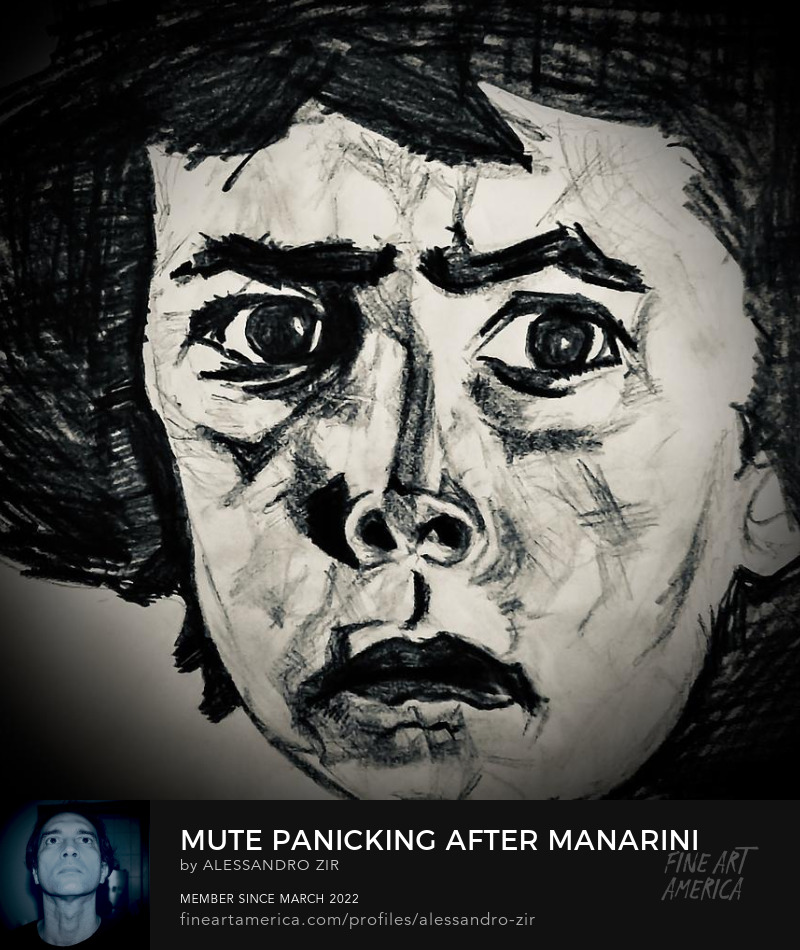
A/Z's drawing after a famous photograph of Ademar Manarini, available with other A/Z's drawings and photographs at Fine Art America;  
Alfredo Andersen, Brincando no Jardim;
Alfredo Andersen, Retrato de Dirceu Andersen (1930);
Almeida Júnior, Estudo de nú masculino (1873);
Candido Portinari, Menino de Brodowski (1946);
Tomie Ohtake, Sem título (1965);
Geraldo de Barros, Unilabor Chair (1954);
Ademar Manarini, Pavor (1951);
German Lorca, Cavalo Bravo (1970)

Depeche Mode's Enjoy the Silence;
Depeche Mode's Shake the Disease;
New Order's Sub-Culture [the video become unavailable at Youtube];
The Cure's Lullaby;
The Cure's The Forest;
The Cure's The Walk;
The Cure's Charlotte's Sometimes;
Duran Duran's Come Undone;
Duran Duran's Save a Prayer;
Bauhaus's In the Flat Field;
Bauhaus's Bela Lugosi's Dead;
Eurythmics's Sweet Dreams;
Siouxsie & the Banshees' Cities in Dust;
DAF 's Sato Sato;
DAF's Der Räuber und der Prinz;
Japan's Ghosts;
Soft Cell's Tainted Love;
Tubeway Army's Down in the Park [video became unavailable at Youtube];
Sigue Sigue Sputnik's Atari Babby;
Sigue Sigue Sputnik's Love Missile F1-11 [video became unavailable at Youtube];
B-52's Private Idaho;
Public Image Limited's Albatross;
Chrome's All Data Lost;
Chrome's New Age;
Factrix's Anemone Housing;
Tuxedomoon's No Tears;
Tuxedomoon's In Heaven;
The Resident's Burning Love;
Beirut Slump's See Pretty;
Throbbing Gristle's Persuasion ;
Throbbing Gristle's Separated;
Human League's Don't You Want Me;
Cabaret Voltaire's Yashar;
Depeche Mode's Martyr (Paul van Dyk Remix);
Depeche Mode's Only When I lose Myself (Lexicon Avenue Remix);
Radiohead's Down is the New Up;
Anton Corbijn, Control (2007);

"The Woodstock revolution started in 1966, peaked in 1976, and hit the wall with a thud! in 1980 with the election of Nancy Reagan."
"So good-bye to turn on, tune in, drop out... and hello to the motto of the 1980: Hang on. Hang in. Hang over."
"In the 1960's Dylan sang: 'We ain't gonna work on Maggie's farm no more.' Lennon sang: 'Give Peace a Chance.' In the somnambulant 1980s Michael Jackson, Prince, Madonna, George Michael kept us moving in the big auditorium-arenas under the watchful eyes of the security guards, but the lyrics are not high in socially redeeming value, while the anger of young activist musicians is limited to the denigrated punk-club scene."
"What do self-respecting, intelligent, ambitious young Americans do [in the 80s]? They perform. They master a craft. They learn to excel in a personal skill. They become entrepreneurs, i.e., people who organize, operate, and assume risks... They are politically and psychologically independent. They are notoriously nonloyal to institutions... black athletes led this evolution."
Timothy Leary
"Other singer-lyricists—Joy Division's Ian Curtis, Paul Haig of Josef K—were steeped in the shadowy unease and crippling anxiety of Dostoevsky, Kafka, Conrad, and Beckett. Three minute mininovels, their songs grappled with classic existentialist quandaries: the struggle and agony of having a self; love versus isolation..."
"Although Burgess drew specific inspiration from his hometown of Manchester, Clockwork Orange's backdrop was familiar to anyone living in Urban Britain during the 1970s. Tower blocks, skyways, shadowy underpasses: This was the desolate psychogeography of a new England created by town planners and Brutalist architects from the early 1960s onward."
"Influenced by Burroughs and his paradoxically depersonalized yet personified vision of Control, the Cabs developed a worldview in which power figured as a demonic, omnipresent force, a multitentacled yet sourceless network of domination and mind coercion. 'Being in a state of paranoia is a very healthy state to be in,' [Stephen] Mallinder said. 'It gives you a permanently questioning and searching nonacceptance of situations..."
"'I ended up working two years in a university bookshop and I had every science-fiction paperback you could get. I was really into Philip K. Dick and Ballard' [Phil Oakey]."
"Drugs of the socially sanctioned sort flooded Manchester in the Seventies. Numbing and often incapacitating tranquilizers were massively overprescribed to help ordinary people (menopausal housewives, troubled teenagers, wage slaves cracked by stress and boredom) not so much manage their lives as be manageable."
"'The reality  of the psychedelic experience isn't love and peace, it's insanity. If you actually took LSD and listened to our records, the trip would get so whacked-out you'd start laughing. Funny-scary, we called it. The bad trip would turn into a good trip, because you'd already been to th emost negative part of the universe' [Helios Creed/Chrome]."
"... underneath the campy surface the B-52's sound was stark and spiky, a tough dance groove midway between James Brown's minimal Afro-funk and the Leeds agit-funk of Gang of Four and Delta 5."
"... the debut Eurythmics album, In the Garden, featured Can's Holger Czukay and DAF's Robert Görl..."
"Whether it was the Human League's celebration of romance or Goth's patchouliscented romanticism, 1982 saw the return of that old (black) magic..."
"... Standard musical fixtures included scything guitar patterns, high-pitched post-Joy Division basslines that usurped the melodic role, beats that were either hypnotically dirgelike or 'tribal'..."
"Any suspect totalitarian leanings were mostly held in check by Goth's opposing attraction to Aleister Crowley's libertine dictum, 'Do what thou wilt shall be the whole of the law.'"
Simon Reynolds (Rip It Up)

"She looked like an ancient vampire countess who was definitely o a mission to capture my soul... Connie might have brought me close to death a lot of times, but in a way, she kept me alive. No one else did."
Dee Dee Ramone (Please Kill Me)
"I was so sick of hippie culture. People were trying to keep up those peace and love ideals, but it was so devalued. That was the era of real hip capitalism too... I found the hippie culture nauseating and prissy and sentimental, and smiley-faced. So Richard Hell just came over and said, 'This is what we are, we're the blank generation. It's over."
Mary Harron (Please Kill Me)
"Remember that season? Fall '86 I think, and all that Soviet madness? We wore Russian logos and listened to Sigue Sigue Sputnik. Oh, and we all quoted Karl Marx and went to those Yakov Smirnoff concerts (or was that just me?). Anyway, Communist chic was all the rage."
James St. James
"Who said that drugs will make you smile?"
Tommy Cash

"Je veux, dans cette dernière partie, définir, et analyser le ravage moral causé par cette dangereuse et délicieuse gymnastique, ravage si grand, danger si profond, que ceux qui ne reviennent du combat que légèrement avariés, m'apparaissent comme des braves échappés de la caverne d'un Protée multiforme, des Orphées vainqueurs de l'Enfer. Qu'on prenne, si l'on veut, cette forme de langage pour une métaphore excessive, j'avouerai que les poisons excitants me semblant non seulement un des plus terribles et des plus sûrs moyens dont dispose l'Esprit des Ténèbres pour enrôler et asservir la déplorable humanité, mais même une de ses incorporations les plus parfaites."
"Il est facile de saisir le rapport qui existe entre les créations sataniques des poëtes et les créatues vivantes qui se sont vouées aux excitants. L'homme a voulu être Dieu, et bientôt le voilà, en vertu d'une loi morale incontrolable, tombé plus bas que sa nature réelle... Il est vraiment superflue d'insister sur le caractère imoral du haschisch... Que je l'assimile à la sorcellerie, à la magie, que veulent, en óperant sur la matière, et par des arcanes dont rien ne prouve la fausseté non plus que l'efficacité, conquérir une domination interdite à l'homem ou permise seulement à celui que en est jugé digne..."
"Elle ne lève jamais les yeux; sa tête, coiffée d'un turban en loques, tombe toujours, et toujours regarde la terre. Elle ne pleure pas, elle ne gémit pas. De temps à autre elle soupire inintelligiblement, Sa soeur, la Madone, est quelquefois tempétueuse et frénétique, délirant contre le ciel et réclamant ses bien-aimés. Mais Notre-Dame des Soupirs ne crie jamais, n'accuse jamais, ne rêve jamais de révolte. Elle est humble jusqu'à l'abjection. Sa douceur est celles des êtres sans espoir..."
"... la plus jeune soeur se meut avec des mouvements impossibles à prévoir; elle bondit; elle a les sauts du tigre. Elle ne porte pas de clef; car, bien qu'elle visite rarement les hommes, quand il lui est permis d'approcher d'une porte, elle s'en empare d'assaut et l'enfonce. Et son nom est Mater Tenebrarum, Notre-Dame des Ténèbres... Telles étaient les Euménides ou Gracieuses Déesses..."
Baudelaire/De Quincey (Les Paradis artificiels)

"Killing an Arab was inspired by the novel L'Étranger written by Camus, the protagonist, for reasons he doesn't understand and cannot explain, shoots an Arab on the beach... Although the song is a treatise on existential angst and has nothing to do with racism, it can attract the wrong type of seeker... At Kingston Poly, we got permission to play it after Robert calmly took several of the students aside and explained the song's literary origins... It wasn't just the skinheads who thought the song was racist: so did the college students!"
"We slept in the old Morgan Studio 1 for some sessions, which was kind of creepy, as it used to be a church. Above the new ceiling was an old, stained-glass roof. When the studio was dark it was visible in a ghostly kind of glow. At 4 a.m. it looked almost otherwordly."
"It's obvious to me now that one of the main things I got out of being in The Cure was that emotional release and understanding of where I was spiritually at any particular time. The lyrics have always spoken to me in a very helpful and healing way."  
"I was playing the songs with ferocious intensity, madly slashing and berating the God who would let this happen to me when I was so young. I felt cast out of heaven and thrown down to earth like a damaged archangel."
"Robert doesn't play halfheartedly; when he plays his songs he has to inhabit them for them to work. I remember some tours where he would literally collapse after the gig and lie on the floor for thirty minutes to recover from the effort he'd put out."
"Pornography stands the test of time because it's not a slave to whatever the current fashions of the day were. It was born out of our own desperation and peculiar madness."
"My other memory of that session is twofold: one, the view from the upstairs room of the studio looking out over London in the early morning, just as the sun was rising and the mist was still enveloping the treetops. The other was..."
"Depeche Mode and The Cure had a lot in common: we both originated in 'new towns,'us in Crawley and them in Basildon, and both bands still have a large US following, which can't be said for some of our peers... We have also over the years shared several crew members."
Lol Tolhurst (Cured: the tale of two imaginary boys)

Aleister Crowley's The Book of Thoth:
- 18/The Moon [Pisces, the last of the signs, the last stage of the winter, gateway to resurrection, midnight, the sacred Egyptian beetle (which "bears the sun in his silence through the darkness of the night, and the bitterness of the winter"), "sinister and forbidden landscape," waning moon, moon of witchcraft, "the poisoned darkness which is the condition of the rebirth of light," "prejudice, superstition, ancestral loathing," "the howling of wild beasts," the threshold, "the dreadful madness of pernicious drugs," the dark night of the soul ("an horror of great darkness came upon me," said Abraham)] [from Nietzsche's Ecce Homo: "Rechne ich dagegen von jenem Tage an vorwärts, bis zur plötzlichen und unter den unwahrscheinlichsten Verhältnissen eintretenden Niederkunft im Februar 1883 — die Schlußpartie, dieselbe, aus der ich im Vorwort ein paar Sätze citirt habe, wurde genau in der heiligen Stunde fertig gemacht, in der Richard Wagner in Venedig starb — so ergeben sich achtzehn Monate für die Schwangerschaft. Diese Zahl gerade von achtzehn Monaten dürfte den Gedanken nahelegen, unter Buddhisten wenigstens, daß ich im Grunde ein Elephanten-Weibchen bin."];
- 9/The Hermit [the Hand ("tool or instrument par excellence"), the letter Yod (which is "the foundation of all the other letters of the Hebrew alphabet, merely combinations of it in various ways, and also "the first letter of the name Tetragrammaton," symbolizing the Father, "the highest form of Mercury, and the Logos, the Creator of all worlds," "the spermatozoon"), the sign of Virgo, corn, wheat, Persephone (queen of underworld) (concealed within Mercury is a light which pervades all parts of the Universe equally... one of his titles is Psychopompos, the guide of the soul through the lower regions") ("these symbols are indicated by his Serpent Wand, which is actually growing out of the Abyss, and is the spermatozoon developed as a poison, and manifesting the foetus... following him is Cerberus... this trump is shewn the entire mystery of Life in its most secret workings... the method")];

***To raise the dead— &/or evidence for the villainous affair, the tale of family disonour, Romish church's pact with the devil (considered the greatest outrage against sense and decency, to be plagued and pestered, though solemnly ratified, à Dieu rien n'est impossible, menteur avéré, nom d'un chien):
"Although Greek names were sometimes applied to the church modes and the principle of diatonic octave scales is found in both systems, certain significant discrepancies seem to belie any direct historical connection. Most conspicuous is the different meaning attributed to the names of the Greek octave species and of the church modes. Comparing the two systems provides a plausible explanation: medieval theorists apparently assumed wrongly that the Greek octave species were named in ascending rather than descending order. The Greek octave species Dorian (E–E), Phrygian (D–D), Lydian (C–C), and Mixolydian (B–B) thus appeared in the church modes as Dorian (D–D), Phrygian (E–E), Lydian (F–F), and Mixolydian (G–G)," (from "Mode," entry in Brittanica, by Mieczyslaw Kolinski);

See also:
- Bellocchio &/or Eye of (Dreadful) Beauty;
- Warszawa;
- Spooky Blue;
And also: 

Sunday, February 07, 2016

(Electronic & Others) High or Middle Culture?


Art Prints


A/Z's post on Instagram: sound & video in the background: The Knife's Silent Shout (from Disk III of Silent Shout's Deluxe Edition);
A Rough Sketch of Tommy Cash, drawing by A/Z available with other drawings and photographs at Fine Art America; 
The Knife (Networking);
The Knife (Tomorrow in a Year); 
Björk (Mouth's Cradle);
Björk (Pluto);
Madonna (Material Girl);
Bauhaus (Bela Lugosi's Dead);
DAF (Der Räuber un der Prinz);
DAF (El Que);
Japan (Ghosts);
Orange Juice (Rip It Up);
Public Image Limited (Albatross);
Chrome (All Data Lost);
Factrix (Phantom Play);
The Residents (Swastikas on Parade);
This Heat (A New Kind of Water);
The Flying Lizards (Money);
Wire (I'm the Fly);
Talking Heads (Psycho Killer);
DNA (Detached);
Mars (Helen Forsdale);
Teenage Jesus (Orphans);
Contortions (I Can't Stand Myself);
Throbbing Gristle (Greasy Spoon);
Cabaret Voltaire (Silent Command, Kino);
The Future (Future Religion);
The Pop Group (We Are Time);
Devo (The Truth About De-Evolution) [this video is not available anymore at Youtube];
Donna Summer (I Feel Love); 
Blue Jay Way (Beatles); 
Cambridge 1969 (John Lennon & Yoko Ono); 
The Crucifixion (Phil Ochs); 
Ornette Coleman's Sound Museum (montage A/Z);
Bat Macumba (Mutantes);
Saúde (Rita Lee) [this video is not available anymore at Youtube];
On the Rocks (Rita Lee);
Morton Subotnick (Silver apples of the Moon); 
Alack Karis & Kian Freitas/ Karlheinz Stockhausen's Mantra; 
Milda Vitartaite plays Mario Davidovsky Synchronisms N 6 (for piano and electronic sound, Youtube);
Code Morel & One Hundred Forty Nine Inches (montage A/Z) [I took this video out of Youtube, because I wanted to change it];

"In one of its innumerable forms music is a powerful drug, partly stimulant and partly narcotic, but wholly alterative."
A. Huxley, The Devils of Loudun
"After we'd sniff glue we used to call up number on the phone. We knew these numbers to dial where you could get these weird sounds. We'd call the numbers and it would go Beep-beep-beep-beep-beep."
Dee Dee Ramone (Please Kill Me)
"... remettre en usage des instruments anciens et oubliés, créer des instruments nouveaux... rechercher,  en dehors de la musique, des instruments et des appareils qui, basés sur des fusions spéciales ou des alliages renouvelés de métaux, puissent atteindre un diapason nouveau de l'octave, produire des sons ou des bruits insupportables, lancinants."
A. Artaud (Le théâtre de la cruauté)

"Zuletzt fehlt mir jeder Grund, die Hoffnung auf eine dionysische Zukunftder Musik zurückzunehmen."
"... wie der das Schwerste von Schicksal, ein Verhängniss von Aufgabe tragende Geist trotzdem der leichteste und jenseitigste sein kann — Zarathustra ist ein Tänzer —;" 
Nietzsche (Ecce Homo)
"... long live dancing in the eddy of the infinite!" 
The young person in Repetition (translation by M. G. Piety)
"... une des divinités caractéristiques du Panthéon brahmanique est le Danseur Suprême. Etre universel, il détient le fil du labyrinthe cosmique. Seigneur jouant au degré le plus élevé: son passe-temps est, inextricablement, de créer et d'anéantir."
André Masson (La tentation de l'Orient/Écris, anthologie établie par Françoise Levaillant)
"Você acredita que eu ia pro Dancing Days dançar a noite inteira, sozinho?"
Ney Matogrosso

"When the mood came over him, he might suddenly interrupt a Saturday afternoon walk in the fashionable Bahnhofstrasse by flinging his loose limbs about in a kind of spider dance, the effect accentuated by his tight trouser-legs and wide cloak, diminutive hat, and thin cane."
Richard Ellmann
"Voisin d'un dancing for populaire connu plus tard sous le nom de Bal nègre, un vieille maison marquée pour la pioche... De l'autre côté: deux ateliers d'artistes... Cette campagnonnage n'avait rien de typiquement 'intellectuel'; parler et sentir ensemble, prendre ses repas en commun, travailler d'une même élan, et danser."
André Masson (45, rue Blomet/Écris, anthologie établie par Françoise Levaillant)

"Na gravação de Adeus Maria Fulô, usei um instrumentinho que os palhaços Torresmo e Fuzarca faziam com tampinhas de garrafa afinadas que, ao soltá-las no chão, tilintavam a nota certa... regravamos Bat Macumba e Baby..."
"Éramos apreciados por nossa esquisitice visual e sonora."
"Quando lançamos Saúde, a crítica me crucificou porque pela primeira vez no país usei em algumas faixas a bateria eletrônica Korg. Diziam que eu havia tirado o trabalho de bateristas humanos. Enquanto a crítica vinha com a farinha, minha antena futurista já comia o bolo. Ser pioneira tem seu preço."
"Minha preferida dessa safra é On the rocks, trenzão, pesadão e chique, letra bem colocada, instrumentália precisa, mixagem perfeita, uma de que muito me orgulho."
Rita Lee
"Com sua trupe panfamiliar, suas mulheres e filhos músicos (virtuoses de vanguarda e jazzistas-roqueiros), Stockhausen é o elo perdido entre a grande música e uma outra música que poderá surgir."
José Miguel Wisnik

"Je me souviens avoir discuté avec Stockhausen... l'idée selon laquelle 'notre musique' (cette notion commune existait encore un peu)... aurait pour mission... d'édifier un 'space' suffisamment étendu et complexe pour que puissent s'y rencontrer... soit l'ancien et le nouveau, soit le 'savant' et le 'populaire'..."
"... des échanges, parfois secrets, s'établissant entre les 'genres', et même certaines des acquisitions les plus aventureuses des musiques expérimentales s'acclimatant dans des régios moins 'distinguées' ou même plus commericales (qu'on pense à la subversion du langage qu'a représente le 'free jazz' ou l'assimilation de l'électronique par le pop, le rock et, surtout les musiques illustratives et 'fonctionelles')..."
Henri Pousseur, Musiques Croisées

"La pauvreté reprochée à beaucoup de sons synthétiques, et pas seulement sur les appareils 'bas gamme', provient souvent du fait que peu de paramètres varient, par exemple que seule la hauteur change, alors qu'entre une note d'un instrument acoustique et la note immédiatement plus grave ou plus aiguë, une foule de variables bougent (pente de décroissance d'intensité, timbre harmonique, vibrato...) simultanément avec la hauteur, même si c'est plus discrètement qu'elle. En même temps, c'est cette pauvreté qui fait le charme propre des sons synthétiques, et des groupes et auteurs 'pop' comme Kraftwerk ou Brian Eno."
"Alan Williams défend l'idée — que nous partageons — que 'ce n'est jamais le sont littéral, 'original' qui est reproduit dans l'enregistrement, mais une perspective sur lui."
"... le son pourrait avoir d'être 'inréifiable' tout en étant accessible à une description et une appréhension plus précises."
Michel de Chion, Le Son

"[Nos áureos tempos na Rádio Nacional] a sonoplastia era coisa de 'alto nível'... Apenas composições dos grandes mestres da música clássica é que integravam as trilhas sonoras daquele período. Mais que isso, os sonoplastas davam preferência ao repertório de vanguarda da música do século XX. Enquanto o público 'consumidor de cultura' torcia o nariz no Municipal ao ouvir as execuções dos mais avançados autores de nossa época, as donas de casa, ao fritar suas abobrinhas, estavam ouvindo no rádio, através da sonoplastia, nada menos que Stravinsky, Schöenberg, Webern, Debussy, Ravel, Bartók, Dukas e outros."
"No fim dos anos 60... Numa era das mais criativas da história, a molecada agarrou a tal caixinha, o sintetizador, e saiu pelo mundo ejaculando frequência por todos os poros... O Japão, o país do futuro, ativava ainda mais sua indústria eletroeletrônica produzindo centenas de maquininhas infernais, práticas e portáveis, que faziam da manipulação do som eletrônico um brinquedo infantil."
Julio Medaglia (Música Impopular)

"The 1980s were a great time for innovation with regard to electronic music. Pop music was starting to incorporate new types of keyboards and drum machines, with new ones coming out every month that helped refine and define the sound of that era."
"You would be surprised how many happy accidents make it onto the records. Robert used to call me 'the X factor,' as he was never quite sure what I might come up with."
"We also liked the way he played his leather trousers with his hands. Yes, that's what you hear on 'The Carterpillar' that sounds like butterfly wings beating: Mr. A.'s leather trousers."
"I have always had a great love for all kinds of experimental music, especially the early synthesizer pioneers like Morton Subotnick, and I loved Don Buchla's electronic machines."
Lol Tolhurst
**************************************************************

"Recorded in West Berlin, Bowie's Low and Heroes, Iggy Pop's The Idiot and Lust for Life (both of which Bowie produced), hugely impacted listeners [and] signaled a shift away from America and rock'n'roll toward Europe and a cool, controlled sound in which synthesizers played as much of a role as guitars..." 
"...  1977's most significant singles [were] 'Trans-Europe Express,' a metronomic, metal-on-metal threnody for the industrial era by the German band Kraftwerk, and Donna Summer's Eurodisco smash 'I Feel Love,' made almost entirely from synthetic sounds by producer Giorgio Moroder, and Italian based in in Munich."
"Rather than a keyboard, Devo treated the synth as a noise generator. 'The more technology you have, the more primitive you can be,' Mothersbaugh told one interviewer. 'You can express guttural sounds, bird noises, brains waves, blood flow.'"
"Devo found Alan Myers, 'this incredible metronomic drummer,' and the group started to explore disconcertingly disjointed time signatures like 7/8 and 11/8. 'Those kind of timings make you feel rigid right away,' says Casale."
"... all rattling synthetic percussion and soiled sheet of sound recall avant-classical electronic composers such as Morton Subotnick. For a while Cabaret Voltaire didn't even have a proper synth, instead using tape loops and a primitive oscillator built by Watson. Kirk's primary instrument was the clarinet, fed through effects to sound harshly processed and eerie, as on the spychotic-bucolic Fuse Mountain."
"Initially, the Future came up with 'the rather radical idea that we'd have shared vocals,' says Ian Craig Marsh. 'We dispensed with our names and called ourselves A, B, and C. I was all very computer oriented...' A cybernetic version of Burroughs's and Gysin's cut-ups and surrealist automatic writing..."
"Another Cabaret Voltaire hallmark was the dehumanization of Mallinder's voice via creepy treatments that made him sound reptilian, alien, or, at the extreme, like some kind of metallic or mineralized being."
"COUM started as a rock band of sorts, making up music on the spot, undeterred by lack of grounding in improvisational technique, using broken violins and prepared piano as well as conventional rock instruments like drums and electric bass. Inspired by John Cage's writing and by primitivists like the Fugs and the Velvet Underground, P-Orridge believed that 'the future of music lies in nonmusicians.'"
"Ironically, a traditional blues and country technique, slide guitar, provided No Wave with some of its most disconcertingly novel noises."
"Byrne was reading books by anthropologists and ethnomusicologists... Eno and Byrne became fascinated with American radio's menagerie of evangelist preachers, right-wing pundits, and callers phoning in to live talk radio shows. Radio was America's seething id."
"Unwilling to spend what it would take to make Wire happen as a pop group, EMI was equally disinclined to fund their more esoteric side."
"Factrix quickly  realized that 'you could put the acetates in upside down and backward, play them the wrong way. That was what was really inspiring to us at the time, 'let's see what happens if we do this wrong.'"
"'The mystical for Factrix was teh  same as Coltrane or any musician who's trying to get to the place where the music is free. The sounds, they really  did have a life of their own. We were really just following the sounds. We were disciples of feedback' [Bond Bergland]."
"'Most  bands get a synthesizer and their first idea is to tune it! They want a clean normal sound. They don't work with the power you get from a synthesizer. We want to bring together this high technique with body  power' [Robert Görl/DAF]."
"DAF and their offshoot group Liaisons Dangereuses influenced the embryonic black electronic sounds of Chicago house and Detroit techno, while Kraftwerk almost single-handedly inspired New York electro."
"'You could do a vaguely experimental film thing as cheaply as you possibly could, and if it was connected to a song, MTV would play it because they needed stuff desperately in those days' [David Byrne]."
"Rave music teemed with futuristic textures and strange noises that came straight out of DAF and Cabaret Voltaire... Acid house essentially fused postpunk futurism with sixties Dionysian frenzy."
Simon Reynolds

"As Stockhausen showed in the 1950s, electronic instruments unify the time field between the audio or intoned frequencies above about 20 Hz and the infrasonic or rhythmic frequencies below this threshold. This means that we can compose throughout this zone, where rhythms morph into tones and vice versa."
"A sine [in a simple sinusoidal wave] repeats at exactly constant intervals of time. Repeating waveforms are called periodic. If there is no discernible repetition pattern, it is called aperiodic or noise. In between the extremes of periodic and aperiodic is a vast domain of quasi-periodic tones. The rate of repetition of a periodic sound is called its fundamental frequency, measured in cycles per second."
"Many frequencies can superimpose in a waveform. A frequency-domain or spectrum representation shows the distribution of frequency energy in a sound... A working definition of spectrum is: a measure of the distribution of signal energy as a function of frequency. Such a definition may seem straightforward, but in practice, different analysis techniques measure properties that they each call 'spectrum' with diverging results. Except for isolated test cases, the practice of spectrum analysis is not an exact science."
"Myriad alternatives to Fourier-based spectrum estimation exist (Roads 1996). Among them, one family is of particular interest, as they decompose a sound into a collection of sound atoms (analogous to grains)."
"... the ear is especially sensitive to frequencies between 1000 Hz and 4000 Hz. Tones in this region sound louder than tones of equal intensity in other frequencies. Thus the measurement of loudness falls under the realm of psychoacoustics."
"The subject of masking inevitably arises in discussions of loudness perception. In its most basic form, masking describes a phenomenon wherein a low-level sound is obscured by a higher-level sound. For example, standing in a shower masks many sounds, such as someone speaking nearby."
"... other types of masking effects are time-based: forward and backward masking. Consider a short sound that ends abruptly. The human auditory system continues to react for a short time (about a half second) after the sound ends. This 'resonance' can blur our perception of the onset of a second sound. Indeed, when the time interval between impulses is less than about 50 ms, the ear no longer perceives them as separate impulses... Backward masking is a curious phenomenon. Basically, a loud click or noise coming less than 100 ms after another sound can obscure our perception of the earlier sound. The masking sound can disrupt the brain’s ability to hear a preceding sound, hence the term backward). It is interesting that both forward masking and backward masking occur in the visual domain as well."
"Low-frequency impulsive events are perceived as rhythms. These are the infrasonic frequencies in the range below about 20 Hz. The infectious beating rhythms of percussion instruments fall within this range."
"Structure-borne sound is vibration that one can feel, like the vibration caused by a train rumbling down nearby tracks. These are typically low-frequency vibrations that one’s ear may be able to hear, but they are also felt through the body. Of course, we can also feel high frequencies, such as the buzzing of an electric razor, which is felt by the hand, as well as heard by the ear."
"Ultrasound comprises the domain of high frequencies beyond the range of human audibility."
"Sound propagates at different rates, depending on the medium of propagation... Sounds at extreme sonic velocities are destructive. Explosives can generate powerful transonic shock wave air currents traveling at up to 8000 meters per second, corresponding to Mach 24. These destroy everything in their path."
"Sounds have a specific physical size as well as shape. A quiet sound is physically petite. One has to put one’s ear close to it because the body of air it perturbs is tiny. Other sound waves are gigantic, such as the Krakatoa explosion of August 1883. It was heard 4800 kilometers away, and the pressure wave traveled around the earth for 127 hours."
"When rhythms are sped up, they morph into tones. When modulations like tremolo and vibrato are sped up, they morph into complex spectra. Streaming around the thresholds of this zone of morphosis—where discrete events turn into continuous tones—is intrinsically fascinating."
"... as [Paul] Griffiths observed, electronic music can resolve an antagonism between music and text since words themselves can be transformed. Extreme distortions obscure the meanings of the words, so that the sonic contours of the vocalisms are more important than their literal sense. Moreover, the freedom of the electronic medium encourages composers to make smooth connections between vocal and non-vocal material."
"In the ideal, a source of noise should generate random values. To define an algorithm for generating truly random numbers is, however, impossible mathematically (Chaitin). Any software method for random number generation ultimately rests on a finite, deterministic procedure. Hence, an algorithm for generating 'random' numbers is actually a pseudorandom number generator... Stephen Wolfram famously developed a new type of pseudorandom number generator that he called rule 30 based on a cellular automata algorithm that is much more random than previous algorithms. A main challenge for digital synthesis is creating more sophisticated algorithmic models for noise... Natural wind, sea spray, waterfalls, and thunder are excellent sources of wideband noise. Speech and animal sounds contain many evocative noises, especially the fricatives and plosives of speech [s], [z], [sh], [f], [k], [t], [p], [g], and so on. I have already mentioned the rich noises of the unpitched percussion instruments. Collections of samples recorded at industrial sites are available. These feature the sounds of crushing, creaking, scraping, squealing, squeaking, and grinding... Analog devices produce some of the most complex and unstable noises. For example, the noise from a diode section of a transistor is widely considered to be one of the most random phenomena in nature... The ear is attracted to changes in noise, to trends... As early drum machines taught us, white noise is a poor substitute for a cymbal crash."
"The early electronic music of Stockhausen is a classic example of the integration of pitched and non-pitched elements. Gesang der Jünglinge (1956) juxtaposed sung serial melodies and chords against such elements as 'sine complex showers,' 'impulse complex showers,' filtered and broadband noise, and 'chords' of narrow noise bands. His Kontakte (1960) takes the contrasts even further. At any given instant, Stockhausen pits noise against pitch, fixed against moving, close against far, short against long, high against low register, soft against loud—always in sharp relief. This unrelenting counterpoint of contrasts marks Kontakte as an especially inventive composition, as Stockhausen discovered oppositions that were never before articulated."
"The lush spatial effect of artificial reverberation is characteristic of the electronic medium. Early recordings used a real physical space—an echo chamber—to produce reverberation."
"Spring reverberators in electric organs date to the 1940s and were later common in guitar amplifiers. In the 1950s, Elektro-Mess-Technik (EMT) introduced the massive (2.4 meters long, 200 kg) model 140 plate reverberator, a higher-quality reverberator renowned for its concert hall-like sound. Plate reverberators consist of a large, thin piece of sheet metal suspended from a steel frame by springs... Equipped with vacuum tube electronics, these units were installed in early electronic music studios like the historic WDR studio in Cologne, where Stockhausen realized many of his electronic pieces, and the Columbia-Princeton Electronic Music Studio... The classic EMT 140 impulse response is accurately modeled by contemporary software reverberators and still marries well with electronic sonorities."
"Portable field recorders enable composers to integrate natural spatial environments (both interior and exterior) into their work. Interior recordings bring us into living spaces, while recording the open space of the outdoors environment allows us to enter the realm of free field acoustics, characterized by a total lack of reflections. Of course, there can also be reflections outside, but the distance cue becomes especially important as we hear the natural foreground/background of the soundstage... Walter Ruttmann’s Weekend (1930) pioneered this genre, depicting the urban soundscape of Berlin. Two decades later, musique concrète used natural sounds, but typically in short clips spliced together rapidly. In contrast, Luc Ferrari’s breakthrough composition Presque rien ou le lever du jour au bord de la mer (1967–1970) began as a long, continuous recording of environmental sounds at a Yugoslavian beach."
"Sound spatialization presents two facets: the virtual and the physical. In the studio, composers spatialize sounds by means of tape echo feedback, delays, spectral filtration, phase shift (for image displacement, widening, and narrowing), convolution, granulation, panning, Doppler shift (for simulation of moving sounds), and reverberation. These transformations give the illusion of sounds inhabiting and moving in imaginary virtual environments."
"Tape echo feedback (TEF) is a classic tape-studio approach to sound transformation that creates a ping-pong panning echo effect, but it can also lead to a transmutation as the original input sound is submerged in distant feedback. There are many variations on TEF, but the classic version requires an analog tape recorder with a continuously variable speed control."
"Another class of reverberators based on convolution is especially interesting... we can take the acoustic signature of an existing space such as a concert hall, and through convolution, impose its spatial characteristics on any sound, creating the illusion of sounds playing in the portrayed space... In the theory of convolution, the acoustic signature of a physical space is sampled by recording the response of a room to a sharp impulse. This is its impulse response."
"Since convolution itself is straightforward, the added value of convolving reverberator applications comes in the form of extensive libraries of proprietary IRs of exotic spaces, including concert halls, cathedrals, stadiums, theaters, churches, recording studios, rooms, scoring stages, clubs, tombs, car interiors, closets, and even acoustic instruments... it is also possible to create synthetic IRs that model strange imaginary rooms with otherworldly echo patterns."
"Starting from the edge of the conventional loudspeaker, we can treat dif- ferent sounds so that they appear to emanate from specific depths behind the loudspeaker. This leads to one of the more interesting possibilities in electronic music: the possibility of a counterpoint between foreground and background elements, where the perceived depth of each element is a function of its virtual acoustic properties. A low-pass filtered sound—bathed in reverberation and diminished in amplitude—recedes into the background, while a bright, present, loud sound jumps to the foreground."
Curtis Roads, Composing Electronic Music

See also:
And also: 

Monday, January 18, 2016

Brazil in the 80's


Reeta Li as I See (transformation of an A/Z drawing after a 60/70's photograph published by Rita Lee in her 2016's autobiography) (Instagram post);
Pictures of Cazuza (taken from the Internet) & a picture of Roger Moreira (taken from Dapieve's BRock);
Gang 90 & Absurdettes: Telefone;
Metrô: Tudo pode mudar;
Lobão & Os Ronaldos: Decadence avec Elegance;
Camisa de Vênus: Só o Fim; 
Ultraje a Rigor: Mim Quer Tocar;
Ultraje a Rigor: Eu Me Amo;
Ultraje a Rigor: Rebelde Sem Causa;
Titãs: Cabeça Dinossauro;
Marina Lima: 
Fullgás;
Grávida; 
Virgem;
Rita Lee  (& Roberto de Carvalho):
Corre Corre;
Chega Mais;
Banho de Espuma;
Pega Rapaz;
Mania de Você;
Baila Comigo;
Lança Perfume;
Caso Sério;
Nem Luxo nem Lixo;
Saúde [the video was taken out from Youtube];
Barata Tonta;
On the Rocks;
Desculpe o Auê;
Raio X [the video was taken out from Youtube];
Mutante;

"Solto entre elas, como um bicho que tivessem adotado escondido, Reeta Li ensaiava os primeiros dos celebres knockouts que tornaram possíveis as operações por tentáculos-pensamento e o fizeram famoso" (A/Z Pleif mapa cap. 12).
"But when alighting at the somber zone, instead of following the chiming buzz of the clausineos (Sesdentinceps clupeoide), Reeta Li, fumbled and befuddled, let himself to be bedraggled by the lava of Barbario’s crack, botching everything. Reeta Li, the envoy," (A/Z Pleif cap. 13).

"De repetente um carro freou atrás dele, o rádio gritando 'se Deus quiser, um dia acabo voando'. Na cabeça dele soaram cinco tiros."
Caio Fernando Abreu

"Assisti Jimi Hendrix tascando fogo na guitarra no Marquee e depois, no festival na ilha Wight, dormi aos pés de Stonehenge em plena lua cheia e aprendi a tocar flauta transversal viajando de mescalina numa floresta mágica do País de Hales com um garoto inglês lindinho chamado Ritchie (que sequestrei para o Brasil)."
"Levantei, encaixei o violão na barriga e, em cinco minutos, 'Baila comigo' estava feita. Meu ego não interferiu em nada, o santo fez tudo sozinho... 'Nem luxo nem lixo' também veio prontinha do santo."
"Se naquele tempo tivesse internet, certamente eu não sairia dos trending topics. #PloftCaiu."
"Gosto muito de 'Saúde', um beat-disco com letra despretensiosa e alto-astral."
Rita Lee

"'E como é você de diretor'", perguntei um dia, lembrando das suas elogiadas atuações como diretor do RPM e do Cazuza. 'Deixa também correr solto, dando apenas dicas e sugestões?' 'Não, eu ponho coleira mesmo, encho o saco. Não querem que eu faça? Então têm de me aguentar.' 'Mas isso não é incoerente com o seu comportamento ao ser dirigido, não aceitando imposição alguma?' 'Mas eu me viro no palco, eu tenho uma noção do palco que essas pessoas normalmente não têm. O RPM, por exemplo, era uma coisa toda pequenininha, que eu queria ampliar, soltar. Por timidez, eles não liberavam nada, e aí eu exigia mesmo, até conseguir colocá-los para fora. Parece que botei para fora demais, né (comenta, rindo). Eu sacava que o Paulo Ricardo tinha sex-appeal, mas faltava coragem para mostrar; ele era uma estrelona e não queria arcar com isso. Foi só dar trela. Falei pra cantarem sem camisa. Quase morreram. O Paulo Ricardo achava que tinha um corpo feio, e eu insistia no fato de que as pessoas gostam de ver quem é bonito. Funciona. Relutaram muito, mas ele e o guitarrista acabaram aceitando; o outro não tirou a camisa de jeito nenhum e continuou vestido até as orelhas. E as mulheres enlouqueciam com os dois. No final, os ombros do Paulo Ricardo eram elogiadíssimos. Já com o Cazuza meu trabalho foi o oposto. Ele fazia barbárie no palco, como enfiar cotonete no ouvido e botar o pau pra fora, e eu precisei convencê-lo de que o seu pensamento (o que ele cantava) é que era importante. Não sua ação. Ele não precisava ficar preocupado em correr para todo lado, para encher o palco, e podia se restringir a cantar, que eu ia cuidar do resto. E o show funcionou perfeitamente bem com ele mais contido. Pedi pra ele fazer uma roupa de seda branca, e aí eu utilizava minhas malandragens com a luz pra preencher os espaços. Em certos momentos, jogava uma luz rosa em cima dele, e sua roupa ficava totalmente transparente'" (Denise Pires Vaz & Ney Matogrosso, Um cara meio estranho. Rio de Janeiro, Rio Fundo, 1992).
************************************************************

"Novelty might dwell either in dissonant harmonic sequences or in the continuous repetition of a single chord... Some do songs, others do sounds, and a few do noise... The value of a song must be connected with the ways it affects the body. Touch is in the channels of the ear..." [A novidade pode habitar tanto sequências harmônicas dissonantes quanto a repetição insistente do mesmo acorde... Uns fazem canções, outros fazem som, alguns fazem barulho... O valor de uma canção deve estar associado a suas propriedades físicas sobre o corpo. O tato se liga diretamente aos canais dos ouvidos...] (Arnaldo Antunes, 40 Escritos. São Paulo: Iluminuras, 2000, p. 17-18).   

"Na noite de 6 de julho de 1984, aos 30 anos, Júlio Barroso [Gang 90 & as Absurdettes] caiu (nesse caso, um acesso de vômito causado pelo processo de desintoxicação o teria levado direto da cama rente à janela para o vazio) ou pulou (nesse caso, jamais se saberá exatamente o porquê, nunca se sabe) de seu apartamento no 11o andar de um edifício na Rua Conselheiro Brotero, no bairro paulistano de Santa Cecília" (Arthur Dapieve, BRock. São Paulo: Editora 34, 2015 p. 27-28).
"João Luiz Woerdenbag Filho, o Lobão... filho de um mecânico holandês, 1,88 metro de altura, epilético, tocava bateria desde os 5 anos, um pouco como terapia contra sua disritmia... Mesmo assim, por influência do virtuosismo do amigo guitarrista Luís Augusto Barros... se sentiu atraído pelo violão clássico, por Guerra Peixe e por Heitor Villa-Lobos, deixando a bateria de lado por dois anos" (Dapieve, p. 39).
"Na madrugada de 13 de novembro de 1985, Tony Bellotto foi preso com 30 miligramas da droga quando o táxi que o transportava foi parado por uma viatura da PM na Avenida Paulista... Levado para o 4o Distrito, o guitarrista confessou ter recebido o papelote de Arnaldo Antunes. Este foi preso pouco depois em seu apartamento na Paulista, com 128 miligramas de heroína" (Dapieve, p. 97-98).
"Ulysses Guimarães se encarregou de divulgar o trabalho do grupo [Ultraje a Rigor]. Irritado com declarações do porta-voz do general-presidente João Figueiredo... de que o comício pelas diretas em Curitiba só serviria para desestabilizar o processo sucessório, Ulysses prometeu mandar-lhe o compatcto com 'Inútil' de presente. 'Ele que repita isso, que toque o disco e fique ouvindo', declarou o político em 13 de janeiro de 1984" (Dapieve, p. 109).

"Rita trocava o rock pesado pelo posto de artesã pop, ainda que não abrisse mão de arestas cortantes... como bem notou Ezequiel Neves no Jornal da Tarde, 'Babilônia é um disco irretocável, o melhor LP de música elétrica produzido entre nós... Desafiando a MPB inteira, Rita Lee se tornou, por merecimento e justiça, uma das mais importantes cantoras/compositoras/letristas deste país" (Ricardo Alexandre, Dias de Luta: O Rock e  o Brasil dos Aos 80. Porto Alegre, Arquipélago Editorial, 2002).  
"Até Salvador, terra com jeito que nenhuma terra tem, abrigou sua banda punk, formada em 1980 pelo DJ Marcelo Nova... O Camisa de Vênus era uma banda de rock, na realidade, mas era punk porque se esmerava em ser polêmico, incômodo... 'Me fascinava no punk a possibilidade de que alguém como eu, sem experiência pregressa, sem carreira assinada, fizesse sua parte. Quanto a dogmas, quanto ao punk unido jamais será vencido, ao coturno e ao casaco de couro, nunca me identifiquei. Movimento? O único movimento em que acredito é o das marés, que enche e vaza" (Ricardo Alexandre, p. 77).
"'Não conseguia me identificar com o mar, o barquinho, o arco-íris e outras imagens paradisíacas da música baiana', recorda Marcelo Nova. 'Eu jogava bola no paralelepípedo. Detestava o calor, tive uma desidratação horrível em 1980. Odiava a celebração, não cantava parabéns nem em meu aniversário'" (Ricardo Alexandre, p. 78). 
"No meio disso tudo, Júlio Barroso já havia se pirulitado para Nova York, após rápida estada na República Dominicana, e descoberto a new wave... Em mais um de seus planos infalíveis, tramou com seu cunhado, o jornalista Okky de Souza, uma banda que transportasse todos aqueles elementos para a realidade tupi. Afinal, sabia tudo sobre antropofagia e modernismo, ele mesmo havia escrito, nas páginas de Somtrês, a clássica frase 'não há nada de novo, há tudo sendo feito de maneira nova'... batizou seu grupo com um nome composto, Gang 90 & Absurdettes, sendo 'gang 90' uma referência à gíria 'pedra 90', do arco da velha, bem ao estilo retrofuturista da new wave" (Ricardo Alexandre, p. 86-88).
"Cazuza e seus novos amigos conseguiam, instintivamente, encontrar um elo perdido entre o blues americano e as canções de dor de cotovelo de Dolores Duran, entre os gritos hippies de Janis Joplin e o resmungo tosco dos punks" (Ricardo Alexandre, p. 115).
"'A TV tocava 'Coração de Estudante', de Milton Nascimento, 'como o hino da campanha das diretas', lembra Roger, desconfiado. 'Mas, na prágica, era Inútil. Só que Inútil incomodava, porque ia fundo na ferida" (Ricardo Alexandre, p. 184).
"... o núcleo dos Titãs era o mitológico Colégio Equipe, onde 'tinha uma espécie de clima que favorecia aos alunos experimentar as áreas nas quais eles pudessem, eventualmente, ter algum talento', recorda Nando Reis. 'Pô, a gente estudava em um colégio com um teatro onde rolavam shows históricos, de Clementina de Jesus e Cateano Celoso a Gilberto Gil e Novos Baianos' [Marcelo Fromer]... 'ao mesmo tempo em que rolava essa coisa de 'vamos ser os bregas' e 'vamos tocar no programa do Chacrinha', também havia um parâmetro cultural da MPB, das avaliações dos irmãos Campos [Tony Bellotto]" (Ricardo Alexandre, p. 185).
"Júlio Barroso foi velado no dia seguinte a sua morte, no Cemitério do Caju, Rio de Janeiro. Lobão afirma que, durante a noite, ele e Cazuza esticaram uma fileira de cocaína sobre o caixão, como se  estivessem dividindo a droga com o amigo, pela última vez" (p. 191).
"Segundo Nando Reis, o esquema era o seguinte: 'Leleco Barbosa (diretor do programa), comandava uma máfia enorme, entre os clubes da Baixada Fluminense. Clubes grandes, até num prenúncio dessa coisa dos bailes funk, onde os artistas que apareciam no Chacrinha se apresentavam, sempre fazendo playback.' 'Era muito conveniente para as companhias esse esquema porque eles faziam caridade com o chapéu dos artistas. Com isso, ganhavam pontos na TV para gastar com gente como Fábio Jr. ou o grupo Dominó' [Ritchie]" (p. 209).
"O quarteto do Ultraje ficou hospedado no Hotel Sol Copacabana. Quando descobriram que o grupo Metrô estava dividindo quartos vizinhos, desceram até a rua, compraram vários tubos de Super Bonder e, candidamente, colaram as portas, mantendo seus colegas presos por um bom tempo" (p. 250).
"De certa forma, a direção tomada por Cazuza o conduzia para próximo da estética da cantora Marina (outra contratada da Polygram, por onde lançou Todas, em que tentava conciliar seu currículo pop-MPB com o rock brasileiro da época) e de Dulce Quental (a ex-vocalista do Sempre Livre que abraçou a sofisticação no album Délica)" (p. 263).
"'Subitamente, vimos todas as portas se fechando', lembra Nando Reis. 'Não fizemos mais nenhum programa de televisão, tivemos um monte de shows cancelados, Arnaldo ficou preso por um mês e a banda quase acabou'" (p. 289).
"'Quando tinha 18 anos, fui assistir à peça Dois perdidos numa noite suja, de Plínio Marcos, no Teatro Castro Alves, em Salvador', recorda o vocalista [Marcelo Nova/Camisa de Vênus]. 'Quando ele começava a gritar vou comer seu cu, filho da puta!, metade da plateia se levantava e ia embora. Vi que Plínio pegava a hipocrisia e virava pelo avesso'" (p. 301).
"O pop brasileiro no fim dos anos 80 foi obscurecido pela sombra da repressão policial — mais ou menos como a que a patrulha direitista tentara imprimir ao pop britânico da década de 60, quando o sargento Norman Pilcher se celebrizou por prender astros do rock como Mick Jagger, Donovan e George Harrison" (p. 328).
"'Estávamos entregando o ouro de volta para o bandido', acrescentou Roger, do Ultraje a Rigor, definindo a aproximação da sua geração dos grande ícones da MPB. 'Claro que o rock sempre foi resistência e, de repente, passamos a ser situação'"  (p. 362).
"O jabá é aquele mecanismo de corrupção com o qual a gravadora garante que seu novo produto vá ser executado em determinada emissora, na esperança de que a massificação gere a familiaridade no ouvinte..." (p. 375).
"Cazuza leu a matéria à beira da piscina de sua casa na cidade serrana de Petrópolis... Quando chegou ao último parágrafo, começou a chorar, compulsivamente" (p. 380).
"Daí surgiu o bumbo-caixa poderoso de 'Lugar nenhum', direto das audições de Led Zeppelin, ou os violões corridos de 'Desordem', inspirados em The Cure" (p. 393).

See also:
Allen Ginsberg, Burroughs & Ney Matogrosso;
- Rock Brazil 90s;
Two invisible phanopoeias & a silence (by Arnaldo Antunes) + Alice Ruiz;