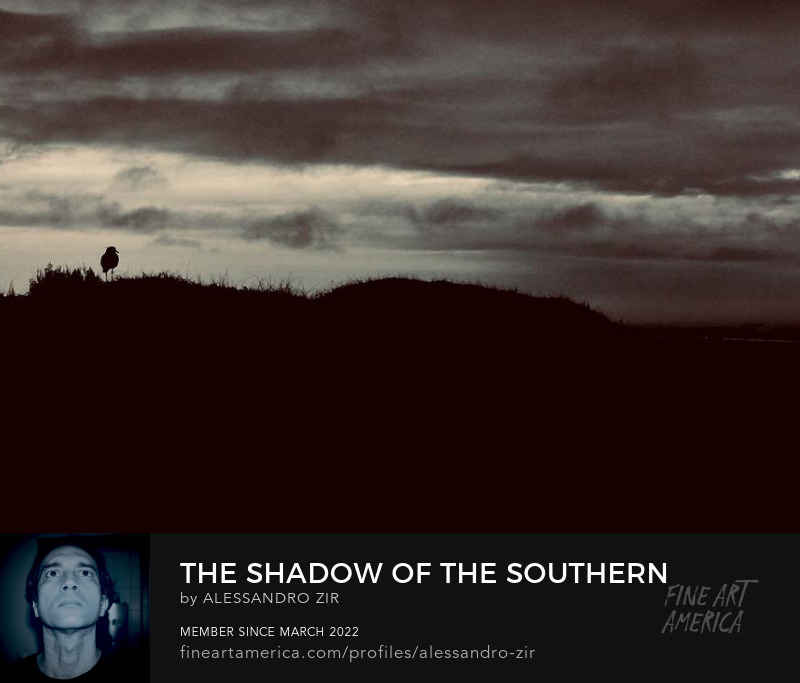

The Shadow of the Southern Lapwing, photograph by A/Z available with other photographs and drawings ad Fine Art America;
other pictures of the Southern Lapwing (taken by A/Z) and pictures of James Joyce (taken from the Internet);
A Suavidade do Vento/Cristovão Tezza (AZ Youtube);
O Caso Morel/Rubem Fonseca (AZ Youtube);
"James and Margaret got up at midnight to see their mother's ghost, and Margaret thought she saw her in the brown habit in which she was buried."
Richard Ellmann
"I hear my father talking to me. I wonder where he is."
Herr Satan/Dear Cuckold (to Maria Jolas)
"Qu'est-ce qu'un expert, quand il s'agit de Joyce, voilà ma question..."
Jacques Derrida
"... mais lui il est catholique, il n'est pas pascatholique."
Hélène Cixous (Portrait de Jacques Derrida en Jeune Saint Juif)
"No doubt the incongruity of making his good Dubliner a Jew, and one so indifferent to all religious forms as to have sampled (without accepting) both Protestantism and Catholicism, attracted him with its satirical possibilities."
Richard Ellmann
"... em Ulysses e Finnegans Wake, a epifania atingirá mecanismos da palavra e até os da letra... a técnica epifânica se incorporou na sua linguagem, Joyce não precisou mais falar nela. Não porque a repudiasse..."
Olga de Sá
"... c'est d'une parole en l'air qu'il nous a dite, d'un 'Vous devriez venir à Balbec,' que toute notre vie et notre oeuvre sont sorties."
Marcel Proust (le narrateur)
"Now, despite the jobbing of bigots and of their sectarian publishing houses, and despite the 'Fly-Fishers' and the types which they represent, and despite the unwillingness of the print-packers (a word derived from pork-packers) and the initial objections of the Dublin publishers, Mr Joyce's novel appears in book form, and intelligent readers gathering few by few will read it, and it will remain a permanent part of English literature—written by an Irishman in Trieste and first published in New York City..."
Ezra Pound (At last the novel appears)
"To begin with matters lying outside dispute I should say that Joyce has taken up the art of writing where Flaubert left it. In Dubliners and The Portrait he had not exceeded the Trois Contes or L'Education; in Ulysses he has carried on a process begun in Bouvard et Pécuchet; he has brought it to a degree of greater efficiency, of greater compactness; he has swallowed the Tentation of St. Antoine whole, it serves as comparions for single episode in Ulysses."
"Messrs Bouvard and Pécuchet are the basis of democracy; Bloom also is the basis of democracy; he is the man in the street, the next man, the public, not our public, but Mr. Wells' public; for Mr Wells he is Hocking's public, he is l'homme moyen sensuel; he is also Shakespeare, Ulysses, The Wandering Jew, the Daily Mail reader, the man who believes what he sees in the papers, Everyman, and 'the goat'..."
"Joyce's characters not only speak their own language, but they think their own language."
"Rabelais himself rests, he remains, he is too solid to be diminished by any pursuer; he was a rock against the follies of his age; against ecclesiastic theology, and more remarkably against the blind idolatry of the classics just coming into fashion. He refused the lot, lock, stock, and barrel, with a greater heave than Joyce has yet exhibited; but I can think of no other prose author whose proportional status in pan-literature is not modified by the advent of Ulysses."
Ezra Pound (Paris Letter)
"There was a lady from Philadelphia who was an authority on Buddhist art. When she found out I was interested in mushrooms, she said, 'Have you an explanation of the symbolism involved in the death of the Buddha by his eating a mushroom?' I explained that I'd never been interested in symbolism; that I preferred just taking things as themselves, not as standing for other things. But them a few days later while rambling in the woods I got to thinking. I recalled the Indian concept of the relation of life and the seasons. Spring is Creation. Summer is Preservation. Fall is Destruction. Winter is Quiescence. Mushrooms grow most vigorously in the fall, the period of destruction, and the function of many of them is to bring about the final decay of rotting material. In fact, as I read somewhere, the world would be an impassible heap of old rubbish were it not for mushrooms and their capacity to get rid of it. So I wrote to the lady in Philadelphia. I said, 'The function of mushrooms is to rid the world of old rubbish. The Buddha died a natural death.'"
John Cage (Edgard Varèse)
**************************************************************
About Ulysses:
"... it is Bolshevism, experimental, anti-conventional, anti-Chistian, chaotic, totally unmoral!"
"Joyce's advice to his Aunt Josephine: 'You say there is a lot of it you don't understand. I told you to read the Odyssey first... Then buy at once the Adventures of Ulysses."
Dates:
"1889... takes Aloysius as his saint's name. Given four strikes on the back of the hand with a pandybat for use of 'vulgar language'."
Dates:
"1889... takes Aloysius as his saint's name. Given four strikes on the back of the hand with a pandybat for use of 'vulgar language'."
"1900... delivers paper defending the attention paid to mundane life in contemporary drama (especially Ibsen)."
"1902... delivers paper praising the Irish poet James Clarence Mangan and advocating literature as 'the continual affirmation of the spirit'."
"1916... writes 'A Notebook of Dreams'—'record' of Nora's dreams with James Joyce's interpretations."
"1933... Judge John M. Woolsey, US District Court, delivers opinion that Ulysses is not obscene and can be published in the USA."
"1934... Lucia under the care of Carl Jung."
Quotes:
"God, these bloody English. Bursting with money and indigestion. Because he comes from Oxford... you have the real Oxford manner." (Buck Mulligan)
"What is a ghost?" (Stephen Dedalus)
"If the shrew is worsted yet there remains to her woman's invisible weapon. There is, I feel in the words, some goad of the flesh driving him into a new passion, a darker shadow of the first, darkening even his own understanding of himself. A like fate awaits him and the two rages commingle in a whirlpool." (Stephen Dedalus)
"They are sundered by a bodily shame so steadfast that the criminal annals of the world, stained with all other incests and bestialities hardly record its breach. Sons with mothers, sires with daughters, lesbic sisters, loves that dare not speak their name, nephews with grandmothers, jailbirds with keyholes, queens with prize bulls." (Stephen Dedalus)
"William, in the plays... as a painter of old Italy set his face in a dark corner of his canvas... What's in a name? That is what we ask ourselves in childhood when we write the name that we are told is ours. A star, a daystar, a firedrake rose at his birth... the recumbent constellation which is the signature of his initial among the stars. His eyes watched it, lowlying on the horizon, eastward of the bear, as he walked by the slumberous summer fields at midnight..." (Stephen Dedalus)
"They drove his wits astray by visions of hell." (Buck Mulligan)
"They drove his wits astray by visions of hell." (Buck Mulligan)
"Married to the greasy nose!" (Miss Douce)
"O, Miss Douce! You horrid thing!" (Miss Kennedy)
"And I belong to a race too that is hated and persecuted. Also now. This very moment. This very instant... Plundered. Insulted. Persecuted. Taking what belongs to us by right... I'm talking about injustice." (Leopold Bloom)
"... the opposite of hatred." (Leopold Bloom)
"... the opposite of hatred." (Leopold Bloom)
"O my! Puddeny pie! He has his bib destroyed." (Cissy Caffrey)
"Pornosophical philotheology. Metaphysics in Mecklenburg street!" (Lynch)
"They make you kaput, Leopoldleben. You watch them chaps." (Rudolf Bloom)
"Sacred Heart of Mary, where were you at all, at all?" (Ellen Bloom)
"Glory Alice, you do look a holy show!" (Mrs Breen)
"The dear dead days beyond recall." (Mrs Breen)
"I'm as staunch a Britisher as you are, sir. I fought with the colours for king and country in the absentminded war under general Gough in the park and was disabled at Spion Kop and Bloemfontein..." (Leonard Bloom)
"Are you of the unfortunate class?" (Second Watch)
"He addressed me in several handwritings with fulsome compliments as a Venus in furs and alleged profound pity for my frostbound coachman Palmer while in the same breath he expressed himself as envious of his earflaps and fleecy sheepskins and of his fortunate proximity to my person..." (Mrs Bellingham)
"You are a credit to your country, sir, that's what you are." (An Old Resident, also Woody Allen's Splendini)
"I'm a Bloomite and I glory in it." (The Veiled Sibyl)
"The hand that rocks the cradle." (Leopold Bloom)
"One two tlee: tlee tlwoe tlone." (Leopold Bloom)
"Death is the highest form of life." (The Cap)
"(Explodes in laughter) Great unjust God!" (Zoe)
"Safe arrival of Antichrist." (The Newboys)
"What?" (All)
"... in the end the world without end." (Stephen Dedalus)
"Serpents too are gluttons for woman's milk. Wind their way through miles of omnivorous forest to sucksucculent her breast dry." (Leopold Bloom)
"Instinct rules the world. In life. In death." (Leopold Bloom)
"Will some pleashe pershon not now impediment so catastrophics mit agitation of firstclass tablenumpkin?" (Virag Lipoti)
"Quack!" (Virag's Head)
"Exuberant female. Enormously I desiderate your domination. I am exhausted, abandoned, no more young." (Leopold Bloom)
"Dungdevourer!" (Bello)
"You were a nicelooking Miriam when you clipped off your backage hairs and lay swooning in the thing across the bed as Mrs Dandrade, about to be violated by Liutenant Smythe-Smythe, Mr Philip Augustus Blockwell, M. P., Signor Laci Daremo, the robust tenor, blueeyed Bert, the liftboy, Henry Fleury of Gordon Bennett fame, Sheridan, the quadroon Croesus, the varsity wetbob eight from old Trinity, Ponto, her splendid Newfoundland and Bobs, dowager duchess of Manorhamilton." (Bello)
"I cure fits or money refunded." (The Nymph)
"We grew by Poulaphouca waterfall. We gave shade on languorous summer days." (The Yews)
"Done. Prff!" (Leopold Bloom)
"Give me back that potato, will you?" (Leopold Bloom)
"I have a little private business with your wife. You understand?" (Blazes Boylan)
"(Horrorstruck) Lemur, who are you?" (Stephen Dedalus)
"The corpsechewer!" (Stephen Dedalus)
"I'll bring you all to heel!" (Stephen Dedalus)
"He expresses himself with much marked refinement of phraseology." (Biddy the Clap)
"Let my country die for me." (Stephen Dedalus)
"Introibo ad altare diaboli." (Father Malachi O'Flynn)
"Htengier Lnetopinmo Dog Drol eht rof, Aiulella!" (The Voice of all the Damned)
"Dooooooooooog!" (Adonai)
"Ute ute ute ute ute ute ute ute." (The Retriever)
"Hohohohohohoh Hohohohome! (The Horse)
"... like me, though in reality I'm not." (Leopold Bloom)
"What a pity the government did not supply our men with wonderworkers during the South African campaign! What a relief it would have been!" (Absentminded beggar)
"Who was M'Intosh?" (Leopold Bloom)
"Where was Moses when the candle went out?" (Leopold Bloom)
Thoughts/Visions:
"Silently, in a dream she had come to him after her death, her wasted body within its loose brown graveclothes giving off an odour of wax and rosewood..." (Stephen Dedalus)
"Ghostly light on the tortured face." (Stephen Dedalus)
"An elderly man shot up near the spur of rock a blowing red face. He scrambled up by the stones, water glistening on his pate and on its garland of grey hair, water rilling over his chest and paunch and spilling jets out of his black sagging loincloth."
"... and in my mind's darkness a sloth of the underworld, reluctant, shy of brightness, shifting her dragon scally folds." (Stephen Dedalus)
"... and on a heath beneath winking stars a fox, red reek of rapine in his fur, with merciless bright eyes scraped in the earth, listened, scraped up the earth, listened, scraped and scraped." (Stephen Dedalus)
"Around the slabbed tables the tangle of wined breaths and grumbling gorges. His breath hangs over our saucestained plates, the green fairy's fang thrusting between his lips." (Stephen Dedalus)
"A bloated carcase of a dog lay lolled on bladderwrack. Before him the gunwale of a boat, sunk in sand. Un coche ensablé, Louis Veuillot called Gautier's prose. These heavy sands are language tide and wind have silted here." (Stephen Dedalus)
"Behold the handmaid of the Moon. In sleep the west sign calls her hour, bids her rise. Bridebed, childbed, bed of death, ghostcandled. Omnis caro ad te veniet. He comes, pale vampire, through storms his eyes, his bat sails bloodying the sea, mouth to her mouth's kiss." (Stephen Dedalus)
"Under the upswelling tide he saw the writhing weeds lift languily and sway reluctant arms, hising up their petticoats, in whispering water swaying and upturning coy silver fronds... they are weary." (Stephen Dedalus)
"The cat mewed in answer and stalked again stiffly round a leg of the table, mewing. Just how she stalks over my writingtable. Prr. Scratch my head. Prr." (Leopold Bloom)
"Out it rushes: blue. One whiff of that and you're a goner." (Leopold Bloom)
"Love among the tombstones. Romeo. Spice of pleasure. In the midst of death we are in life. Both ends meet." (Leopold Bloom)
"Chinese cemeteries with giant poppies growing produce the best opium..." (Leopold Bloom)
"Gentle sweet air blew round the bared heads in a whisper. Whisper. The boy by the gravehead held his wreath with both hands staring quietly in the black open space." (Leopold Bloom &/or the Narrator/Arranger)
"An obese grey rat toddled along the side of the crypt, moving the pebbles." (Leopold Bloom)
"Pyramids in sand. Built in bread and onions." (Leopold Bloom)
"There he is: the brother. Image of him. Haunting face. Now that's a coincidence. Course hundreds of times you think of a person and don't meet him. Like a man walking in his sleep." (Leopold Bloom)
"Coming events cast their shadows before." (Leopold Bloom)
"Mawkish pulp her mouth had mumbled sweet and sour with spittle. Joy: I ate it: joy. Young life, her lips that gave me pouting. Soft, warm, sticky gumjelly lips. Flower her eyes were, take me, willing eyes. Pebbles fell. She lay still. A goat." (Leopold Bloom)
"... woman's breasts full in her blouse of nun's veiling, fat nipples upright..." (Leopold Bloom)
"Stuck, the flies buzzed." (Leopold Bloom)
"Seabedabbled, fallen, weltering. Lapwing you are. Lapwing be." (Stephen Dedalus)
"She dances in a foul gloom where gum burns with garlic. A sailorman, rustbearded, sips from a beaker rum and eyes her. A long and seafed silent rut. She dances, capers, wagging her sowish hauches and her hips, on her grow belly flapping a ruby egg." (Stephen Dedalus)
"She will drown me with her, eyes and hair. Lank coils of seaweed hair around me, my hear, my soul. Salt green death." (Stephen Dedalus)
"His face got all grey instead of being red like it was and there was a fly walking over it up to his eye." (Master Dignam)
"Chords dark. Lugugugubrious. Low. In a cave of the dark middle earth. Embedded ore. Lumpmusic." (Leopold Bloom)
"Body of white woman, a flute alive. Blow gentle. Loud. Three holes all..." (Leopold Bloom)
"The man in the brown macintosh loves a lady who is dead." (Arranger)
"He was eying her as a snake eyes its prey." (Gerty MacDowell)
"Edy had her own quiet way of saying things like that she knew would wound like the confounded little cat she was." (Gerty MacDowell)
"... a bat flew forth from the ivied belfry through the dusk, hither, thither, with a tiny lost cry." (Gerty MacDowell)
"Back of everything magnetism." (Leopold Bloom)
"Hanging by his heels in the odour of sanctity." (Leopold Bloom)
"Howth settled for slumber tired of long days, of yumyum rhododendrons (he was old) and felt gladly the night breeze lift, ruffle his fell of ferns. He lay but opened a red eye unsleeping, deep and slowly breathing, slumberous but awake." (Leopold Bloom &/or arranger)
"Bottle with story of a treasure in it thrown from a wreck." (Leopold Bloom)
"Bottle with story of a treasure in it thrown from a wreck." (Leopold Bloom)
"The adiaphane in the noon of life is an Egypt's plague which in the nights of prenativity and postmortemity is their most proper ubi and quomodo." (Stephen Dedalus)
"In terror the poor girl flees away through the murk. She is the bride of darkness, a daughter of night... There is none now to be for Leopold, what Leopold was for Rudolph. (Leopold Bloom &/or arranger)
"Parallax stalks behind and goads them, the lancinating lightnings of whose brow are scorpions." (Leopold Bloom/ Stephen Dedalus &/or arranger)
"She leads him towards the steps, drawing him by the odour of her armpits, the vice of her painted eyes, the rustle of her slip in whose sinuous folds lurks the lion reek of all the male brutes that have possessed her." (Arranger &/or Leopold Bloom)
"Round and round a moth flies, colliding, escaping." (Arranger &/or Leopold Bloom)
"And a prettier, daintier head of winsome curls was never seen on a whore's shoulders." (Arranger &/or Stephen Dedalus/ Leopold Bloom)
"And a prettier, daintier head of winsome curls was never seen on a whore's shoulders." (Arranger &/or Stephen Dedalus/ Leopold Bloom)
"Bello grabs her hair violently and drags her forward." (Arranger &/or Leopold Bloom/ Stephen Dedalus)
"Mute inhuman faces throng forward, leering, vanishing, gibbering, Booloohoom." (Arranger &/or Leopold Bloom/ Stephen Dedalus)
"Mute inhuman faces throng forward, leering, vanishing, gibbering, Booloohoom." (Arranger &/or Leopold Bloom/ Stephen Dedalus)
"Whispered kisses are heard in all the wood. Faces of hamadryads peep out from the boles and among the leaves and break blossoming into bloom." (Arranger &/or Leopold Bloom/ Stephen Dedalus)
"She fixes her bluecircled hollow eyesockets on Stephen and opens her toothless mouth uttering a silent word." (Stephen Dedalus)
"A green crab with malignant red eyes sitcks deep its grinning claws in Stephen's heart." (Stephen Dedalus)
"Time's livid final flame leaps and, in the following darkness, ruin of all space, shattered glass and toppling masonry." (Stephen Dedalus)
"A violent erection of the hanged sends gouts of sperm spouting through his death clothes on to the cobblestones." (Stephen Dedalus/ Leopold Bloom &/or arranger)
"Old Gummy Granny in sugarloaf hat appears seated on a toadstool, the deathflower of the potato blight on her breast." (Stephen Dedalus/ Leopold Bloom &/or arranger)
"Pandemonium... The midnight sun is darkened... Laughing witches in red cutty sarks ride through the air on broomsticks.... It rains dragon's teeth." (Stephen Dedalus/ Leopold Bloom &/or arranger)
"The Reverend Mr Haines Love raises high behind the celebrant's petticoats, revealing his grey bare hairy buttocks between which a carrot is stuck." (Stephen Dedalus/ Leopold Bloom &/or arranger)
"Against the dark wall a figure appears slowly, a fairy boy of eleven, a changeling, kidnapped, dressed in an Eton suit with glass shoes and a little bronze helmet, holding a book in his hand. He reads from right to left inaudibly, smiling, kissing hte page." (Leopold Bloom)
"... as she also was Spanish or half so, types that wouldn't do things by halves, passionate abandon of the south, casting every shred of decency to the winds." (Leopold Bloom)
"... from existence to nonexistence gone he would be by all as none perceived." (Arranger &/or Leopold Bloom)
"To knock or not to knock." (Arranger &/or Leopold Bloom)
"Unsmiling, he heard and saw with wonder a jew's daughter, all dressed in green." (Arranger &/or Leopold Bloom)
"... theres nothing like a kiss long and hot down to your soul almost paralyses you..." (Molly Bloom)
"... he was very handsome at that time trying to look like lord Byron I said I liked though he was too beautiful for a man..." (Molly Bloom)
"... I hate an unlucky man..." (Molly Bloom)
"... you cant get on in this world without style..." (Molly Bloom)
"... when I came to page 50 the part about where she hangs him up out of a hook with a cord flagellate sure theres nothing for a woman in that all invention made up about he drinking the champagne out of her slipper..." (Molly Bloom)
"... titties he calls them I had to laugh yes..." (Molly Bloom)
"... I don't like books with a Molly in them..." (Molly Bloom)
"... I wish somebody would write me a loveletter... true or not it fills up your whole day..." (Molly Bloom)
"... after I tried with the Banana but I was afraid it might break and get lost up in me somewhere..." (Molly Bloom)
"... I tortured the life out of him... his eyes shut and a bird flying below us..." (Molly Bloom)
"... my mother whoever she was might have given me a nicer name the Lord knows after the lovely one she had Lunita Laredo..." (Molly Bloom)
"... I wouldn't mind being a man and get up on a lovely woman..." (Molly Bloom)
"... theyve money of course so theyre all right I wouldnt marry him not if he was the last man in the world besides theres something queer about their children always smelling around..." (Molly Bloom)
"... for the one thing he slept on the floor half the night naked the way the jews used when somebody dies belonged to them..." (Molly Bloom)
"... and Fanny M Coys husband white head of cabbage skinny thing with a turn in her eye trying to sing my songs shed want to be born all over again and her old green dress..." (Molly Bloom)
"... her window weeds wont improve her appearance..." (Molly Bloom)
"... he insisted hed go into mourning for the cat..." (Molly Bloom)
"... those fine young men I could see down in Margate strand bathing place from the side of the rock standing up in the sun naked like a God or something and then plunging into the sea with them why arent all men like that thered be some consolation for a woman..." (Molly Bloom)
"... there so simple I wouldnt mind taking him in my mouth if nobody was looking..." (Molly Bloom)
"... when do you ever see women rolling around drunk like they do or gambling every penny they have... a woman whatever she does she knows where to stop..." (Molly Bloom)
"... no wonder they treat us the way they do we are a dreadful lot of bitches..." (Molly Bloom)
"... that his wife is fucked yes and damn well fucked too up to my neck..." (Molly Bloom)
***All quotations here come from the Ulysses the 1922 text, edited by Jeri Johnson (Oxford, 1993).
On Nationalism:
"Nationality (if this is not really a useful fiction like many others which the scalpels of the present-day scientists have put paid to) must find its basic reason for being in something that surpasses, that transcends and that informs changeable entities such as blood or human speech. The mystic theologian who assumed the pseudonym of Dionysius the Areopagite said somewhere that ‘God has arranged the limits of the nations according to his angels’ and this is probably not purely a mystic concept. In Ireland we can see how the Danes, the Firbolgs, the Milesians from Spain, the Norman invaders, the Anglo-Saxon colonists and the Huguenots came together to form a new entity, under the influence of a local god, one might say."
"I find a bit naïve to heap insults on the Englishmen for his misdeeds in Ireland. A conqueror cannot be amateurish, and what England did in Ireland over the centuries is no different from what the Belgians are doing today in the Congo Free State..."
James Joyce, "Ireland: Island of Saints and Sages."
"All the Anglo-Saxon soul is in Crusoe: virile independence, unthinking cruelty, persistence, slow yet effective intelligence, sexual apathy, practical and well-balanced religiosity, calculating dourness."
James Joyce, "Realism and Idealism in English Literature."
On Oscar Wilde:
"Anyone who follows closely the life and language of men, whether in a soldier’s barracks or in a large office of commerce, will hesitate to believe that all those who cast stones at Wilde were themselves without blemish. In fact, everyone feels reluctant in speaking with others on this subject fearing that his listener might know more about it than himself."
"Wilde assimilation of other natures alien to his own, such as those of the delinquent and the humble... is the true inherent in the spirit of Catholicism: that men cannot reach the divine heart except across that sense of separation and loss that is called sin."
James Joyce, "Oscar Wilde: The Poet of Salomé."
On Blake:
"Blake, like many other man of great genius, was not attracted by cultivated and refined woman. Either he preferred simple women with sensual and nebulous mind… or the demon hidden in a cloud."
"Elementary beings and the spirits of deceased great men would often enter the poet’s room at night to speak to him about art and the imagination… Ought we to be amazed that the symbolic beings Los, Urizen, Vala, Tiriel, and Enitharmon and the shades of Homer and Milton should come from their ideal world into a poor room in London, or that the incense that greeted their coming was the smell of Indian tea and eggs fried in lard?"
"If we were to lay a charge of madness against every great genius who does not share the science undergraduate’s fatuous belief in headlong materialism now held in such high regard, little would remain of world art and history."
James Joyce, "Realism and Idealism in English Literature."
On Mangan:
"Mangan obtained a position as assistant librarian in the huge library of Trinity College Dublin… Mangan passed his days studying in this library, becoming a reasonably accomplished linguist. He was well familiar with the Italian, Spanish, French and German languages and literatures, besides those of Ireland and England and, it would seem, had some knowledge of oriental languages, probably Sanskrit and Arabic."
"I understand that pathologists deny the possibility of combining the delights of alcohol and opium, and it seems that Mangan was soon convinced of this fact, for he dedicated himself unremittingly to filling himself with narcotics. Mitchel tell us how Mangan looked like a living skeleton towards the end of his life. His face was fleshless, barely covered by a translucent skin, like fine porcelain, his body wasted. His eyes, behind which shone rare glimmers which seemed to hide the horrendous, voluptuous memory of his visions, were dreaming, large and staring; his voice was drawling, faint and sepulchral… So lived and died the man who I consider the most distinguished poet of the modern Celtic world and one of the most inspired poets of any country ever to make use of the lyric form."
James Joyce, "James Clarence Mangan."
***To raise the dead— &/or evidence for the villainous affair, the tale of family disonour, Romish church's pact with the devil (considered the greatest outrage against sense and decency, to be plagued and pestered, though solemnly ratified, à Dieu rien n'est impossible, menteur avéré, nom d'un chien):
"Although Greek names were sometimes applied to the church modes and the principle of diatonic octave scales is found in both systems, certain significant discrepancies seem to belie any direct historical connection. Most conspicuous is the different meaning attributed to the names of the Greek octave species and of the church modes. Comparing the two systems provides a plausible explanation: medieval theorists apparently assumed wrongly that the Greek octave species were named in ascending rather than descending order. The Greek octave species Dorian (E–E), Phrygian (D–D), Lydian (C–C), and Mixolydian (B–B) thus appeared in the church modes as Dorian (D–D), Phrygian (E–E), Lydian (F–F), and Mixolydian (G–G)," (from "Mode," entry in Brittanica, by Mieczyslaw Kolinski);
See also:
And also:


