"He was delicate; he had mischievous moods; he could play. He carried his rag doll about him for company until he was eight. He was fond of grumbling."
The New Saying
"Não estou aprendendo lições senão da vida."
Clarice Lispector
"... le génie est le meneur de jeu en personne... Peut-être est-il aujourd'hui même dans un endroit auquel on ne pense guère. Car c'est souvent un hérétique aux yeux du dogme. L'école ferait bien de le garder comme un secret dans une chambre close... un mage! Il faudrait donner un cours en dehors du complexe scolaire... construction du secret."
Paul Klee (traduction par Pierre-Henri Gonthier)
"Daniela, telefonando de Londres, ficou horrorizada. Achou que eu tivesse me convertido a algum novo tipo de religião."
Gerald Thomas
"... there is a critical blindspot. The more intently we look for the answer in terms of the grid, the more impossible the task becomes."
Thomas P. Kasulis
"Nietzsche critique Darwin, parce que celui-ci interprète l'évolution, et même le hasard dans l'évolution, d'une manière toute réactive. Il admire Lamarck, parce que Lamarck a pressenti l'existence d'une force plastique vraiment active..."
Gilles Deleuze
"Quand comme moi on répond par l'affirmative on est bien obligé de détester d'abord le marxisme puisque ses bases sont uniquement rationalistes."
André Masson (Lettre à Georges Bataille, 6 octobre 1935)
"Si j'insiste autant c'est pour bien affirmer que je ne peux m'intéresser à aucune activité intellectuelle qui ne dénoncera pas d'abord l'activité inconsidérée des sciences dites exactes..."
André Masson (Lettre à Georges Bataille, 8 novembre 1935)
"... cette force d'inertie dont tout le monde parle à mots couverts, et qui n'est jamais devenue si obscure que depuis que toute la terre et la vie présente se sont mêlées de l'élucider..."
Artaud
"... la dromosphère d'accélération se substituant, in extremis, à la noosphère des élus de Dieu d'un Teilhard de Chardin, lui-même victime du grand lavage de cerveau de la propagande du Progrès..."
Paul Virilio (Le Grand Accelerateur)
"O dr. Antônio Álvares dos Santos, médico-adjunto do exército que acompanhava a expedição, enlouqueceu."
Euclides da Cunha (Caderneta de Campo)
"Remember, the sixties counterculture was centered on the campuses. Berkeley. Kent State. Columbia. Madison. Austin. Boulder. Seattle. In the 1980s, however, the colleges, the source of our future, have seethed with rest."
"At this point it dawned on me that this clinic, supposedly set up to deal with sexual arousal, was the most antiseptic, mechanical, unerotic place I had ever encountered. I could feel my reservoir of sexual desire rapidly draining away. If I didn't have an erection problem before, I was very likely to catch one in here. This place could make Casanova take a vow of chastity."
Timothy Leary
"Why, when he himself was pointing to serious flaws related to the fundamental assumptions, did he want to teach this nonsense? His response was that there were two reasons: the first was "P.E." "P.E.?" I asked. "What is P.E.? Population explosion? Punctuated equilibrium? Physical education?" "No," he replied, "P.E. is 'physics envy,'" which is a syndrome in which scientists in other disciplines yearn for the mathematically explicit models of physics. His second reason was even more insidious: if he didn't couch his studies in the neo-Darwinist thought style (archaic and totally inappropriate language, in my opinion), he wouldn't be able to obtain grant money that was set up to support this kind of work."
"In fact, this method of treatment has been largely neglected. Apomorphine is a metabolic and psychic regulator that can be discontinued as soo as it has done its work. The world is deluged with tranquilizers and energizers but htis unique regulator has not received attention."
"'Defense is meaningless in the present state of our knowledge,' said The Defense looking up from an electron microscope."
William S. Burroughs
"Há, por pura preguiça intelectual, uma resistência confortável no mundo científico que pesquisa 'medicamentos' para curar doenças humanas torturando cobaias. Em pleno terceiro milênio, ei-los injetando xampu nos olhos de ratinhos para descobrirem a fórmula do antialérgico equivalente. Mexam a bunda, senhores doutores, há mais soluções alternativas entre o céu e a terra do que sonham vossas vãs cegueiras."
Rita Lee
"Les travaux qui me valent la bienveillante attention de l’Académie royale datent d’il y a vingt-cinq ans, d’une époque où je faisait partie du milieu scientifique et où je partageais pour l’essentiel son esprit et ses valeurs. J’ai quitté ce milieu en 1970 et, sans renoncer pour autant à ma passion pour la recherche scientifique, je me suis éloigné intérieurement de plus en plus du milieu des scientifiques." "Or, dans les deux décennies écoulées l’éthique du métier scientifique (tout au moins parmi des mathématiciens) s’est dégradée à un degré tel que le pillage pur et simple entre confrères (et surtout aux dépens de ceux qui ne sont pas en position de pouvoir se défendre) est devenu quasiment une règle générale, et qu’il est en tout cas toléré par tous, y compris dans les cas les plus flagrants et les plus iniques." "Dans ces conditions, accepter d’entrer dans le jeu des prix et des récompenses serait aussi donner ma caution à un esprit et à une évolution, dans le monde scientifique, que je reconnais comme profondément malsains, et d’ailleurs condamnés à disparaître à brève échéance tant ils sont suicidaires spirituellement, et même intellectuellement et matériellement." "C’est cette troisième raison qui est pour moi, et de loin, la plus sérieuse. Si j’en fais état, ce n’est nullement dans le but de critiquer les intentions de l’Académie royale dans l’administration des fonds qui lui sont confiés. Je ne doute pas qu’avant la fin du siècle des bouleversements entièrement imprévus vont transformer de fond en comble la notion même que nous avons de la « science », ses grands objectifs et l’esprit dans lequel s’accomplit le travail scientifique. Nul doute que l’Académie royale fera alors partie des institutions et des personnages qui auront un rôle utile à jouer dans un renouveau sans précédent, après une fin de civilisation également sans précédent…" "Je suis désolé de la contrariété que peut représenter pour vous-même et pour l’Académie royale mon refus du prix Crafoord, alors qu’il semblerait qu’une certaine publicité ait d’ores et déjà été donnée à cette attribution, sans l’assurance au préalable de l’accord des lauréats désignés. Pourtant, je n’ai pas manqué de faire mon possible pour donner à connaître dans le milieu scientifique, et tout particulièrement parmi mes anciens amis et élèves dans le monde mathématique, mes dispositions vis-à-vis de ce milieu et de la « science officielle » d’aujourd’hui."
"There is always money for, there are always doctorates in, the learned foolery of research into what, for scholars, is the all-important problem: Who influenced whom to say what when? ...But when it comes to finding out how you and I, our children and grandchildren, may become more perceptive, more intensely aware of inward and outward reality, more open to Spirit, less apt, by psychological malpractices, to make ourselves physically ill, and more capable of controlling our own autonomic nervous system... no really respectable university or church will do anything about it...
Besides, this matter of education in the non-verbal humanities will not fit into any of the established pigeonholes. It is not religion, not neurology, not gymnastics, not morality or civics, not even experimental psychology. This being so the subject is, for academic and ecclesiastical purposes, non-existent and may safely be ignored altogether or left, with a patronizing smile, to those whom the Pharisees of verbal orthodoxy call cranks, quacks, charlatans and unqualified amateurs," Aldous Huxley, The Doors of Perception.
By "non-verbal humanities," Huxley means investigations possibly related to traditional academic disciplines such as philosophy, history, the study of literature, painting etc., but not hampered by the many conceptual systems and "notions" that hinder, for the only benefit of the monopoly of academic priesthoods, direct experience of reality as a Bergsonian living field of interconnected intensities. (It is through Henri Bergson that Huxley makes sense of his experience with mescaline. Bergson comes second only to William Blake in terms of importance to Huxley's essay.)
Huxley criticism of universities and churches is fair and even more valuable now than when he wrote it. The only (but serious) problem with this essay is Huxley understanding of art mainly in terms of "symbols," as if a painting or a madrigal would have to "stand for" other things.
What Cézanne and Alban Berg do is definitely more than merely representing things. And in "Heaven and Hell," Huxley recognizes that "in nature, as in a work of art, the isolation of an object tends to invest it with absoluteness, to endow it with that more-than-symbolic meaning which is identical with being." He also tempers his criticism of Modern art: "Looking at Ny, Ny, I was amazed to see that every pictorial device invented by the old masters of non-representational art and reproduced ad nauseam by the academicians and mannerists of the school, for the last forty years or more, makes its appearance, alive, glowing, intensely significant, in the sequences of Mr. Thompson's film."
"... historians of science have suggested that... the military spirit is identifiable even in the pragmatic and instrumentalist attitude toward high-energy physics that characterized many American theorists" (Kragh, Quantum Generations);
"... one of the effects of the new kind of big science was a marked shift of the role of the physicist, from an individual researcher to a small wheel in a collective research effort. It was a shift that many physicists of the old school deplored. One of them was Percy Bridgman, the Nobel laureate and philosopher of science, who argued that the new style of physcis was detrimental to creative ideas and intellecutal freedom... this was a critique to be repeated and reinforced by a younger generation of physicists" (Kragh, Quantum Generations);
"Ehrenfeld meanwhile went on publishing all his observations, which continued to show a far greater variability than Milikan's selected data. Ehrenfeld was disregarded while Milikan won the Nobel Prize..." (Rupert Sheldrake, Seven Experiments that Could Change the World);
"Peer review and refereeing procedures act as important quality checks, and are no doubt often effective, but they have a built-in bias. They tend to favor prestigious scientists and institutions" (Sheldrake, Seven Experiments);
"We have become a scientific society. This society has produced all sorts of discoveries and technology, but if it leads to destruction, either through war or through devastation of natural resources, then it will have been the least successful society that ever existed" (David Bohm, interviewed by David Peat);
"It seemed that physics did not have as much meaning as I thought it had. It turned out to be not so different from, let us say, business. A businessman does whatever will please his customers and get him money, get him whatever he wants. A lot of physicists seem to be in that boat. They found out what was wanted and did it and hoping thereby to gain various advantages" (David Bohm, conversation with Maurice Wilkins);
"I remember when I got back to Europe from Israel, I came in the summer of ‘56, and I met this fellow... whom I had known fairly well in America. He began to talk about my ideas and he took me aside one day and said, “You know, you better not talk so freely about your ideas, that people will steal them.” The point is that the people became more interested in using ideas to get ahead to get ahead and to gain advantages... This is the way I can get a job and get ahead and make it security and win a Nobel Prize and whatever" (David Bohm, conversation with Maurice Wilkins);
"And then I was going to say, at the university I was a little bit disappointed in the teachers there because in the first two years I wanted to ask questions about relativity and about quantum mechanics and about the foundations of these subjects, but I was kept being told not to worry about all that but to pass the exams — so, I was very disappointed until the last year as an undergraduate... at school we had a good physics master and he always was willing for me to talk about all sorts of topics in physics and so it was really that interaction that inspired me. And then when I got to university I was expecting a lot more than I got" (Basil Hiley, interviewed by Olival Freire);
"... I was brought up in an atmosphere where it was generally agreed that there was something basically wrong with the ‘52 paper of Bohm. But, there was more to it than that. There was a general atmosphere in physics, that there was something, I would almost say “evil” about it, and I never understood why there was that feeling around. It seemed that if somehow you touched it and thought about it, it would corrupt your physics forever more" (Basil Hiley, interviewed by Olival Freire);
"... everybody who’s doing physics now, ninety-nine percent of them are following the tradition that is already laid down. So, where are you going to get your new ideas from? You know, new ideas are going to come from looking at different philosophical frameworks to see if there is anything in those frameworks which is the sort of thing that you can use to develop the way you’re thinking. I found reading Fichte and Schelling..." (Basil Hiley, interviewed by Olival Freire);
"... the youngsters, you know... they’re forced into a difficult job market in academia, they are sort of tailoring their research to what is expected and I think this cannot be but bad for physics in general. Now, the great thing about the research in the ‘60s and the ‘70s was, yes there was prejudice... but because there was more freedom from the constraint, the university constraints, you know (“How many publications? Which journals do you publish your papers in?”)... all this absolute nonsense that has been going on since the ‘80s and ‘90s has now stopped the creativity that we had in the ‘60s"(Basil Hiley, interviewed by Olival Freire);
"Another piece of advice I was given was, ‘Find a very, very small area in physics and then just publish about ten or fifteen papers on it; then you’ll get a reputation. Then you can go and do this other stuff.’ In fact - another little story — when I did go and spend a sabbatical with Bohm, a very senior physicist in England asked me to come visit him for a few days. He took me out to dinner one night and, very fatherly, said he wanted to give me some advice. He said he knew I was working with Bohm and that it probably wasn’t a very good thing to be doing. It would be bad for me, and really I should try to dissociate myself from him and go back to doing small pieces of physics. ‘Do small problems,’ he said. ‘That’s the way that physics is going to progress, by people doing little bits of things.’ Another person told me that his ambition was to be just a footnote in a textbook" (David Peat, interviewed by Mike Towler);
"The saddest people on Earth are junior faculty hoping to get tenure at a university, because they are forbidden to smile in public, crack jokes, or make eye contact, and they absolutely can't be seen as being even mildly interested in tabloid stories. It's the kiss of death to put one's twenty-plus years of education and training in jeopardy by being perceived as too sympathetic about controversial issues" (Dean Radin, Real Magic, p. 13);
Brian D. Josephson's critical review of BBC's program Heretic:
"For the last six weeks, BBC2 TV has been running a series called 'Heretic', detailing the responses of the scientific community to ideas generally considered unacceptable by scientists, and the treatment given to those advocating such ideas... In every case a similar story unfolded: dismissal of the claims as being nonsense or impossible, generally without any serious attempt to look at the evidence or the arguments... The sense of self-superiority of the critics in many instances was in striking contrast to the humility, integrity and sincerity manifested by workers such as Robert Jahn (an expert in rocket engineering forced to resign his position as Dean of the Faculty of Engineering at Princeton University because of this unconventional side to his research interests and, for a time, not allowed to talk about that research). Jahn became interested in psychokinesis because an undergraduate at Princeton asked if he could choose as a project the investigation of possible effects of mind on electronic circuits. Jahn assumed that there would be no such effects, but thought setting up an experiment to look for them would be a useful exercise in itself and agreed; to his considerable surprise the results were positive. These results held up under further investigation and since that time the phenomenon has been studied by Jahn and his associates in great detail and in a variety of ways. As in a number of the cases, finding out the truth was more important for Jahn than whether others would accept his discoveries and whether work in the area would advance his career. Critics of his work have been numerous, but most have been armchair ones, who have not taken the trouble to find out what the experiment actually entailed", Brian D. Josephson (Times Higher Education Supplement, 12 Aug. 1994);
'In the U.S., however, industry dug in, seeking not only to discredit the research but to cast pesticide companies as a solution to the problem. Lobbying documents and emails, many of which were obtained through open records requests, show a sophisticated effort over the last decade by the pesticide industry to obstruct any effort to restrict the use of neonicotinoids. Bayer and Syngenta, the largest manufacturers of neonics, and Monsanto, one of the leading producers of seeds pretreated with neonics, cultivated ties with prominent academics, including vanEngelsdorp, and other scientists who had once called for a greater focus on the threat posed by pesticides' (Many seeds in the U.S. come precoated with neonicotinoids, The Intercept);
'Undercover footage at the Laboratory of Pharmacology and Toxicology (LPT) near Hamburg, published by Cruelty Free International and Soko Tierschutz, shows technicians with metal prongs grabbing macaque monkeys by the neck. The monkeys are restrained by braces during testing. The footage also shows primates being handled “violently” by technicians: in one incident a monkey has its head smacked against a door frame...' (Barbaric tests on monkeys lead to calls for closure of German lab, The Guardian);
'I didn’t get the approval letter I needed from the professor that day. Instead I was given an “insider tip” that my research project would probably be evaluated by old-fashioned white men, who would likely be fascinated and impressed by cliches about a woman’s struggles in the Middle East... I left Iran to pursue an academic career where I could have better access to knowledge and collaborate with international scholars. Instead, I feel increasingly trapped in Germany... Projects which depict an oppressed, exotic other – for instance, through examinations of topics such as physical violence in Islamic rituals or the persecution of women in the middle east – tend to be well-received by lecturers and students...' (As an Iranian academic, I'm fed up of being asked to focus on poverty and oppression, The Guardian);
'Lawrence Krauss, a physicist who retired from Arizona State University, even continued defending Epstein after his 2008 conviction, telling the Daily Beast in 2011: “As a scientist I always judge things on empirical evidence and he always has women ages 19 to 23 around him, but I’ve never seen anything else, so as a scientist, my presumption is that whatever the problems were I would believe him over other people...”' (Private jets, parties and eugenics: Jeffrey Epstein's bizarre world of scientists, The Guardian);
'Even as dogs have become beloved pets in the U.S., treated as members of the family, with harsh punishments for those who abuse them, the behavior of corporate and academic entities that subject dogs to gruesome experimentations has barely changed. It’s a strange hypocrisy: Individuals may not abuse these animals, but corporations can...' (Bred do Suffer: Inside the Barbaric U.S. Industry of Dog Experimentation, The Intercept);
"In the fall of 1949, the influential scientific General Advisory Committee of the AEC recommended not to proceed with the hydrogen bomb. The majority, consisting of Oppenheimer, Conant, and Lee DuBridge (a physicist and president of Caltech) argued in ethical and political terms that the bomb was unnecessary, indeed, unwanted, because its use would involve a decision to slaughter a vast number of civilians... Fermi and Rabi agreed in the rejection of what they considered to be a danger to humanity as a whole and necessarily an evil thing considered in any light... Arthur Comton had advised hat this development should not be undertaken, primarily because we should prefer defeat in war to a victory obtained at the expense of the enourmous human disaster that would be caused... There were other and louder voices, especially that of Teller, who argued passionately for a thermonuclear crash program. During the beginning of the Cold War, his voice reached the ears of many politicians and, not surprisingly, generals and admirals... President Truman authorized the development of a superbomb based on fusion... Many of America's best physicists, including some of those (Oppenheimer, Bethe and Fermi) who had argued against the superbomb, now engaged collectively in an effort to find a way of how to construct the bomb... by 1952 a thermonuclear test device, called Mike, was ready... It took one and a half years of hard work to develop Mike into a real bomb that could be dropped from an airplane. The result was Bravo... The destructive yield was awesome, corresponding to about 15 megatons of TNT or more than 1000 times as much as the 1945 Hiroshima bomb... The Soviet Union followed quickly in the new arms race..." (Helge Kragh, Quantum Generations) [also, Donald Trump confirms US withdrawal from INF nuclear treaty, The Guardian];
'Je l’ai dit et le répète: en ces temps de mobilisation collective, nous avons tous à respecter scrupuleusement les mesures qui sont imposées. Même si on doute de celles-ci ou qu’on les trouve inadaptées, aucun d’entre nous ne peut se donner le droit de suivre sa propre idée. Cette compliance -que je n’ai cessé de prôner- m’habite inconditionnellement. Par contre, cette obéissance civile ne doit surtout pas conduire à une interdiction de penser ou de parler.'
'Un possible motif d'inquiétude en revanche est cette affirmation qu'il y aurait des personnes jeunes en quantité non négligeable atteintes de pneumonie et placées sous assistance respiratoire. Elles semblent heureusement survivre, mais évidemment que le nombre de lits en soins intensifs est le paramètre qui pose problème. C’est dans ce paradoxe compliqué entre la très grande innocuité du virus pour l'immense majorité des gens et sa dangerosité extrême dans certains cas que nous sommes trouvés coincés.'
'Raoult a relevé avec ironie qu’il n’était pas impossible que la découverte d’un nouvelle utilité thérapeutique pour un médicament tombé de longue date dans le domaine public soit décevant pour tous ceux qui espèrent un prix Nobel grâce à la découverte fracassante d’une nouvelle molécule ou d'un vaccin… sans oublier la perspective des dizaines de milliards de dollars de revenus à prendre, là où la chloroquine ne coûte littéralement rien.'
'La recherche et l’autorité médicales sont aussi souvent faites de mesquineries, de manipulations, de malhonnêtetés ou d’abus en tous genres, ainsi que de pitoyables mais violents combats d’ego. Sur BFM TV, le Dr Alain Durcadonnet cassait aussitôt du sucre sur le dos de Raoult en rappelant qu’une conclusion scientifique se publiait dans des revues scientifiques et non pas par vidéo… Ceci alors, que dans sa communication, le Pr Raoult (le chercheur français qui, rappelons-le, a le plus publié dans les revues scientifiques dans son domaine) venait évidemment de préciser que l’article décrivant son essai clinique avait été envoyé pour publication à une revue à comité de lecture.'
'La seule stratégie qui fasse sens est de dépister massivement, puis confiner les positifs et/ou les traiter, tout comme les cas à risque puisque c’est possible, comme on le voit en Chine et en Corée, qui ont intégré l’association de dépistages massifs avec la prescription de chloroquine dans leurs treatment guidelines. Ni Hong Kong ni la Corée, deux territoires qui ont connu les plus faibles taux de mortalité face au Covid-19 n’ont imposé de confinement aux personnes saines. Elle se sont simplement organisées différemment.'
'Il n’est pas dans mes habitudes d’être complaisant avec les autorités. J’ai trop souvent vu les ravages de la flatterie et de la veulerie (comme de la critique gratuite ou du procès d'intention) pour tomber dans le piège. Ici, on entend bien des critiques qui me semblent injustes. Oui, notre système de santé n’en est pas vraiment un, on a une industrie de la maladie – ce qui n’est pas pareil. Oui, nos réponses sanitaires sont incroyablement poussiéreuses et même dépassés' (Covid-19: fin de partie? Anthropo-logiques, 03/18/2020);
More on Covid-19 & the US Health System (Jeffrey Sachs):
'Our health system is focused not even first and foremost on curing disease; it’s focused first and foremost on making money. We have drugs that could stop many other epidemics now, like hepatitis C, that don’t do so, because they are priced hundreds of times more than their production costs because of the unbelievably broken system we have to give monopoly power to powerful companies, who then use their unbelievable profits, in part, to buy the Congress. So, the corruption of our political system has driven so much attention to the wrong things, away from our well-being and now even away from our survival.'
'This is a corruption of the most basic human spirit. It’s a kind of sickness that has infiltrated our public life, of now literally money before lives, money before survival. And it leads to a kind of blindness, because it’s not only cruelty that we’re seeing. We’re seeing profound ignorance. Of course, the president is the ignoramus-in-chief. He knows nothing, understands nothing. He’s a vulgar narcissist. But we have so many people in this country that know something, but where are they when Congress is spending $2 trillion? Where are the experts being listen to? Our system is broken because the greed has supplanted the basic values, and the greed has supplanted people who know what to do' (Economist Jeffrey Sachs: Trump “Understands Nothing, Listens to Nothing” as Pandemic Surges in U.S./ Democracy Now, 03/24/2020);
Covid-19 & Agriculture (Yakk Pabst & Rob Wallace):
'The increased occurrence of viruses is closely linked to food production and the profitability of multinational corporations. Anyone who aims to understand why viruses are becoming more dangerous must investigate the industrial model of agriculture and, more specifically, livestock production. At present, few governments, and few scientists, are prepared to do so. Quite the contrary.'
'When the new outbreaks spring up, governments, the media, and even most of the medical establishment are so focused on each separate emergency that they dismiss the structural causes that are driving multiple marginalized pathogens into sudden global celebrity, one after the other.'
'... Globally, and in China, wild food is becoming more formalized as an economic sector. But its relationship with industrial agriculture extends beyond merely sharing the same moneybags. As industrial production–hog, poultry, and the like–expand into primary forest, it places pressure on wild food operators to dredge further into the forest for source populations, increasing the interface with, and spillover of, new pathogens, including Covid-19.'
'The U.S. and Europe have served as ground zeros for new influenzas as well, recently H5N2 and H5Nx, and their multinationals and neocolonial proxies drove the emergence of Ebola in West Africa and Zika in Brazil. U.S. public health officials covered for agribusiness during the H1N1 (2009) and H5N2 outbreaks' (Capitalist Agriculture and Covid-19: a deadly combination/ Climate and Capitalism, 03/11/2020);
Covid-19 & le for intérieur (Julia Kristeva):
"... la mort, cette limite ultime de l’expérience humaine, se trouve occultée dans nos sociétés sécularisées... cette déferlante virale que nous venons de vivre, nous a révélé la vulnérabilité inerrante à la condition humaine, par-delà le grand âge. Je parle ici de la vulnérabilité qui est en nous, qui nous habite et que notre idéologie de la performance, et du gagnant/gagnant s’avère incapable d’assumer..."
"Cette crise sanitaire fait basculer, dit-on, le néocapitalisme libéral dans un capitalisme numérique, ce qui voudrait dire qu’il faudrait organiser le soutient budgétaire direct de l’Etat et trouver des outils numériques capables de faire du « sur mesure » pour baisser les coûts, tout en revalorisant les rémunérations de certaines professions sous-estimées, notamment dans la santé, l’éducation ou la sécurité. Etc… Mais le désastre humain qu’entraine la pandémie me semble tel, qu’il ne pourra pas se résoudre avec les seules mesures politiques, économiques et sanitaires aussi indispensables soient-elles. Nous devons de façon urgente changer de paradigme et mettre la personne au centre de notre logiciel. Aux niveaux essentiels du pacte social : éthique, éducatif, cultuel, politique."
"Alors, une brèche s’ouvre dans leur confinement. Posé sur la table ou l’oreiller du lit de l’internaute stressé et coincé, ce même objet comme oublié facilite en fait le besoin et le désir de se dénuder, de faire tomber le masque, de parler « seul à seul », « pour de vrai ». Déverrouillage de la culpabilité, du faire-semblant, des défenses mondaines s’en suivent. Chacun découvre son « d’intime/extime », « dedans /dehors » qu’il ou elle puise dans les zones fragiles de leur vie, faisant appel à la vitalité de l’analyste. En attente du vaccin, ce n’est pas un anticorps qui s’élabore ainsi, mais un véritable contrefort psychosomatique qui repousse l’effondrement fomenté par l’attaque virale et la désocialisation confinante. Une espèce d’éthique, transversale aux frontières et interdits moraux qu’elle n’ignore pas, et qu’on nomme dans notre jargon un « inter-dire » (Lacan). Pour ma part, j’appelle « reliance » cette mutualité nucléaire de la parole qui constitue l’être parlant et qu’il nous faut retrouver."
"Nous accusons les scientifiques et les politiques d’être « incertains ». Mais c’est l’abyssale incertitude des frontières entre la vie et la mort que les virus révèlent (ces parasites sont-ils des concepts, des molécules ou des êtres vivants ?) et qui nous tombe dessus. Il faut donc se préparer à vivre avec ces menaces présentes à l’intérieur de notre corps et avec lesquelles nous avons cohabité depuis des millénaires, mais qui vont se faire de plus en plus envahissantes. Si rien n’est fait pour les brider la viralité économico-politique risque de nous revenir en boomerang dans l’inévitable réchauffement climatique," ("C'est le for intérieur qu'il s'impose de sauver dans l'état de guerre en cours," L'Arche, Mai/Juin 2020);
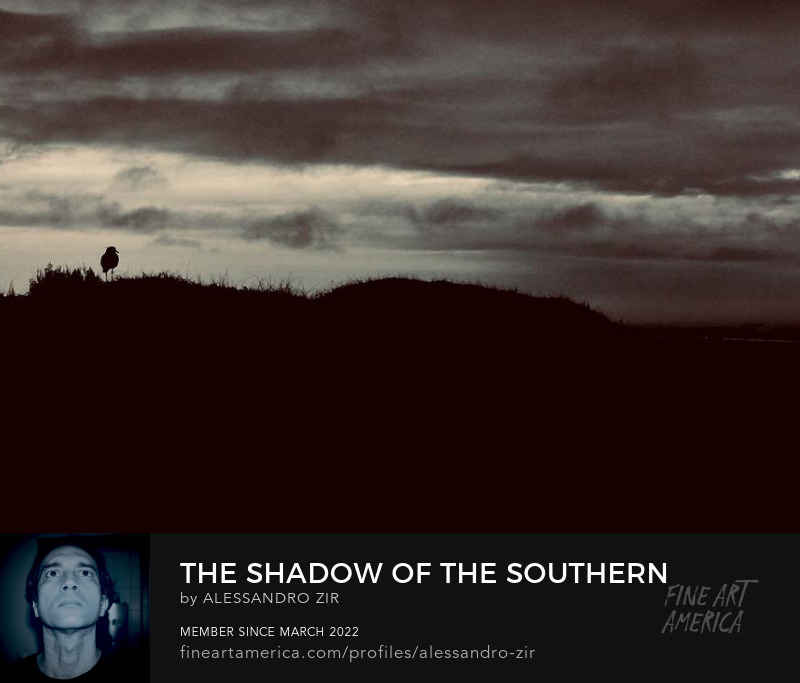
The Shadow of the Southern Lapwing, photograph by A/Z available with other photographs and drawings ad Fine Art America;
other pictures of the Southern Lapwing (taken by A/Z) and pictures of James Joyce (taken from the Internet);
A Suavidade do Vento/Cristovão Tezza (AZ Youtube);
O Caso Morel/Rubem Fonseca (AZ Youtube);
"James and Margaret got up at midnight to see their mother's ghost, and Margaret thought she saw her in the brown habit in which she was buried."
Richard Ellmann
"I hear my father talking to me. I wonder where he is."
Herr Satan/Dear Cuckold (to Maria Jolas)
"Qu'est-ce qu'un expert, quand il s'agit de Joyce, voilà ma question..."
Jacques Derrida
"... mais lui il est catholique, il n'est pas pascatholique."
Hélène Cixous (Portrait de Jacques Derrida en Jeune Saint Juif)
"No doubt the incongruity of making his good Dubliner a Jew, and one so indifferent to all religious forms as to have sampled (without accepting) both Protestantism and Catholicism, attracted him with its satirical possibilities."
Richard Ellmann
"... em Ulysses e Finnegans Wake, a epifania atingirá mecanismos da palavra e até os da letra... a técnica epifânica se incorporou na sua linguagem, Joyce não precisou mais falar nela. Não porque a repudiasse..."
Olga de Sá
"... c'est d'une parole en l'air qu'il nous a dite, d'un 'Vous devriez venir à Balbec,' que toute notre vie et notre oeuvre sont sorties."
Marcel Proust (le narrateur)
"Now, despite the jobbing of bigots and of their sectarian publishing houses, and despite the 'Fly-Fishers' and the types which they represent, and despite the unwillingness of the print-packers (a word derived from pork-packers) and the initial objections of the Dublin publishers, Mr Joyce's novel appears in book form, and intelligent readers gathering few by few will read it, and it will remain a permanent part of English literature—written by an Irishman in Trieste and first published in New York City..."
Ezra Pound (At last the novel appears)
"To begin with matters lying outside dispute I should say that Joyce has taken up the art of writing where Flaubert left it. In Dubliners and The Portrait he had not exceeded the Trois Contes or L'Education; in Ulysses he has carried on a process begun in Bouvard et Pécuchet; he has brought it to a degree of greater efficiency, of greater compactness; he has swallowed the Tentation of St. Antoine whole, it serves as comparions for single episode in Ulysses."
"Messrs Bouvard and Pécuchet are the basis of democracy; Bloom also is the basis of democracy; he is the man in the street, the next man, the public, not our public, but Mr. Wells' public; for Mr Wells he is Hocking's public, he is l'homme moyen sensuel; he is also Shakespeare, Ulysses, The Wandering Jew, the Daily Mail reader, the man who believes what he sees in the papers, Everyman, and 'the goat'..."
"Joyce's characters not only speak their own language, but they think their own language."
"Rabelais himself rests, he remains, he is too solid to be diminished by any pursuer; he was a rock against the follies of his age; against ecclesiastic theology, and more remarkably against the blind idolatry of the classics just coming into fashion. He refused the lot, lock, stock, and barrel, with a greater heave than Joyce has yet exhibited; but I can think of no other prose author whose proportional status in pan-literature is not modified by the advent of Ulysses."
Ezra Pound (Paris Letter)
"There was a lady from Philadelphia who was an authority on Buddhist art. When she found out I was interested in mushrooms, she said, 'Have you an explanation of the symbolism involved in the death of the Buddha by his eating a mushroom?' I explained that I'd never been interested in symbolism; that I preferred just taking things as themselves, not as standing for other things. But them a few days later while rambling in the woods I got to thinking. I recalled the Indian concept of the relation of life and the seasons. Spring is Creation. Summer is Preservation. Fall is Destruction. Winter is Quiescence. Mushrooms grow most vigorously in the fall, the period of destruction, and the function of many of them is to bring about the final decay of rotting material. In fact, as I read somewhere, the world would be an impassible heap of old rubbish were it not for mushrooms and their capacity to get rid of it. So I wrote to the lady in Philadelphia. I said, 'The function of mushrooms is to rid the world of old rubbish. The Buddha died a natural death.'"
"... it is Bolshevism, experimental, anti-conventional, anti-Chistian, chaotic, totally unmoral!"
"Joyce's advice to his Aunt Josephine: 'You say there is a lot of it you don't understand. I told you to read the Odyssey first... Then buy at once the Adventures of Ulysses."
Dates:
"1889... takes Aloysius as his saint's name. Given four strikes on the back of the hand with a pandybat for use of 'vulgar language'."
"1900... delivers paper defending the attention paid to mundane life in contemporary drama (especially Ibsen)."
"1902... delivers paper praising the Irish poet James Clarence Mangan and advocating literature as 'the continual affirmation of the spirit'."
"1916... writes 'A Notebook of Dreams'—'record' of Nora's dreams with James Joyce's interpretations."
"1933... Judge John M. Woolsey, US District Court, delivers opinion that Ulysses is not obscene and can be published in the USA."
"1934... Lucia under the care of Carl Jung."
Quotes:
"God, these bloody English. Bursting with money and indigestion. Because he comes from Oxford... you have the real Oxford manner." (Buck Mulligan)
"What is a ghost?" (Stephen Dedalus)
"If the shrew is worsted yet there remains to her woman's invisible weapon. There is, I feel in the words, some goad of the flesh driving him into a new passion, a darker shadow of the first, darkening even his own understanding of himself. A like fate awaits him and the two rages commingle in a whirlpool." (Stephen Dedalus)
"They are sundered by a bodily shame so steadfast that the criminal annals of the world, stained with all other incests and bestialities hardly record its breach. Sons with mothers, sires with daughters, lesbic sisters, loves that dare not speak their name, nephews with grandmothers, jailbirds with keyholes, queens with prize bulls." (Stephen Dedalus)
"William, in the plays... as a painter of old Italy set his face in a dark corner of his canvas... What's in a name? That is what we ask ourselves in childhood when we write the name that we are told is ours. A star, a daystar, a firedrake rose at his birth... the recumbent constellation which is the signature of his initial among the stars. His eyes watched it, lowlying on the horizon, eastward of the bear, as he walked by the slumberous summer fields at midnight..." (Stephen Dedalus)
"They drove his wits astray by visions of hell." (Buck Mulligan)
"Married to the greasy nose!" (Miss Douce)
"O, Miss Douce! You horrid thing!" (Miss Kennedy)
"And I belong to a race too that is hated and persecuted. Also now. This very moment. This very instant... Plundered. Insulted. Persecuted. Taking what belongs to us by right... I'm talking about injustice." (Leopold Bloom)
"... the opposite of hatred." (Leopold Bloom)
"O my! Puddeny pie! He has his bib destroyed." (Cissy Caffrey)
"Pornosophical philotheology. Metaphysics in Mecklenburg street!" (Lynch)
"They make you kaput, Leopoldleben. You watch them chaps." (Rudolf Bloom)
"Sacred Heart of Mary, where were you at all, at all?" (Ellen Bloom)
"Glory Alice, you do look a holy show!" (Mrs Breen)
"The dear dead days beyond recall." (Mrs Breen)
"I'm as staunch a Britisher as you are, sir. I fought with the colours for king and country in the absentminded war under general Gough in the park and was disabled at Spion Kop and Bloemfontein..." (Leonard Bloom)
"Are you of the unfortunate class?" (Second Watch)
"He addressed me in several handwritings with fulsome compliments as a Venus in furs and alleged profound pity for my frostbound coachman Palmer while in the same breath he expressed himself as envious of his earflaps and fleecy sheepskins and of his fortunate proximity to my person..." (Mrs Bellingham)
"You are a credit to your country, sir, that's what you are." (An Old Resident, also Woody Allen's Splendini)
"I'm a Bloomite and I glory in it." (The Veiled Sibyl)
"The hand that rocks the cradle." (Leopold Bloom)
"One two tlee: tlee tlwoe tlone." (Leopold Bloom)
"Death is the highest form of life." (The Cap)
"(Explodes in laughter) Great unjust God!" (Zoe)
"Safe arrival of Antichrist." (The Newboys)
"What?" (All)
"... in the end the world without end." (Stephen Dedalus)
"Serpents too are gluttons for woman's milk. Wind their way through miles of omnivorous forest to sucksucculent her breast dry." (Leopold Bloom)
"Instinct rules the world. In life. In death." (Leopold Bloom)
"Will some pleashe pershon not now impediment so catastrophics mit agitation of firstclass tablenumpkin?" (Virag Lipoti)
"Quack!" (Virag's Head)
"Exuberant female. Enormously I desiderate your domination. I am exhausted, abandoned, no more young." (Leopold Bloom)
"Dungdevourer!" (Bello)
"You were a nicelooking Miriam when you clipped off your backage hairs and lay swooning in the thing across the bed as Mrs Dandrade, about to be violated by Liutenant Smythe-Smythe, Mr Philip Augustus Blockwell, M. P., Signor Laci Daremo, the robust tenor, blueeyed Bert, the liftboy, Henry Fleury of Gordon Bennett fame, Sheridan, the quadroon Croesus, the varsity wetbob eight from old Trinity, Ponto, her splendid Newfoundland and Bobs, dowager duchess of Manorhamilton." (Bello)
"I cure fits or money refunded." (The Nymph)
"We grew by Poulaphouca waterfall. We gave shade on languorous summer days." (The Yews)
"Done. Prff!" (Leopold Bloom)
"Give me back that potato, will you?" (Leopold Bloom)
"I have a little private business with your wife. You understand?" (Blazes Boylan)
"(Horrorstruck) Lemur, who are you?" (Stephen Dedalus)
"The corpsechewer!" (Stephen Dedalus)
"I'll bring you all to heel!" (Stephen Dedalus)
"He expresses himself with much marked refinement of phraseology." (Biddy the Clap)
"Let my country die for me." (Stephen Dedalus)
"Introibo ad altare diaboli." (Father Malachi O'Flynn)
"Htengier Lnetopinmo Dog Drol eht rof, Aiulella!" (The Voice of all the Damned)
"Dooooooooooog!" (Adonai)
"Ute ute ute ute ute ute ute ute." (The Retriever)
"Hohohohohohoh Hohohohome! (The Horse)
"... like me, though in reality I'm not." (Leopold Bloom)
"What a pity the government did not supply our men with wonderworkers during the South African campaign! What a relief it would have been!" (Absentminded beggar)
"Who was M'Intosh?" (Leopold Bloom)
"Where was Moses when the candle went out?" (Leopold Bloom)
Thoughts/Visions:
"Silently, in a dream she had come to him after her death, her wasted body within its loose brown graveclothes giving off an odour of wax and rosewood..." (Stephen Dedalus)
"Ghostly light on the tortured face." (Stephen Dedalus)
"An elderly man shot up near the spur of rock a blowing red face. He scrambled up by the stones, water glistening on his pate and on its garland of grey hair, water rilling over his chest and paunch and spilling jets out of his black sagging loincloth."
"... and in my mind's darkness a sloth of the underworld, reluctant, shy of brightness, shifting her dragon scally folds." (Stephen Dedalus)
"... and on a heath beneath winking stars a fox, red reek of rapine in his fur, with merciless bright eyes scraped in the earth, listened, scraped up the earth, listened, scraped and scraped." (Stephen Dedalus)
"Around the slabbed tables the tangle of wined breaths and grumbling gorges. His breath hangs over our saucestained plates, the green fairy's fang thrusting between his lips." (Stephen Dedalus)
"A bloated carcase of a dog lay lolled on bladderwrack. Before him the gunwale of a boat, sunk in sand. Un coche ensablé, Louis Veuillot called Gautier's prose. These heavy sands are language tide and wind have silted here." (Stephen Dedalus)
"Behold the handmaid of the Moon. In sleep the west sign calls her hour, bids her rise. Bridebed, childbed, bed of death, ghostcandled. Omnis caro ad te veniet. He comes, pale vampire, through storms his eyes, his bat sails bloodying the sea, mouth to her mouth's kiss." (Stephen Dedalus)
"Under the upswelling tide he saw the writhing weeds lift languily and sway reluctant arms, hising up their petticoats, in whispering water swaying and upturning coy silver fronds... they are weary." (Stephen Dedalus)
"The cat mewed in answer and stalked again stiffly round a leg of the table, mewing. Just how she stalks over my writingtable. Prr. Scratch my head. Prr." (Leopold Bloom)
"Out it rushes: blue. One whiff of that and you're a goner." (Leopold Bloom)
"Love among the tombstones. Romeo. Spice of pleasure. In the midst of death we are in life. Both ends meet." (Leopold Bloom)
"Chinese cemeteries with giant poppies growing produce the best opium..." (Leopold Bloom)
"Gentle sweet air blew round the bared heads in a whisper. Whisper. The boy by the gravehead held his wreath with both hands staring quietly in the black open space." (Leopold Bloom &/or the Narrator/Arranger)
"An obese grey rat toddled along the side of the crypt, moving the pebbles." (Leopold Bloom)
"Pyramids in sand. Built in bread and onions." (Leopold Bloom)
"There he is: the brother. Image of him. Haunting face. Now that's a coincidence. Course hundreds of times you think of a person and don't meet him. Like a man walking in his sleep." (Leopold Bloom)
"Coming events cast their shadows before." (Leopold Bloom)
"Mawkish pulp her mouth had mumbled sweet and sour with spittle. Joy: I ate it: joy. Young life, her lips that gave me pouting. Soft, warm, sticky gumjelly lips. Flower her eyes were, take me, willing eyes. Pebbles fell. She lay still. A goat." (Leopold Bloom)
"... woman's breasts full in her blouse of nun's veiling, fat nipples upright..." (Leopold Bloom)
"Stuck, the flies buzzed." (Leopold Bloom)
"Seabedabbled, fallen, weltering. Lapwing you are. Lapwing be." (Stephen Dedalus)
"She dances in a foul gloom where gum burns with garlic. A sailorman, rustbearded, sips from a beaker rum and eyes her. A long and seafed silent rut. She dances, capers, wagging her sowish hauches and her hips, on her grow belly flapping a ruby egg." (Stephen Dedalus)
"She will drown me with her, eyes and hair. Lank coils of seaweed hair around me, my hear, my soul. Salt green death." (Stephen Dedalus)
"His face got all grey instead of being red like it was and there was a fly walking over it up to his eye." (Master Dignam)
"Chords dark. Lugugugubrious. Low. In a cave of the dark middle earth. Embedded ore. Lumpmusic." (Leopold Bloom)
"Body of white woman, a flute alive. Blow gentle. Loud. Three holes all..." (Leopold Bloom)
"The man in the brown macintosh loves a lady who is dead." (Arranger)
"He was eying her as a snake eyes its prey." (Gerty MacDowell)
"Edy had her own quiet way of saying things like that she knew would wound like the confounded little cat she was." (Gerty MacDowell)
"... a bat flew forth from the ivied belfry through the dusk, hither, thither, with a tiny lost cry." (Gerty MacDowell)
"Back of everything magnetism." (Leopold Bloom)
"Hanging by his heels in the odour of sanctity." (Leopold Bloom)
"Howth settled for slumber tired of long days, of yumyum rhododendrons (he was old) and felt gladly the night breeze lift, ruffle his fell of ferns. He lay but opened a red eye unsleeping, deep and slowly breathing, slumberous but awake." (Leopold Bloom &/or arranger)
"Bottle with story of a treasure in it thrown from a wreck." (Leopold Bloom)
"The adiaphane in the noon of life is an Egypt's plague which in the nights of prenativity and postmortemity is their most proper ubi and quomodo." (Stephen Dedalus)
"In terror the poor girl flees away through the murk. She is the bride of darkness, a daughter of night... There is none now to be for Leopold, what Leopold was for Rudolph. (Leopold Bloom &/or arranger)
"Parallax stalks behind and goads them, the lancinating lightnings of whose brow are scorpions." (Leopold Bloom/ Stephen Dedalus &/or arranger)
"She leads him towards the steps, drawing him by the odour of her armpits, the vice of her painted eyes, the rustle of her slip in whose sinuous folds lurks the lion reek of all the male brutes that have possessed her." (Arranger &/or Leopold Bloom)
"Round and round a moth flies, colliding, escaping." (Arranger &/or Leopold Bloom) "And a prettier, daintier head of winsome curls was never seen on a whore's shoulders." (Arranger &/or Stephen Dedalus/ Leopold Bloom)
"Bello grabs her hair violently and drags her forward." (Arranger &/or Leopold Bloom/ Stephen Dedalus)
"Mute inhuman faces throng forward, leering, vanishing, gibbering, Booloohoom." (Arranger &/or Leopold Bloom/ Stephen Dedalus)
"Whispered kisses are heard in all the wood. Faces of hamadryads peep out from the boles and among the leaves and break blossoming into bloom." (Arranger &/or Leopold Bloom/ Stephen Dedalus)
"She fixes her bluecircled hollow eyesockets on Stephen and opens her toothless mouth uttering a silent word." (Stephen Dedalus)
"A green crab with malignant red eyes sitcks deep its grinning claws in Stephen's heart." (Stephen Dedalus)
"Time's livid final flame leaps and, in the following darkness, ruin of all space, shattered glass and toppling masonry." (Stephen Dedalus)
"A violent erection of the hanged sends gouts of sperm spouting through his death clothes on to the cobblestones." (Stephen Dedalus/ Leopold Bloom &/or arranger)
"Old Gummy Granny in sugarloaf hat appears seated on a toadstool, the deathflower of the potato blight on her breast." (Stephen Dedalus/ Leopold Bloom &/or arranger)
"Pandemonium... The midnight sun is darkened... Laughing witches in red cutty sarks ride through the air on broomsticks.... It rains dragon's teeth." (Stephen Dedalus/ Leopold Bloom &/or arranger)
"The Reverend Mr Haines Love raises high behind the celebrant's petticoats, revealing his grey bare hairy buttocks between which a carrot is stuck." (Stephen Dedalus/ Leopold Bloom &/or arranger)
"Against the dark wall a figure appears slowly, a fairy boy of eleven, a changeling, kidnapped, dressed in an Eton suit with glass shoes and a little bronze helmet, holding a book in his hand. He reads from right to left inaudibly, smiling, kissing hte page." (Leopold Bloom)
"... as she also was Spanish or half so, types that wouldn't do things by halves, passionate abandon of the south, casting every shred of decency to the winds." (Leopold Bloom)
"... from existence to nonexistence gone he would be by all as none perceived." (Arranger &/or Leopold Bloom)
"To knock or not to knock." (Arranger &/or Leopold Bloom)
"Unsmiling, he heard and saw with wonder a jew's daughter, all dressed in green." (Arranger &/or Leopold Bloom)
"... theres nothing like a kiss long and hot down to your soul almost paralyses you..." (Molly Bloom)
"... he was very handsome at that time trying to look like lord Byron I said I liked though he was too beautiful for a man..." (Molly Bloom)
"... I hate an unlucky man..." (Molly Bloom)
"... you cant get on in this world without style..." (Molly Bloom)
"... when I came to page 50 the part about where she hangs him up out of a hook with a cord flagellate sure theres nothing for a woman in that all invention made up about he drinking the champagne out of her slipper..." (Molly Bloom)
"... titties he calls them I had to laugh yes..." (Molly Bloom)
"... I don't like books with a Molly in them..." (Molly Bloom)
"... I wish somebody would write me a loveletter... true or not it fills up your whole day..." (Molly Bloom)
"... after I tried with the Banana but I was afraid it might break and get lost up in me somewhere..." (Molly Bloom)
"... I tortured the life out of him... his eyes shut and a bird flying below us..." (Molly Bloom)
"... my mother whoever she was might have given me a nicer name the Lord knows after the lovely one she had Lunita Laredo..." (Molly Bloom)
"... I wouldn't mind being a man and get up on a lovely woman..." (Molly Bloom)
"... theyve money of course so theyre all right I wouldnt marry him not if he was the last man in the world besides theres something queer about their children always smelling around..." (Molly Bloom)
"... for the one thing he slept on the floor half the night naked the way the jews used when somebody dies belonged to them..." (Molly Bloom)
"... and Fanny M Coys husband white head of cabbage skinny thing with a turn in her eye trying to sing my songs shed want to be born all over again and her old green dress..." (Molly Bloom)
"... her window weeds wont improve her appearance..." (Molly Bloom)
"... he insisted hed go into mourning for the cat..." (Molly Bloom)
"... those fine young men I could see down in Margate strand bathing place from the side of the rock standing up in the sun naked like a God or something and then plunging into the sea with them why arent all men like that thered be some consolation for a woman..." (Molly Bloom)
"... there so simple I wouldnt mind taking him in my mouth if nobody was looking..." (Molly Bloom)
"... when do you ever see women rolling around drunk like they do or gambling every penny they have... a woman whatever she does she knows where to stop..." (Molly Bloom)
"... no wonder they treat us the way they do we are a dreadful lot of bitches..." (Molly Bloom)
"... that his wife is fucked yes and damn well fucked too up to my neck..." (Molly Bloom)
***All quotations here come from the Ulyssesthe 1922 text, edited by Jeri Johnson (Oxford, 1993).
On Nationalism:
"Nationality (if this is not really a useful fiction like many others which the scalpels of the present-day scientists have put paid to) must find its basic reason for being in something that surpasses, that transcends and that informs changeable entities such as blood or human speech. The mystic theologian who assumed the pseudonym of Dionysius the Areopagite said somewhere that ‘God has arranged the limits of the nations according to his angels’ and this is probably not purely a mystic concept. In Ireland we can see how the Danes, the Firbolgs, the Milesians from Spain, the Norman invaders, the Anglo-Saxon colonists and the Huguenots came together to form a new entity, under the influence of a local god, one might say."
"I find a bit naïve to heap insults on the Englishmen for his misdeeds in Ireland. A conqueror cannot be amateurish, and what England did in Ireland over the centuries is no different from what the Belgians are doing today in the Congo Free State..."
James Joyce, "Ireland: Island of Saints and Sages."
"All the Anglo-Saxon soul is in Crusoe: virile independence, unthinking cruelty, persistence, slow yet effective intelligence, sexual apathy, practical and well-balanced religiosity, calculating dourness."
James Joyce, "Realism and Idealism in English Literature."
On Oscar Wilde:
"Anyone who follows closely the life and language of men, whether in a soldier’s barracks or in a large office of commerce, will hesitate to believe that all those who cast stones at Wilde were themselves without blemish. In fact, everyone feels reluctant in speaking with others on this subject fearing that his listener might know more about it than himself."
"Wilde assimilation of other natures alien to his own, such as those of the delinquent and the humble... is the true inherent in the spirit of Catholicism: that men cannot reach the divine heart except across that sense of separation and loss that is called sin."
James Joyce, "Oscar Wilde: The Poet of Salomé."
On Blake:
"Blake, like many other man of great genius, was not attracted by cultivated and refined woman. Either he preferred simple women with sensual and nebulous mind… or the demon hidden in a cloud."
"Elementary beings and the spirits of deceased great men would often enter the poet’s room at night to speak to him about art and the imagination… Ought we to be amazed that the symbolic beings Los, Urizen, Vala, Tiriel, and Enitharmon and the shades of Homer and Milton should come from their ideal world into a poor room in London, or that the incense that greeted their coming was the smell of Indian tea and eggs fried in lard?"
"If we were to lay a charge of madness against every great genius who does not share the science undergraduate’s fatuous belief in headlong materialism now held in such high regard, little would remain of world art and history."
James Joyce, "Realism and Idealism in English Literature."
On Mangan:
"Mangan obtained a position as assistant librarian in the huge library of Trinity College Dublin… Mangan passed his days studying in this library, becoming a reasonably accomplished linguist. He was well familiar with the Italian, Spanish, French and German languages and literatures, besides those of Ireland and England and, it would seem, had some knowledge of oriental languages, probably Sanskrit and Arabic."
"I understand that pathologists deny the possibility of combining the delights of alcohol and opium, and it seems that Mangan was soon convinced of this fact, for he dedicated himself unremittingly to filling himself with narcotics. Mitchel tell us how Mangan looked like a living skeleton towards the end of his life. His face was fleshless, barely covered by a translucent skin, like fine porcelain, his body wasted. His eyes, behind which shone rare glimmers which seemed to hide the horrendous, voluptuous memory of his visions, were dreaming, large and staring; his voice was drawling, faint and sepulchral… So lived and died the man who I consider the most distinguished poet of the modern Celtic world and one of the most inspired poets of any country ever to make use of the lyric form."
James Joyce, "James Clarence Mangan."
***To raise the dead— &/or evidence for the villainous affair, the tale of family disonour, Romish church's pact with the devil (considered the greatest outrage against sense and decency, to be plagued and pestered, though solemnly ratified, à Dieu rien n'est impossible, menteur avéré, nom d'un chien):
"Although Greek names were sometimes applied to the church modes and the principle of diatonic octave scales is found in both systems, certain significant discrepancies seem to belie any direct historical connection. Most conspicuous is the different meaning attributed to the names of the Greek octave species and of the church modes. Comparing the two systems provides a plausible explanation: medieval theorists apparently assumed wrongly that the Greek octave species were named in ascending rather than descending order. The Greek octave species Dorian (E–E), Phrygian (D–D), Lydian (C–C), and Mixolydian (B–B) thus appeared in the church modes as Dorian (D–D), Phrygian (E–E), Lydian (F–F), and Mixolydian (G–G)," (from "Mode," entry in Brittanica, by Mieczyslaw Kolinski);
Andy Warhol about Godard;
Gang of Four (Damaged Goods);
Red Hot Chili Peppers (Coffe Shop); Code Morel & One Hundred Forty-Nine Inches [I took this video out of Youtube, because I wanted to change it];
Devenir Musician [I took this video out of Youtube, because I wanted to change it];
"Andy Gill and Jon King [from Gang of Four] ran Leeds University's student film society, so they'd have been familiar with Godard's work: the deliberately exposed means of production (like the clapper board that flashes into view every so often in La Chinoise); the disjointedness (continuity lapses, incorrect eye line matches, jump cuts, lack of congruence between images and sound)..."
"Rather than cozily dividing the world into a righteous 'us' versus a corrupt 'them', Gang of Four's songs implicated listeners (and themselves) in the very processes being critiqued. But that didn't mean there weren't sides worth taking or enemies worth fighting. In spring 1979, Gang of Four participated in Rock Against Racism..." "Over the last twenty-five years, countless bands have seized on aspects of the Gang of Four style, finding inspiration in the possibility the Leeds group opened up for a new form of rock that's aggressive and violent without being oppressively macho—Pylonm the B-52s, Romeo Void, Red Hot Chilli Peppers (who enlisted Gill to produce their debut album)..."
Simon Reynolds
"And what's more important: we must be aware of the so called friend who in the end is the enemy."
"Peace is the language of the integrationists: but there can be no peace... until the black people of the world are free."
Godard/ Sympathy for the Devil
"Sometimes the class struggle is also the struggle of one image against another image, of one sound against another sound. In a film the struggle is between images and sounds."
"Is the Marxist concept of surplus value the best weapon with which to unmask the bourgeois concept of presentation? The first task of the anti-imperialist cinema is to answer that question."
"There are neither self-evident images nor images that speak for themselves in the way the Russian revisionist films and the mass circulation magazines in the West pretend."
"Seizing the revolution with one hand and production with the other. What does that mean for militant film makers? It doesn't mean bringing films to the people, but making films from and through the people."
Godard/ British Sounds
"A Coke is a Coke and no amount of money can get you a better Coke than the one the bum on the corner is drinking."
Andy Warhol
"O rock com sua redundância assumida, como diz Cage, é atravessado por uma torrente de energia que arrasta tudo... cetelha que espalha, no campo das músicas dançante, a novidade do pulso-ruído."
José Miguel Wisnik
***To raise the dead— &/or evidence for the villainous affair, the tale of family disonour, Romish church's pact with the devil (considered the greatest outrage against sense and decency, to be plagued and pestered, though solemnly ratified, à Dieu rien n'est impossible, menteur avéré, nom d'un chien):
"Although Greek names were sometimes applied to the church modes and the principle of diatonic octave scales is found in both systems, certain significant discrepancies seem to belie any direct historical connection. Most conspicuous is the different meaning attributed to the names of the Greek octave species and of the church modes. Comparing the two systems provides a plausible explanation: medieval theorists apparently assumed wrongly that the Greek octave species were named in ascending rather than descending order. The Greek octave species Dorian (E–E), Phrygian (D–D), Lydian (C–C), and Mixolydian (B–B) thus appeared in the church modes as Dorian (D–D), Phrygian (E–E), Lydian (F–F), and Mixolydian (G–G)," (from "Mode," entry in Brittanica, by Mieczyslaw Kolinski);
John Lydon & Sex Pistols;
Andy Warhol, Lou Reed, Nico & The Velvet Underground; Kurt Cobain;
Pictures taken from the Internet (montage A/Z);
Me from Mommy Dearest Photo Album;
Presuming Ed from Bruce Robinson's Whitnail and I (1987);
Anselm Kiefer's Unternehmen Seelöwe (1975),
picture taken from Daniel Arasse's Anselm Kiefer;
The Sex Pistols In Brazil (The Great Rock 'n' Roll Swindle, 1980);
Devenir Musicien & Pillage (videos by A/Z) [I took these videos out of Youtube, because I wanted to change them];
George Antheil's Violin Sonata n. 2 (Vahid Khadem-Missagh and Gottlieb Wallisch/2015, Youtube);
"Pure experience is an animated state with maximum freedom in which there is not the least gap between the will's demand and its fulfilment."
Kitaro Nishida "La main se crispe dans une sorte de contraction impudique..." Canteloube (Grand Journal, 21 mai) "Eine lange lateinische Abhandlung in Einer Nachtwache niederzuschreiben und auch noch ab-zuschreiben, mit dem Ehrgeiz in der Feder, es meinem Vorbilde Sallust in Strenge und Gedrängtheit nachzuthun, und einigen Grog von schwerstem Kaliber über mein Latein zu gießen, dies stand schon, als ich Schüler der ehrwürdigen Schulpforta war, durchaus nicht im Widerspruch zu meiner Physiologie, noch vielleicht auch zu der des Sallust—wiesehr auch immer zur ehrwürdigen Schulpforta..." Nietzsche
"... e, uma vez, apaguei de repente, caí com a cabeça em cima dos pratos e elas me ajudaram, com massagens, estímulos e mais drogas, é lógico." Júpiter Maçã, A Odisséia
"Ultrasonic sounds on records to cause frontal lobotomies." "Rock & Roll is so great, people should start dying for it. You don't understand. The music gave you back your beat so you could dream." Lou Reed (Please Kill Me)
"Then of course Nico walked out with this gorgeous face and voice and stood absolutely motionless."
"Lou was a double-faced, insincere, grasping type."
Paul Morrissey (Please Kill Me)
"Nico was really odd. She was very icy and reserved on one level, and then annoyingly insecure on another... Beautiful, but a weirdo. You didn't have a relationship with Nico."
Ronnie Cutrone (Please Kill Me)
"I just thought Richard Hell was incredible. Here was a guy all deconstructed, torn down, looking like he'd just crawled out of a drain hole, looking like he was covered in slime, looking like he hadn't slept in years, looking like he hadn't washed in years, and looking like no one gave a fuck about him. And looking like he didn't really give a fuck about you!"
Malcolm McLaren (Please Kill Me)
"I liked Malcolm because he liked me... There weren't that many people who gave us any respect, you know?"
Richard Hell (Please Kill Me) "The first song that the Sex Pistols played was I Wanna Be Your Dog, the greatest punk song ever written to this day."
Danny Field (Please Kill Me)
"The profanity hooked me first (I was fourteen), Johnny Rotten's 'fuck this and fuck that/Fuck it all and fuck her fucking brat.' More than the naughty words themselves, it was the vehemence and virulence of Rotten's delivery—those percussive 'fucks,' the demonic glee of the rolled rs in 'brrrrrrrat.'"
"From that point onward, McLaren decided that Rotten was at heart 'a constructive sissy rather than a destructive lunatic,' and focused his energy on molding the more suggestible Sid Vicious into the Pistol's true star, a cartoon psychopath, wanton and self-destructive."
"Although they found nothing, Lydon was taken to the local police station and had to walk home in his pijamas."
Simon Reynolds
"Andy said to me, 'Don't... don't... don't make me laugh. I hurts too much." Billy Name (Please Kill Me) "In a desperate plea for the attention of her idol, she snatched Andy Warhol's wig." James St. James (Party Monster)
"... et du chaos d'un sommeil plein de songes tu évoques à la lumière du soleil les visages des beautés depuis longtemps ensevelies, et les physionomies familières et bénies, nettoyées des outrages de la tombe. Toi seul, tu donnes à l'homme ces trésors, et tu possèdes les clefs du paradis, ô juste, subtil et puissant opium!"
Baudelaire/De Quincey (Les Paradis artificiels)
"... virei mentor dum garoto judeu e gay... Eu dizia, você não acredita em nada? Marilyn Monroe? Elvis Presley, George Harrison?"
Júpiter Maçã, A Odisséia
"What's wrong with tits? The queen's got'em."
Geri Miller (Please Kill Me)
"After the gig we were visited in our dressing room by none other than Lady Helen Windsor, a minor royal and great-granddaughter of King George V. Seems she was a mad Cure fan, too! Truth is stranger than fiction, truly."
Lol Tolhurst (Cured: the tale of two imaginary boys)
"The society ladies who appear to Bloom, Mrs. Yelverton Barry (a name modified from that of a suspected transvestist) and Mrs. Bellingham (an actual name) are as fond of wearing furs as Wanda."
Richard Ellmann
"Dr. Spock personalizes quantum psychology: 'Treat your kids as individuals, as singularities.' Here was the most radical, subversive social doctrine ever proposed, and it was directed to the only groups that can bring about enduring change: parents, pediatricians, teachers."
Timothy Leary
"In India, many people visit holy men and women for their darshan, literally their look, which is believed to confer great blessings. Perhaps an unconscious survival of the same kind of belief is involved in the popular desire to see in person the Queen of England, the President of the United Sates, the Pope, pop stars, or other luminaries."
Rupert Sheldrake
"When Queen Elizabeth came here and President Eisenhower bought her a hot dog I'm sure he felt confident that she couldn't have had delivered to Buckingham Palace a better hot dog than that one he bought her for maybe twenty cents at the ballpark... Not for a dollar, not for ten dollars, not for a hundred thousand dollars."
"Think rich. Look poor."
Andy Warhol
"Giving up Beethoven, the emotional climaxes and all, is fairly simple for an American. But giving Bach is more difficult. Bach's music suggest order and glorifies for those who hear it their regard for order, which in their lives is expressed by daily jobs nine to five and the appliances with which they surround themselves and which, when plugged in, God willing, work... Jazz is equivalent to Bach (steady beat, dependable motor), and the love of Bach is generally coupled with the love of jazz. Jazz is more seductive, less moralistic than Bach. It popularizes the pleasures and pains of the physical life, whereas Bach is close to church and all that. Knowing as we do that so many jazz musicians stay up to all hours and even take dope, we permit ourselves to become sympathetically at least, junkies and night owls ourselves: by participation mystique. Giving up Bach, jazz, and order is difficult. Patsy Davenport is right."
"Ten years ago the New York painters were for the most part poor as church mice. Did they then or do they now have a place in American society?"
John Cage (Indeterminacy)
"In Washington DC, we experienced the sharper side of American life. We were shocked when we pulled into town and realized it was divided into the haves and have-nots, ghettoized in a way we had not experienced before... In London it appeared to us that all the races mixed together..."
"In the United Kingdom, punk was more of a cultural/political movement—it had to be, given the circumstances—whereas in the United States it felt more like a social/fashion happening... this being New York, we had our first brush with the celebrity circuit. Debbie Harry and Chris Stein of Blondie, along with David Johansen of The New York Dolls, turned up to our first-night gig at Hurrah's..."
Lol Tolhurst (Cured: the tale of two imaginary boys)
"Not that I'm especially patriotic or anything, but it's also striking how both the sixties and the postpunk movement were periods during which Britannia ruled the pop waves..."
"The No Wave scene in New York was virtually wall-to-wall painters, filmmakers, poets, and performance artists. Gang of Four, Cabaret Voltaire, Wire, and the Raincoats are just a handful of the U.K. bands that were started by fine-art or design graduates. Especially in Britain, art schools have long functioned as a state-subsidized bohemia, where working-class youths too unruly for a life of labor mingle with slumming bourgeois kids too wayward for a middle-management career."
"... it was a particular kind of 'art rock' that postpunk pledged allegiance to... the minimal-is-maximal lineage that runs from the Velvet Underground through Krautrock and the more intellectual Bowie/Roxy end of glam. For a certain breed of hipster, the music that sustained them through the 'wasteland' of the seventies was made by a cluster of kindred spirits—Lou Reed, John Cale, Nico, Iggy Pop, David Bowie, Brian Eno..."
"For those prepared to live somewhere that looked almost as bombed-out as Beirut, and where heroin was easier to buy than groceries, the Lower East Side was a paradise... 'We didn't have someone like Mayor Giuliani breathing down our necks. It was a very loose time. There wasn't much to fight against, except tradition, where you came from, what your parents were. It was like you'd been thrown into this adolescent adult fun fair and left to figure it out' [Lydia Lunch]."
"By the late seventies, French thinkers of the sort Green [of Scritti Politti] had been devouring were flirting with the once unthinkable (for the Left) notion that American capitalism, despite its faults, offered a lot of space for doing it yourself and bending the law."
"Early MTV was a curious animal, almost inadvertently radical. Because videos from domestic major labels acts were scarce, the channel depended on promos from the U.K. and Europe, where the pop video was already well established. Artists such as Queen, David Bowie, Abba, and Boomtown Rats had specialized in striking promo clips."
Simon Reynolds (Rip It Up)
"When David said in Melody Maker that he was gay—then he changed it, and said he was bisexual, which was what he really meant—he never would have had the balls to do that unless he'd been hanging around with Iggy and Lou."
"... Iggy actually read, you know, Dostoevsky and all that kinda crap..."
Angela Bowie (Please Kill Me)
"Johnny Rotten asked me, 'If they don't like me will they beat me up?' He thought the Ramones were a real gang, ha ha ha."
Arturo Vega (Please Kill Me)
"I felt that what we had done as a joke in New York had been taken for real in England by a younger and more violent audience."
Mary Harron (Please Kill Me)
"By the end of the seventies, the philosophy was that you couldn't do anything without a lot of money... the anger was simply about money, that the culture had become corporate, that we no longer owned it and everybody was desperate to fucking get it back."
Malcolm McLaren
"Nous sommes invités, Rose et moi, à Boston, la semaine prochaine pour un banquet — nous commençons à en prendre l'habitude! et même je n'ai plus de trac quand il faut parler devant 200 personnes. C'est la vie américaine. J'aime ce pays de plus en plus: j'aurais d'ailleurs mauvaise grâce à ne pas m'y plaire car nous y avons été reçus avec chaleur et compréhension."
André Masson (Lettre à Daniel-Henry Kahnweilver, 2 December, 1941)
"Il fait un drôle de temps ici: le pays a l'air d'être retouché par Turner — brumes et brouillard, sans doute pour ne pas trop dépayser les Anglais qui sont ici."
André Masson (Lettre à Georges Bataille, 2 Juillet 1936)
"Pour ce qui est de l'Angleterre, je ne saurais vraiment rien vous dire, car il s'agit d'un pays cagot, livré aux femmes, ce qui signifie autant qu'une totale décadence."
Strindberg à Nietzsche (Klossowski's translation)
"En effet, je retrouve bien dans Hogarth ce je ne sais quoi de sinistre, de violent et de résolu, qui respire dans presque toutes les oeuvres du pays du spleen."
Baudelaire (Quelques caricaturistes étrangers)
"Lui et ses trois soeurs étaient fort jeunes quand leur père mourut, laissant à leur mère une abondante fortune, une véritable fortune de négociant anglais."
Baudelaire (Les Paradis artificiels)
"La marca de fábrica, en la culata, saltaba a la vista: Liverpool, 1891."
Mario Vargas Llosa (La guerra del fin del mundo)
"This danger was more real in London under the Blitz, which dominated everyday life in 1940-1, as Britain alone opposed Germany."
Matthew Gale
"É o sentimento que os ingleses chamam de spleen, e que não tem correspondente na língua portuguesa. Em noites assim, a nossa realidade interior se mistura à atmosfera que o fog torna ainda mais densa, apagando os contornos da vida. O silêncio ao redor de nós como que se materializa. Os movimentos se fazem em câmera lenta, de peixes no mundo das águas. Ectoplasmas de nós mesmos, flutuamos no ar, integrados à eternidade do nada."
Fernando Sabino (A Morte Vista de Perto)
"Now, Sir, if I conduct you home again into this warmer and more luxuriant island, where you perceive the spring tide of our blood and humours runs high,—where we have more ambition, and pride, and envy, and lechery, and other whoreson passions upon our hands to govern and subject to reason,—the height of our wit and the depth of our judgment, you see, are exactly proportioned to the length and breadth of our necessities,—and accordingly, we have them sent down amongst us in such a flowing kind of decent and creditable plenty, that no one thinks he has any cause to complain. It must however be confessed on this head, that, as our air blows hot and could,—wet and dry, ten times in a day, we have them in no regular and settled way;—so that sometimes for near half a century together, tehre shall be very little wit or judgment, either to be seen or heard of amongst us..."
Tristram Shandy
"The fashions which Charles II brought with him and which were adopted by his Court were among the strangest male garments ever worn. Subsequent historians have regarded them with an unfavourable eye. 'Taste and elegance', says F. W. Fairholt, 'were abandoned for extravagance and folly.'"
"In essence the change consisted of a decreasing emphasis on the French Court style and an increasing adoption of English country clothes. There was, in short, a trend towards practicality and simplicity. Coats were plain, had narrower cuffs and the skirts were sometimes cut away in front for ease on horseback."
"This was due in no small degree to the superior skill of London tailors, trained to work in wool broadcloth. Such cloth, unlike light silk and other flimsy materials, can be stretched and moulded to the body. The clothes of the eighteenth-century aristocrat were in general very badly made and did not fit at all snugly to the body. Such snug fitting was the very essence of dandyism, and George Brummell prided himself on the fact that his clothes did not show a single wrinkle and that his breeches fitted his legs like a natural skin. Dandyism does not imply gorgeousness in male attire; the exact opposite is the case."
"The dandy was shown not only by the cut of his clothes and the snugness of his breeches but by the elaboration of his neckwear. The collar of the shirt was worn upright; the two points projected on to the cheeks and were kept in place by a neckcloth, either in the form of a cravat or a stock. Some dandies were alleged to spend a whole morning in the arrangement of their cravats... There is the well-known story of a caller visiting Brummell in the middle of the morning and finding his valet arranging his cravat. On the floor was a large heap of discarded cravats, and when the visitor inquired what they were, the valet replied, 'Sir, those are our failures.'"
"Of course the dandies, who still persisted into the 1840s, spent very much more than this. They were regarded as relics of a former, dissipated age. The dominant figure in English life was now a respectable bourgeois, who had no desire to make himself conspicuous but wished merely to present a gentlemanly appearance..."
"Like the King [Edward] himself it favoured the mature woman, cool and commanding with a rather heavy bust, the effect of which was further emphasized by the so-called 'health' corsets which, in a laudable effort to prevent a downward pressure on the abdomen, made the body rigidly straight in front by throwing forward the bust and throwing back the hips. This produced the peculiar S-shaped stance so characteristic of the period."
"As a commentator of the time remarked, 'the angular English woman, over whose lack of embonpoint papers like La Vie Parisienne have been making merry for two generations, now became accepted type of beauty."
"Young people around the globe danced to the new American rock 'n' roll music, and it was from this date that the fashion and music-industries became inextricably linked."
"The chief fashion story of the period was the miniskirt. Hemlines rose just above the knee in 1961 and had reached the upper thighs by 1966.... It was a style best suited to a skinny, pre-pubescent physique, epitomized by the schoolgirl model Lesley Hornby, known as Twiggy... The designer most often credited with introducing the 'mini' was Mary Quant..."
"The anarchic Punk style, which appeared on the streets of London during the mid-1970's, and which spread in diluted form throughout Europe and North America, was to have an enormous impact on both streetwear and high fashion. It was a style which consciously sought to shock, combining—for both sexes—black tight trousers and striped mohair sweaters with customized leather jackets and heavy-duty Doctor Marten boots. Some female Punks wore miniskirts, fishnet tights and high stiletto-heeled shoes. Fetishistic leather and rubber were an integral part of the Punk look, as were trousers with bondage straps from knee to knee, and bondage collars. Clothes were slashed and ripped, embellished with safety pins, zips and studs. T-shirts were printed with aggressive, anarchistic slogans. The most famous retail outlet for Punk garments and accessories was the shop Seditionaries in London's King's Road, run by Vivienne Westwood and Malcolm McLaren..."
"American retailer The Gap, founded in San Francisco in 1969, universalized the popularity of garments such as the hooded sweatshirt and cargo pant (the latter contributing to a massive downsizing in teh denim market), making once-basic items a wardrobe staple for all generations."
James Laver (Costume and Fashion)
***To raise the dead— &/or evidence for the villainous affair, the tale of family disonour, Romish church's pact with the devil (considered the greatest outrage against sense and decency, to be plagued and pestered, though solemnly ratified, à Dieu rien n'est impossible, menteur avéré, nom d'un chien):
"Although Greek names were sometimes applied to the church modes and the principle of diatonic octave scales is found in both systems, certain significant discrepancies seem to belie any direct historical connection. Most conspicuous is the different meaning attributed to the names of the Greek octave species and of the church modes. Comparing the two systems provides a plausible explanation: medieval theorists apparently assumed wrongly that the Greek octave species were named in ascending rather than descending order. The Greek octave species Dorian (E–E), Phrygian (D–D), Lydian (C–C), and Mixolydian (B–B) thus appeared in the church modes as Dorian (D–D), Phrygian (E–E), Lydian (F–F), and Mixolydian (G–G)," (from "Mode," entry in Brittanica, by Mieczyslaw Kolinski);
"There is nothing to warn a fishmonger's wife that such sublime devotion to etiquette is in any way ridiculous. English society is impregnated from top to bottom with this spirit. The supreme satisfaction is to be able to despise one's neighbour, and this fact goes far to account for religious intolerance. It is evidently consoling to reflect that the people next door are headed for hell."
"Adaptation to one's environment makes for a sort of survival; but after all, the supreme victory is only won by those who prove themselves of so much harder stuff than the rest that no power on earth is able to destroy them."
"[My father's] integrity was absolute... It was horrifying thought to him that he might be caught by the Second Advent at a moment when he was not actively and intensely engaged on the work which God had sent him into the world to do. This sense of the importance of the slightest act, of the value of every moment, has been a tragically intense factor in my life."
"My mother was naturally a rather sensual type of woman, and there is no doubt that sexual repression had driven her as nearly as possible to the borders of insanity."
"Men and women will never behave worthily as long as current morality interferes with the legitimate satisfaction of physiological needs. Nature always avenges herself on those who insult her... society is blowing up in larger or smaller spots all over the world, because it has failed to develop a system by which all its members can be adequately nourished without conflict, and the waste products eliminated without discomfort..."
"Milton was a great poet; and the subconscious artistic self of him was therefore bitterly antagonistic to Christianity. Not only is Satan the hero, but the triumphant hero... On the Christian theory, goodness is, in fact, nothing but absence of character, for it implies complete submission to God. Satan's original fault is not pride; that is secondary. It springs from the consciousness of separateness... this is, mystically speaking, sinful... Christian theology has not had sufficient logic to see..."
"The school had a long way to go. Bullying went on unchecked, the prefects being foremost offenders... concentrating on obscenity and petty tyranny. It annoyed them particularly that my conduct was irreproachable."
"The fact is that (as my brother-in-law, Gerald Kelly, once told me, with astounding insight), I was the most religious man that he had ever met. It is the inmost truth. The instinct was masked for a long time, firstly by the abominations of the Plymouth Brethren and the Evangelicals; secondly, by the normal world... and I was a Satanist... in the spirit of St. Francis of Assisi."
"It seems as if I clung to the idea of the wickedness of love, and the belief that it entailed divine retribution, partly perhaps because of my tendency to masochism... as adding actual value to sin. Pleasure as such has never attracted me."
"It is monstrous for a man to pretend to be devoted to securing his wife's happiness and yet to wish to deprive her of a woman's supreme joy: that of bearing a child to the man whom she desires sexually, and is therefore indicated by nature as the proper father, though he may be utterly unsuitable as a husband."
"We have abolished all kinds of injustice on our attention being called to them; but the result has been that we have created an artificial doctrinaire society... All classes are complaining. We are in the condition of a man whose nerves all talk at once instead of doing their work quietly."
"Material welfare is only important as assisting men towards a consciousness of satisfaction. From the nature of things, therefore, life is a sacrament; in other words, all our acts are Magical Acts."
"It is a remarkable fact that only very exceptional men retain their normal reasoning powers in presence of mountains... A high degree of spiritual development, a romantic temperament, and a profound knowledge based on experience of mountain conditions, are the best safeguards against the insane impulses and hysterical errors which overwhelm the average man."
"I had come across Von Krafft-Ebbings' Psychopathia Sexualis. The professor tries to prove that sexual aberrations are the result of disease. I did not agree."
"Swinburne had taught me the doctrine of justification by sin. Every woman that I met enabled me to affirm magically that I had defied the tyranny of the Plymouth Brethren and the Evangelicals."
"Baudelaire and Swinburne, at their best, succeed in celebrating the victory of the human soul over its adversaries... Even James Thomson, ending with 'confirmation of the old despair,' somehow defeats that despair by the essential force of his genius. Keats, on the contrary, no matter how hard he endeavours to end on a note of optimism, always leaves an impression of failure. I well know how strangely perverse this criticism must sound, but I fell its truth in the marrow of my bones."
"Havelock Ellis and Edward Carpenter have been treated with the foulest injustice by ignorant and prejudiced people."
"Every particle of one's personality is a necessary factor in the equation, and every impulse must be turned to account in the Great Work... I had a thorough instinctive understanding of the theory of psychoanalysis. To this fact I attribute my extraordinary success in all my spiritual undertakings."
"I made a point of putting God on His honour, so to speak, to supply anything I might need by demonstrating to him that I would not keep back the least imaginable fraction of my resources."
"Acts of Will, performed by the proper person, never fall to the ground..."
"Eckenstein business in life was mathematics and science, and his one pleasure mountaineering. He was probably the best all-round man in England, but his achievements were little known because of his almost fanatical objection to publicity."
"... my limbs posses a consciousness of their own which is infallible. I am reminded of the Shetland ponies which can find their way through the most bewildering bogs and mist."
"It is useless to have strength if you don't know how to apply it."
"I must record one adventure, striking not only in itself but because it is of a type which seems almost as universal as the flying dream. It possesses the quality of the phantasmal. It strikes me as an adventure which occurs constantly in dreams and romances of the Stevensonian order... I cannot help believing that something of the kind has happened to me, though I can not say when, or remember the incidents..."
"I ask myself whether, after all, it is not conceivable that the immense number of facts which point to intelligent control of very various energies, which claim to be so, could not be in reality an accident in the true sense of the word..."
"Ireland has been badly treated, we all know; but her only salvation lay in forgetting her nonsense."
"I see no sense in violating conventions, still less in breaking laws... On the other hand, it is impossible to make positive progress by means of institutions which lead to one becoming Lord Chancellor, and Archbishop, an Admiral, or some other flower of futility."
"It seems to me no mere accident that Cambridge was able to tolerate Milton, Byron, Tennyson, and myself without turning a hair, while Oxford inevitably excreted Shelley and Swinburne. Per contra, she suited Walter Pater and Oscar Wilde perfectly. Had they been at Cambridge, the nonsense would have been knocked out of them."
"Fate familiarised me with this psychology in another form. It breaks out every time any man speaks or acts so as to awaken the frantic fear which is inherent in all but the rarest individuals, that anything new is a monstrous menace... whatever science may say, there is such a thing as moral superiority, a spiritual strength independent of material or calculable conditions."
"The majority of old Magical Rituals are either purposely unintelligible or actually puerile nonsense... But there is one startling exception to this rule. It is the Book of the Sacred Magick of Abramelin the Mage."
"... even the crudest Magick eludes consciousness altogether, so that when one is able to do it, one does it without conscious comprehension, very much as one makes a good stroke at cricket or billiards. One cannot give an intellectual explanation... as one can explain the steps in the solution of a quadratic equation... [it] is rather an art than a science."
"There is always occult opposition to the publication of any important document... This is one of the facts whose cumulative effect makes it impossible to doubt the existence of spiritual forces."
"Magick is one of the subtlest and most difficult of the sciences and arts... It is above all needful for the student to be armed with scientific knowledge, sympathetic apprehension, and common sense."
"Money grubbing does its best to blaspheme and destroy nature. It is useless to oppose the baseness of humanity; if one touches pitch one runs the risk of being defiled. I am perfectly content to know that the vileness of civilisation is rapidly destroying itself; that it stinks in my nostrils tells me it is rotting... wealth, the most dangerous of narcotic drugs. It creates a morbid craving..."
"I was bound up with the welfare of humanity, and could only satisfy my aspiration by becoming a perfect instrument for the regeneration of the world."