Showing posts with label parody. Show all posts

Friday, November 09, 2018

The House that Jack Built's simple equation, metainfinity abyss & parallel topics (or how me once became a total scoundrel three times)


from Kurt Cobain Journals (New York: Riverhead books, 2002);
from Augusto de Campos' Poesia 1949-1979 (Ateliê Editorial, 2014);
1280 Almas de Jim Thompson (Policiales de Colleccion, Silvia Hopenhayn, 2011); 
The Jim Thompson History  (The Grifters 1990, DVD extra); 
Melancholia: La Fin du Monde e L'Ultime Fin du Film (Pacôme Thiellement/Bast);
George Sluizer on The Vanishing (Criterion/Youtube); 
I Work on Wall Street (by the treshorrificque American Psycho of Mary Harron, 2000); 
Brian Ferneyhough's Terrain (1992) (Youtube); 
Brian Ferneyhough's La Terre est un Homme (Youtube); 
Galina Ustvolskaya's Grand Duet for cello and piano (Tobias Moster & Ingrid Karlen, Youtube);
Galina Ustvolskaya's 12 preludes (David Arden, Youtube);
Galina Ustvolskaya's Sonata No. 6 (Alexei Lubimov, 1988, Youtube);

Excerpts de beaulx livres de haulte gresse: 


"[Philip Adrian] Wright also had a fascination with celebrity culture, says [Philip] Oakey, 'people who manipulated the media to their own advantage. He was absolutely fascinated by the Kennedys and Hitler, to the point where some people thought he was fascist. But in fact he was just interested in their use of image and propaganda."
Simon Reynolds (Rip It Up)
"... there's a certain kind of poetry that's performance poetry. It's like the American Indians weren't writing conscious poetry. They were making chants, they were making ritual language—and the language of ritual is the language of the moment... I mean, Billy Graham is a great performer, even though he is a hunk of shit. Adolf Hitler was a fantastic performer. He was a black magician. And I learned from that. You can seduce people into mass consciousness. So I write to have somebody... The other thing is that through performance, I reach such states, in which my brain feels so open—so full of light, it feels huge, it feels as big as the Empire State Building..."
Patti Smith (Please Kill Me, livre seigneurial)
"Richard Hell had designed a T-shirt for himself that said Please Kill Me, but he wouldn't wear it. I was like, 'I'll wear it.' So I wore it when we played upstair at Max's Kansas City, and afterwards these kids came up to me. These fans gave me this really psychotic look..."
Richard Lloyd (Please Kill Me)
"The fluorescent Day-Go colors don't seem very natural, even though the colors do exist in nature—there are some fishes and some birds that are kind of fluorescent, but to me the colors represented this man-made madness. Then when you mix Nazism with fluorescent colors, it's even more man-made madness... The people that act so defensively are always the people who are closet fascists."
Arturo Vega (Please Kill Me)
"In the hippie days, styles of dress or symbols were used unironically... and suddenly a movement comes along, and they were using swastikas and it's not about that; it's a costume and an assault. It's about something completely different—it's about gesture, and shock tactic."
Mary Harron (Please Kill Me)

"I have a real problem with  ignorant people—particularly ignorant people that embrace fascism. And David Bowie has a streak of ignorance which is as wide as it is long..."
Angela Bowie (Please Kill Me)
"I did have this whole feeling of that once all the discussion was done, basically I don't care... I would always take the opposite view of the person who was trying to analyze it, so I was deliberately giving as much latitude as possible: 'I belong to the ____ generation.' How can you misinterpret that? Anything you think is correct, ha ha ha."
Richard Hell, abstracteur de quinte essence (Please Kill Me)

"Everyone's telling Debbie she's gonna be the next Farrah Fawcett, and she was saying that she didn't want to be Farrah Fawcett. All she wanted to do was sing."
James Sliman (Please Kill Me)
"They give this stuff to us just to keep us stoned, I don't even want it. You fucking take it. They just keep giving it to us! That's all the fucking guys give us! They want, they want, they want, and for that they give us this shit! James, this is for you, I don't even want it, my hotel room is full of it."
Blondie/James Sliman (Please Kill Me)

"I always say when the music moves from the music section to the front page of the newspaper, you're in trouble."
Danny Fields (Please Kill Me)
"It wasn't only the band who were crazy—the people who were supporting them were worse."
Bob Gruen (Please Kill Me)
"I just shit in her mouth... Well, her boyfriend said he wanted her to have an experience she wouldn't forget."
Sid Vicius/Bob Gruen (Please Kill Me)
"'Don't we get a kiss first?' one of the girls asked."
Legs McNeil (Please Kill Me)

"Artists will confuse sending with creation. They will camp around screeching 'A new medium!' until their rating drops off..."
William S. Burroughs
"Así que ese es el Fantasma con el que te comunicás?"
Mauricio Rosencof
"... and I just couldn't stop looking at her, because I was so fascinated-but-horrified. Her hands kept crawling, they couldn't sleep, they couldn't stay still..."
The Philosophy of Andy Warhol
"Descendez, descendez, lamentables victimes,
Descendez le chemin de l'enfer éternel!"
Baudelaire

"Die Behandlung, die ich von Seiten meiner Mutter und Schwester erfahre, bis auf diesen Augenblick, flösst mir ein unsägliches Grauen ein: hier arbeitet eine vollkommene Höllenmaschine, mit unfehlbarer Sicherheit über den Augenblick, wo man mich blutig verwunden kann — in meinen höchsten Augenblicken… denn da fehlt jede Kraft, sich gegen giftiges Gewürm zu wehren… Die physiologische Contiguität ermöglicht eine solche disharmonia praestabilita. Aber ich bekenne, dass der tiefste Einwand gegen die 'ewige Wiederkunft', mein eigentlich abgründlicher Gedanke, immer Mutter und Schwester sind."
Nietzsche
**************************************************************

Treshaulltz sacrements et mystères horrificques:


1) The Simple Equation:
What's the material? 
Corpses, but corpses resulting from atrocity, and from atrocity not punished.
Where does the material take us?
Hell.
Conclusion:
Only hell can punish unpunished atrocity.

2) Metainfinity Abyss (le fondament nous echappe!):
But does hell exist?
If it does exist, we deserve it.
If it doesn't, we get it the same way, or actually, we might get it even worse.

[Moon of Alabama's secret: Don't trust the dwarf, Gauguin's
glorious love for the Danish fabulous society]
**************************************************************

Parallel topics (des haultes matières et sciences profondes):


Art:
- icons: in principle they demand some kind of transcendence (even if it is not attainable: finis les pieds plats, est-ce qu'il n'aime pas Isou?) (Glenn Gould is an icon, as much as Picasso, Bowie, Jim Morrison and Debord, and Hitler);
- tigers fearful symmetries (or how I once became a total scoundrel by joining Blake to humble Augustus);
- Virgil and the circles of Hell (we all start from inferno, the Dantes alone ascend to heaven; but isn't Virgil here Kafka's Türhüter?);
- Goethe: usually taken as a humanist, he is actually the Nietzschean voice of the demonic (the fact that he stays as an oak in the middle of German atrocities, redime German culture or reviles him?) (the very essence of the demonic principle is that not all questions have an answer) (Faust, zweiter Teil; Die Wahlverwandtschaften) (two times total scoundrel);

Popular Culture:
- fame (vs. icon);
- whisky bars all closed...
Religion:
- Hell is a vagina [die Scheide(n)], a cosmic crack (against which white straight men are all victims of their own defensive mechanisms) (three times total scoundrel: but me who?);
Philosophy:
- Zarathustra's dwarf (the devil of noon, spirit without shadow);

***To raise the dead— &/or evidence for the villainous affair, the tale of family disonour, Romish church's pact with the devil (considered the greatest outrage against sense and decency, to be plagued and pestered, though solemnly ratified, à Dieu rien n'est impossible, menteur avéré, nom d'un chien):
"Although Greek names were sometimes applied to the church modes and the principle of diatonic octave scales is found in both systems, certain significant discrepancies seem to belie any direct historical connection. Most conspicuous is the different meaning attributed to the names of the Greek octave species and of the church modes. Comparing the two systems provides a plausible explanation: medieval theorists apparently assumed wrongly that the Greek octave species were named in ascending rather than descending order. The Greek octave species Dorian (E–E), Phrygian (D–D), Lydian (C–C), and Mixolydian (B–B) thus appeared in the church modes as Dorian (D–D), Phrygian (E–E), Lydian (F–F), and Mixolydian (G–G)," (from "Mode," entry in Brittanica, by Mieczyslaw Kolinski);

See also:

Monday, March 02, 2015

List of painters and other visual artists (under construction) avec des blackboards pédagogiques & PLUS

Buy Art Online


Priest's Head (drawing by A/Z available with other drawings and photographs at Fine Art America); 
The blackboards' series, by A/Z (2019):
Wie man dem toten Hasen die Bilder erklärt: 
Triptyque sur le secret onctueux de la déchéance du nabisme
Le voyant de le Scorpion dans les taches
Fin génie de la deformation au corps d'Apollon
Julie Vellay et d'autres disparues rétrouvées 
En attendant la noisette qui tombe
Louis Guillaume immobile évanoui;
Marina Abramovic on Joseph Beuys (Beuys TV/Youtube); 
************************************************************

[exponential variation upon Wesley Duke Lee's O Tríptico (1966), homage to UFRGS' "Instituto de Artes"; made with pictures taken at the Musée d'Orsay (original works by Vuillard), and also at the Land of the Southern Lapwing; for more on the diagrams, see "the great abyss inframince"; besides being a "montage," this is also a "digital blackboard" (and to be made available also as a panneau décoratif); ALSO: "It is deplorable that the toilet next to the Great Gate is not well maintained" (Myoe/Mark Unno);]
["essa parte foi considerada chocante e, para remediar a situação, a Eminência Parda colou a parte móvel com Araldite, numa atitude espantosa de autoritarismo e desrespeito ao artista, que nesse momento se encontrava no exterior... Wesley retorna e transforma o retrato num tríptico, pintando uma tarja negra sobre os olhos da mulher retratada e colocando a cada lado do retrato os guardiões... acopla à tela um retrato do Chefe, com sua moldura dourada, típica do ecletismo... a Eminência Parda é representada de óculos escuros..." Cacilda Teixeira da Costa, Wesley Duke Lee, Edusp 2005, p. 117-18;]

"Não sei se aí irei, pois fazer uma exposição por fazer não dá pé. Não é que seja contra galerias, não sou a priori contra nada. Não quero criar nova elite. Quero é gente, e talvez nos lugares mais recuperados é que eu tenha mais sentido, procurando dar outro às pessoas."
Lygia Clark (carta a Hélio Oiticica)

"Even more curious than the wearing of mountains of artificial hair was the use of powder. This certainly did not originate with Louis XIV, who disapproved of it..."
"George Colman the Younger describes a contemporary headdress: 'A towering toupee pulled up all but by the roots and strained over a cushion on the top of her head, formed the centre of the building; tiers of curls served for the wings; a hanging chignon behind defended her occiput like a buttress; and the whole fabric was kept tight and water proof by a quantity of long single and double black pins.'"  
James Laver (Costume and Fashion)
"Les connaisseurs admirent la patte (comme on admire un danseur de corde) et apprécient la 'peinture' (comme on apprécie un pâté)... dispersion inutile des forces de l'artiste... L'artiste recherche le salaire de son habilité, de sa puissance inventive et de sa sensibilité sous forme matérielle. Son but devient de satisfaire son ambition et sa cupidité."
"Dans toutes les sections Triangle on peut trouver de artistes. Celui d'entre eux qui est capable de voir par-delà les limites de sa section est un prophète pour son entourage et aide au mouvement du chariot récalcitrant. Mais qu'il n'ait pas cette vision perçante, ou qu'il en mésuse pour des motifs bas, ou qu'il n'en use pas, et il sera parfaitement compris de ses semblables et sera fêté."
Kandinsky (Du Spirituel dans l'art, traduction Nicole Debrand et Bernadette du Crest)

"A acuidade crítica de Mário de Andrade considerou a exposição Lasar Segall (1891-1957), realizada em São Paulo em 1913, 'por demais prematura para que a arte brasileira, então em pleno academismo se fecundasse com ela.' Que diria ele sobre os trabalhos de Belmiro de Almeida, expostos aqui no Rio de Janeiro em 1894?"
"Aberta a concorrência para a realização do túmulo do Presidente Afonso Pena, ficara encarregado de receber as maquettes inscritas ao concurso o então diretor da Escola Nacional de Belas Artes, o professor Rodolfo Bernardelli, que assumira o compromisso de não ser por isso concorrente. Entretanto, na exposição de maquettes figurava uma de sua autoria. Ora, a comissão julgadora, organizada pelo próprio Bernardelli, compunha-se na maior parte de seus amigos e de professores da Escola, cuja recondução aos respectivos cargos, no ano seguinte, dependia da vontade do diretor..."
"Já quando da sua inabilitação no concurso para professor de pintura da Escola Nacional de Belas Artes, em 1916, protestou violentamente e sustentou acirrada polêmica com o professor Morales de los Rios: lançou graves objurgatórias aos examinadores, denunciando a parcialidade deles e a circunstância de dez membros da Congregação não serem pintores, razão pela qual lhes negava competência para considerá-lo inábil."
"No meio acadêmico, apesar de sabê-lo refratário às inovações artísticas, teimava em defendê-las num permanente esforço para a atualização do nosso ensino... Havia maior e melhor entendimento entre ele e os destrambelhados fazedores de bonecos do que entre ele e os pretensiosos autores de odaliscas ou de quitandas envernizadas... Mas todos eram colegas e artistas e Belmiro se interessava por toda a classe... a maioria do corpo docente e da Congregação da Escola Nacional de Belas Artes respeitava-o, admirava-lhe o talento, mas não lhe perdoava a apostasia de abandonar o academismo por uma arte de vanguarda."
"Seu ateliê, além de estar sempre aberto aos colegas, era ponto obrigatório a todo brasileiro de passagem pela capital francesa... suas posses, que a inteligência e a honestidade do amigo, o comerciante Antônio Ribeiro Seabra, conseguira amealhar e fazer crescer com a gerência dos ganhos que o artista lhe confiara, foram legadas em testamento à Escola de Belas Artes para serem repartidas através da instituição de um 'Prêmio Belmiro Almeida', destinado a jovens autores de desenhos ou pinturas, e de uma bolsa para auxiliar velhos artistas. A viúva de Belmiro, bem interpretando o sentimento do marido, satisfez seu desejo; a Escola de Belas Artes, até o presente, não cumpriu a vontade testamentária de Marie Anne Louise Paquier."
José Maria dos Reis Júnior (Belmiro de Almeida)

"Der Gelehrte, der im Grunde nur noch Bücher 'wälzt' — der Philologe mit mäßigem Ansatz des Tags ungefähr 200 — verliert zuletzt ganz und gar das Vermögen, von sich aus zu denken. Wälzt er nicht, so denkt er nicht. Er antwortet auf einen Reiz (einen gelesenen Gedanken), wenn er denkt, — er reagirt zuletzt bloß noch."
"... ich greife nie Personen an, — ich bediene mich der Person nur wie eines starken Vergrößerungsglases, mit dem man einen all-gemeinen, aber schleichenden, aber wenig greifbaren Notstand sichtbar machen kann."
"Nochmals gesagt, es ist Wenig in meinem Leben nachweisbar von 'bösem Willen'; auch von litterarischem 'bösen Willen' wüßte ich kaum einen Fall zu erzählen. Dagegen zu Viel von reiner Thorheit!"
Nietzsche (Ecce Homo)

"The yellow varnish that was spread over paintings in the nineteenth century to give them what was called a 'gallery tone' has disappeared with the Claude glass. We have been taught to look into light without putting on black spectacles..."
Ernst H. Gombrich (Art and Illusion)
"Guilherme Araújo, empresário de todos nós, uma pessoa pra lá de hilária, sugeriu o genial Wesley Duke Lee para fazer a capa. Na foto Serginho veste uma capa preta de veludo que minha mãe costurou às pressas; Arnaldo, um quimono que eu comprei de um chinês contrabandista de ban-lon; e eu, um vestido-poncho feito com outra toalha indiana garimpada nas muambas do cara."
Rita Lee
"Le Brésil a collé sur sa rétine un fort attrait pour les tons francs, voir outrés, en tout cas tranchés, et il s'insurge contre tous les tarabiscotages, les demi-mesures fondues et confondues dans un modelé trop soigné."
Sophie Chauveau (Manet Le secret)
**************************************************************

Nietzsche's art of styles (with a Portuguese translation by A/Z): 


"Ich sage zugleich noch ein allgemeines Wort über meine Kunst des Stils. Einen Zustand, eine innere Spannung von Pathos durch Zeichen, eingerechnet das Tempo dieser Zeichen, mitzutheilen — das ist der Sinn jedes Stils; und in Anbetracht, daß die Vielheit innerer Zustände bei mir außerordentlich ist, giebt es bei mir viele Möglichkeiten des Stils — die vielfachste Kunst des Stils überhaupt, über die je ein Mensch verfügt hat. Gut ist jeder Stil, der einen inneren Zustand wirklich mittheilt, der sich über die Zeichen, über das Tempo der Zeichen, über die Gebärden — alle Gesetze der Periode sind Kunst der Gebärde — nichtvergreift. Mein Instinkt ist hier unfehlbar... Die Kunst des großen Rhythmus, der große Stil der Periodik, zum Ausdruck eines ungeheuren Auf und Nieder von sublimer, von übermenschlicher Leidenschaft, ist erst von mir entdeckt [Direi ao mesmo tempo algo mais geral sobre minha arte de estilo. Comunicar um estado, uma tensão intrínseca ao pathos, através de sinais, incluindo o ritmo (Tempo) desses sinais — esse é o sentido de cada estilo. E visto que a multiplicidade de estados internos é em mim extraordinária, apresentam-se comigo várias possibilidades de estilo — a mais variada arte dos estilos à disposição de um ser-humano. Bom é o estilo que efetivamente comunica um estado inerente, que não se equivoca sobre os sinais, sobre o ritmo dos sinais, sobre os gestos — as leis de toda periodicidade são uma arte dos gestos. Meu instinto é aqui infalível... A arte do mais alto ritmo, o mais alto estilo do periódico, para a expressão dos inauditos altos e baixos de uma paixão sublime, sobre-humana, foi descoberta primeiro por mim]."
***To understand the significance of what Nietzsche calls here gestures (Gebärde), high and low fluctuations (Auf und Nieder), which are also a kind of "metabolism", a variation of moods, souffles (as in le souffle au coeur, murmurs) — things which are neither "material" nor "spiritual" as these terms are usually understood (in "science", "religion" and "common sense"), one should read Klossovsky's Nietzsche et le cercle vicieux. 

André Masson on the art or painting: 


"... l'originalité du cubisme a trait à sa représentation, sans précédent connu, de la profondeur. Franquissant les limites conventionnelles de la troisième dimension, utilisées depuis la Renaissance... une certaine manière de représenter la durée... une connaissance nouvelle des intervalles, chargé d'autant d'énergie que les figures qui les déterminent. Dans la peinture cubiste, ce sont les objets déterminés par le peintre, ou plutôt leur dynamisme, qui crée l'espace..."
André Masson (Peindre est une gageure/Écrits, anthologie établie par Françoise Levaillant)
"... les cubistes et les surréalistes décideront que l'art a droit à la liberté suprême, celle qui consiste à créer de choses neuves qui répondront, soit au sens tactile et sensuel qu'ils auront du monde, soit à leurs aspirations et à leurs instincts les plus secrets, les plus réprimés..."
André Masson (Origines du Cubisme et du Surréalisme/Écrits, anthologie établie par Françoise Levaillant)
"'Que pensez-vous de Rodin?' Matisse finit en affirmant très haut: 'Ses dessins, aquarelles, n'on pas été mis à leur place méritée: une place majeure. Il n'y a pas un artiste digne de ce nom qui ne lui doive quelque chose...' Seul, Alberto Giacometti, à qui je faisais part dans les années profondes de ce jugement, était tout à fait d'accord avec Henri Matisse, et j'ajouterai: avec moi."
André Masson (Conversations avec Henri Matisse/ Écris, anthologie établie par Françoise Levaillant)
"Déterminer des formes rigides et les remplir de couleurs, c'est Gauguin qui a commencé à nous jouer ce tour-là: ce que précisément lui reprochait Cézanne. L'influence de Gauguin fut considérable, souvent ignorée, parfois inavouée, et pourquoi inavouée? — Parce que 'en principe' l'oeuvre de Cézanne était, moralement, considérée comme majeure. Exemplaire. Mais la route indiquée était trop abrupte, et les pentes, redoutables. Il a été choisi, en général, de rester chez soi, ou de fuir... avec Gauguin."
André Masson (Commentaires sur Paul Cézanne/ Écris, anthologie établie par Françoise Levaillant)
"L'intelligence des avatars de la peinture chez Delacroix est illustrée par deux propos fameux. Le premier: 'Si on pouvait vivre cent-vingt ans, on saurait que Titien est le plus grand des peintres'. Le second: 'La tradition finit à David'. C'est indiscutable. Titien inaugure et fait triompher pendant deux longs siècles la picturalité."
André Masson (Le peintre et la culture/ Écris, anthologie établie par Françoise Levaillant)
"Avec Titien... Delacroix est conscient... l'exigence de concevoir l'homme et les objets de référence comme points de condensation des forces mouvantes du Cosmos. Le 'détail historique', plaie de la peinture ancienne, est comme aboli par une vision panique. Le résultat fait penser à une sorte d'impressionnisme grandiose. Un impressionnisme magique."
André Masson (Le peintre et la culture/Écrits, anthologie établie par Françoise Levaillant)
"Il y avait un sens de l'espace neuf et imprévu dans l'oeuvre de Redon, des rapports de couleurs intéressants, une fantaisie biologique des plus personnelles. Nous pourrions au moins reconnaître ces mérites."
André Masson (Odilon Redon/Écrits, anthologie établie par Françoise Levaillant) 
"Je disais un jour à Pierre Klossowski: votre oeuvre graphique est inclassable — comme celle de Füssli — elle ne peut se réclamer d'aucun pavillon. Le rapport est d'abord de l'ordre des profondeurs, chez tous deux, visionnaires, la pensée est à l'origine de l'image — des phantasmes... Lumière spectrale et irradiante."
André Masson (Pierre Klossowski/Écrits, anthologie établie par Françoise Levaillant) 

Michael Bockemühl on William M. W. Turner (Taschen, 2015): 


"Les oeuvres tardives de Turner s'adressent à l'oeil du spectateur avec toutes les conséquences que cela implique, et offrent à celui-ci non seulement un accès à direct et intuitif à l'expression figurative de la nature mais aussi un nouvel accès à la nature de l'image. Il semble que la puissance persuasive de l'art de Turner repose sur le fait qu'on ne puisse séparer ces deux notions. Sa peinture redéfinit les relations entre la nature et l'art."
"Sa quête artistique précoce fut aussi marquée par les réflexions d'Edmund Burke sur le Beau et le Sublime. La peinture de paysage doit être en accord avec l'infini, le grandiose, l'héroïque, avec la nature indomptée et étrangère à l'homme qu'elle laisse craintif et étonné, en bref avec le sublime."
"C'est finalement en 1799 qu'eut lieu la rencontre décisive avec la peinture Claude de Lorrain dans la collection Angerstein. On dit que Turner fut ému aux larmes en contemplant un Port de mer du Lorrain. Il semble que les tableaux du Lorrain lui aient fait découvrir les différentes manières de peindre la lumière." 
"Un chapitre important était voué à ce qu'on nomme la perspective aérienne, fondée sur l'observation de Léonard de Vinci selon laquelle les objets éloignés dans un paysage apparaissent bleuâtres à cause de l'opacité de l'atmosphère... La marine Pêche en mer est la première toile de Turner exposée à l'Academy. La scène nocturne montre l'intérêt de Turner pour les situations aux éclairages différenciés qui ne proviennent pas ici, strictement parlant, d'une observation directe de la nature mais surtout des moyens techniques de la peinture dans le sens d'une étude en clair-obscure. La marine Egremont aux coloris retenus renvoie également à la tradition hollandaise."
"Chez Turner, l'observateur est directement confronté à l'événement. Le premier plan protecteur est absent. Et le fait que la représentation ne soit pas convertible de manière empirique ne porte guère préjudice à l'effet du tableau. On ne sait trop où se dirige l'avalanche, ni d'où elle vient."
"Pour dessiner, Turner ne se servait pas uniquement de crayon ou d'encre. Il utilisait également de la craie, du jus de tabac, mais aussi de plus en plus de l'aquarelle et de la gouache. Il travaillait aussi avec du papier de couleur, gris, brun et bleu... Avec des traits de pinceau légers et floconneux, il lui est possible de 'rendre' non seulement les objets isolés dans le paysage mais aussi de représenter de manière tangible l'aspect trouble et vaporeux de l'air humide, les nébulosités, les voiles de brume et les nuages."
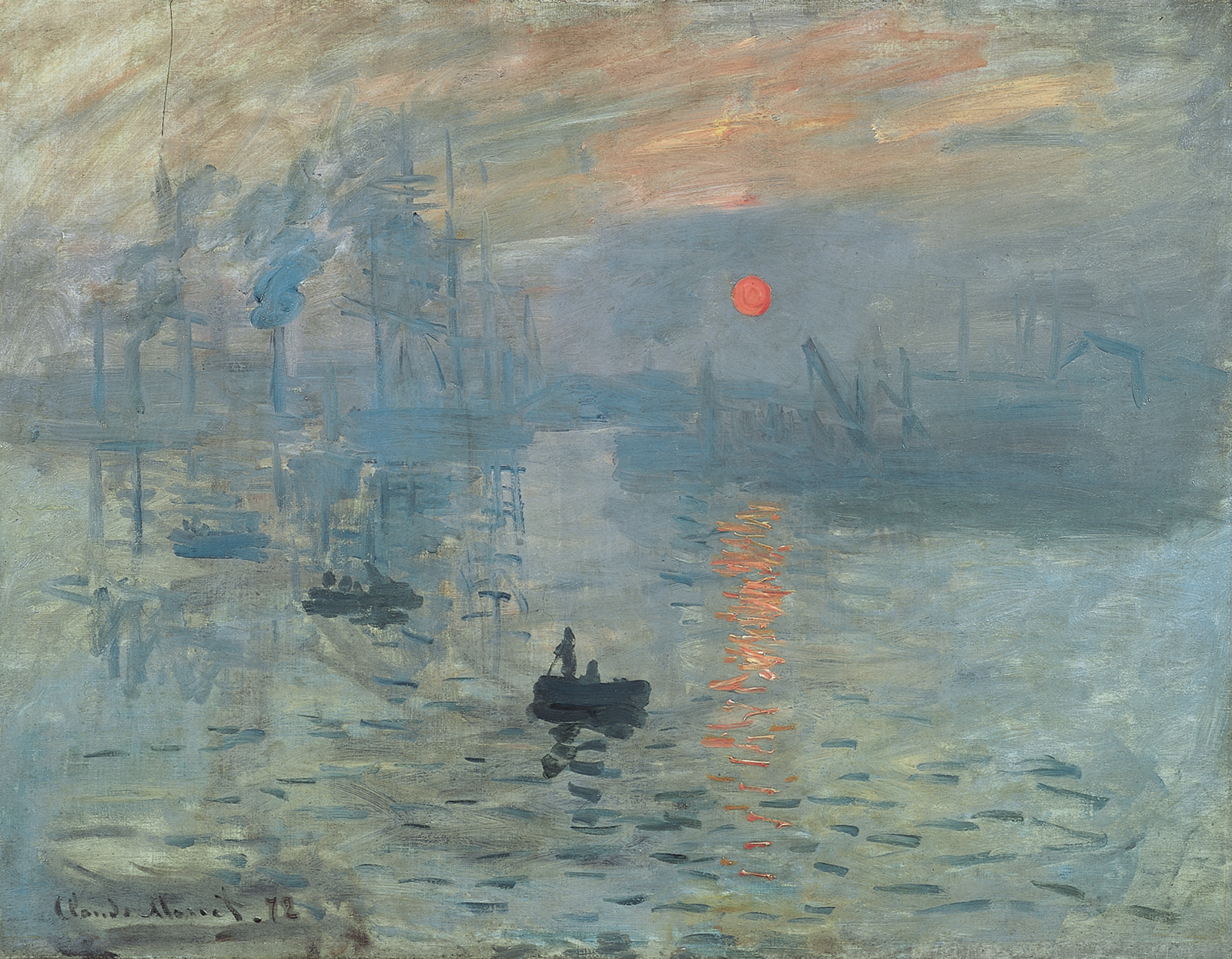
"Le regard est ainsi entraîné toujours plus loin en profondeur et ceci en renonçant à toutes les constructions relevant de la perspective linéaire. Il est également manifeste que l'auréole rouge du soleil — tout comme le rayon jaune au-dessus d'elle — provient d'une couche de peinture préliminaire, sur laquelle la couleur sombre a été ensuite portée de sorte que les reflets moirés de cette base colorée soient visibles ou ressortent en couleur claire à côté de la teinte sombre. À la frappante impression de profondeur s'ajoute ainsi l'effet de scintillement par transparence..."
"... la peinture à l'huile de jeunesse montre déjà aussi des 'anticipations': Tempête de neige... la structure en clair-obscur expressive de l'image ne nous laisse pas seulement imaginer des nuages en mouvement et des éclairages changeant subitement, mais elle apparaît par elle-même déjà mouvementée. Le jeu de lumière et d'ombre est en soi déjà dramatique."
"[Dans Rome vue du Vatican] la façade de l'édifice élevé à gauche montre nettement des lignes de fuite qui ne se rencontrent pourtant pas en un point de fuite. L'objectif de ces indications est uniquement de faire remarquer que la construction de la perspective n'est pas concluante, qu'on ne peut organiser une représentation spatiale systématique."
**************************************************************

- Adolphe-William Bouguereau;
- Agnolo Bronzino;
- Albrecht Dürer;
- André Masson;
- Andrea del Verrocchio;
- Andy Warhol (Eating a hamburger);
- Anselm Kiefer (Sol Invictus, Wölundlied);
- Antoine Louis Barye;
- Antonio Canova;
- Bill Viola;
- Camille Pissarro;
- Caravaggio;
- Caspar David Friedrich;
- Cindy Sherman (Untitled Film Still, Untitled Film Still, Untitled Film Still);
- Claude Monet;
- Conrad Witz;
- Diego Velázquez;
- Domenico Ghirlandaio;
- Donatello;
- Duccio;
- Edgard Degas;
- Édouard Manet (Le déjeuner sur l'herbe, Soleil Levant);
- Édouard Vuillard;
- Edvard Munch;
- Egon Schiele (Self-Portrait);
- El Greco;
- Ernst Ludwig Kirchner (Peter Schlemihls);
- Eugène Atget (Shop Window);
- Fra Angelico;
- Francis Bacon;
- Francisco Goya (Carlos Saura's Goya);
- Frantisek Kupka;
- Frans Hals;
- Frans Snyders;
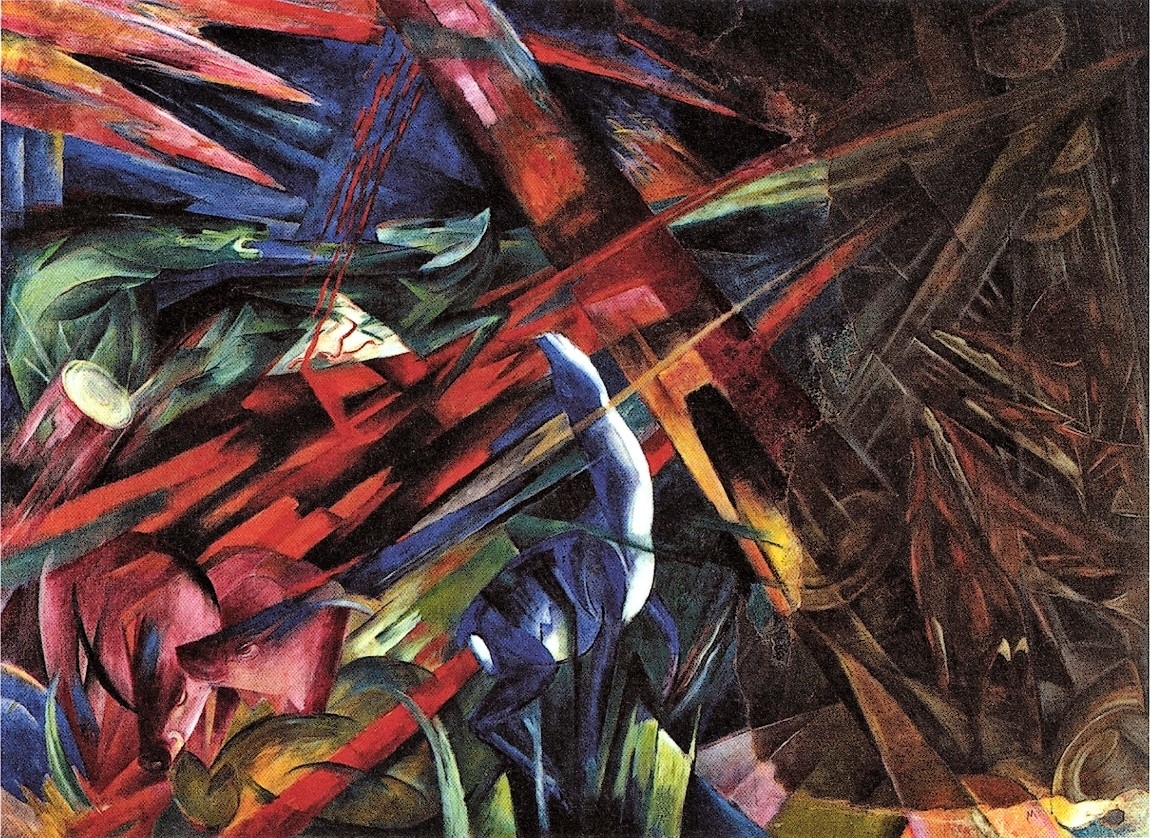
- Franz Marc (Schicksal der Tiere);
- George Inness;
- George Stubbs;
- Georges de la Tour (Saint Joseph charpentier);
- Gianlorenzo Bernini;
- Giotto;
- Gustave Courbet;
- Hendrick ter Brugghen (Cruxificion);
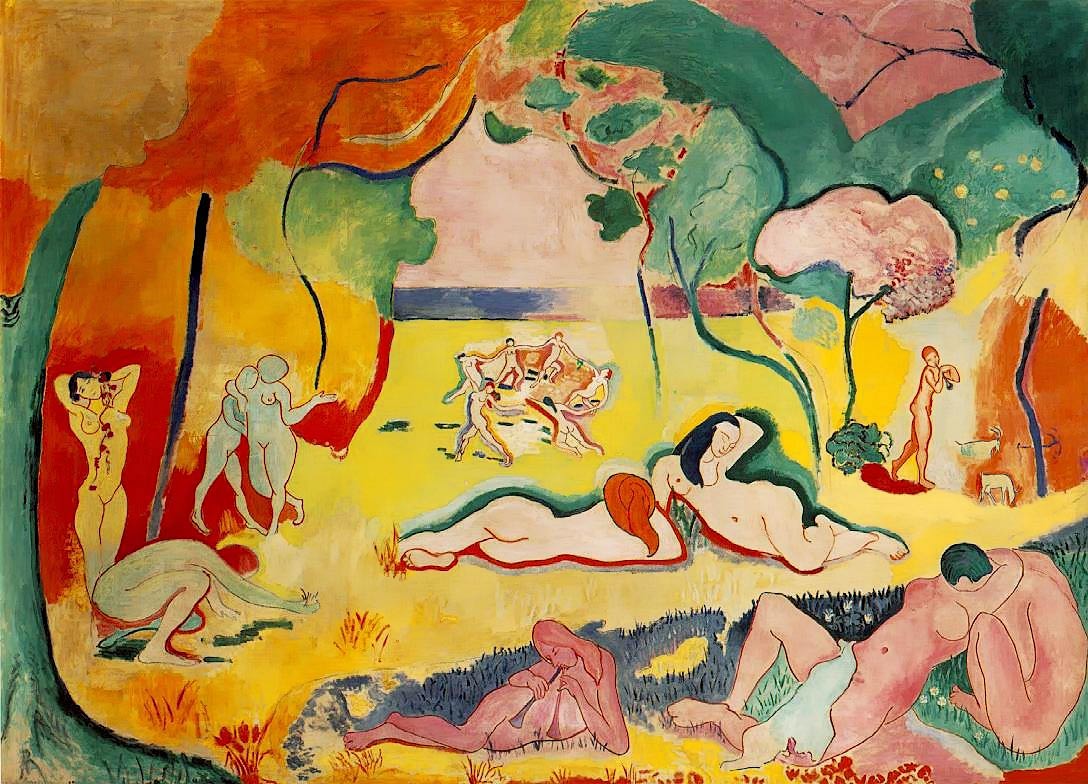
- Henri Matisse (Bonheur, L'Atelier Rouge);
- Henri Toulouse-Lautrec;
- James Ensor;
- James Whistler;
- Jan van Eyck;
- Jan Vermeer;
- Jean Fouquet;
- Jean-Antoine Watteau;
- Jean-Baptiste Carpeaux;
- Jean-Honoré Fragonard;
- Jean-Michel Basquiat (Fallen Angel, Dos Cabezas);
- Joan Miró;
- John Henry Fuseli;
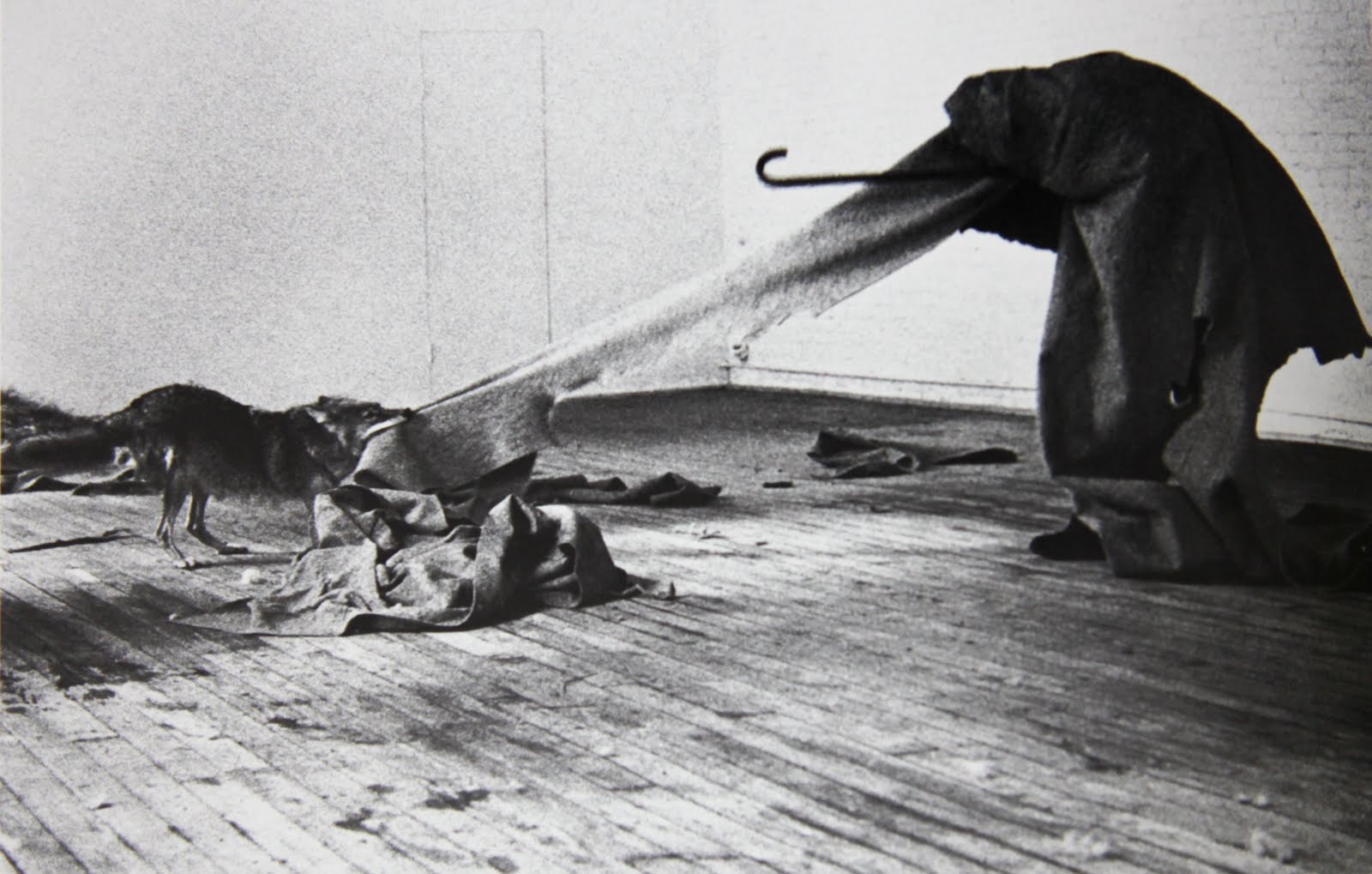
- Joseph Beuys (Coyote);
- Joseph Turner;
- Judith Leyster;
- Julia Margaret Cameron;
- Jusepe de Ribera;
- Kazimir Malevich;
- Leonardo da Vinci;
- Man Ray (Le retour a la raison);
- Marcel Duchamp (& Rrose Sélavy) (BBC Interview, Le Grand Verre, Anemic Cinema);
- Mark Rothko;
- Martin Schongauer;
- Matthias Grünewald;
- Michelangelo (Male torso);
- Pablo Picasso (Les demoiselles d'Avignon);
- Parmigianino;
- Paul Gauguin (Manao Tupapau);
- Paul Klee;
- Peter Henry Emerson;
- Piet Mondrian;
- Pieter Bruegel;
- Raffaello Sanzio;
- Rembrandt van Rijn;
- Robert Campin;
- Rogier van der Weyden;
- Rosa Bonheur;
- Roy Lichtenstein;
- Sandro Botticelli (Annunciazione di Cestello, Primavera);
- Sigmar Polke;
- Theo van Doesburg;
- Théodore Rousseau;
- Thomas Eakins;
- Vincent van Gogh;
- Wassily Kandinsky;
- Willem Claesz;
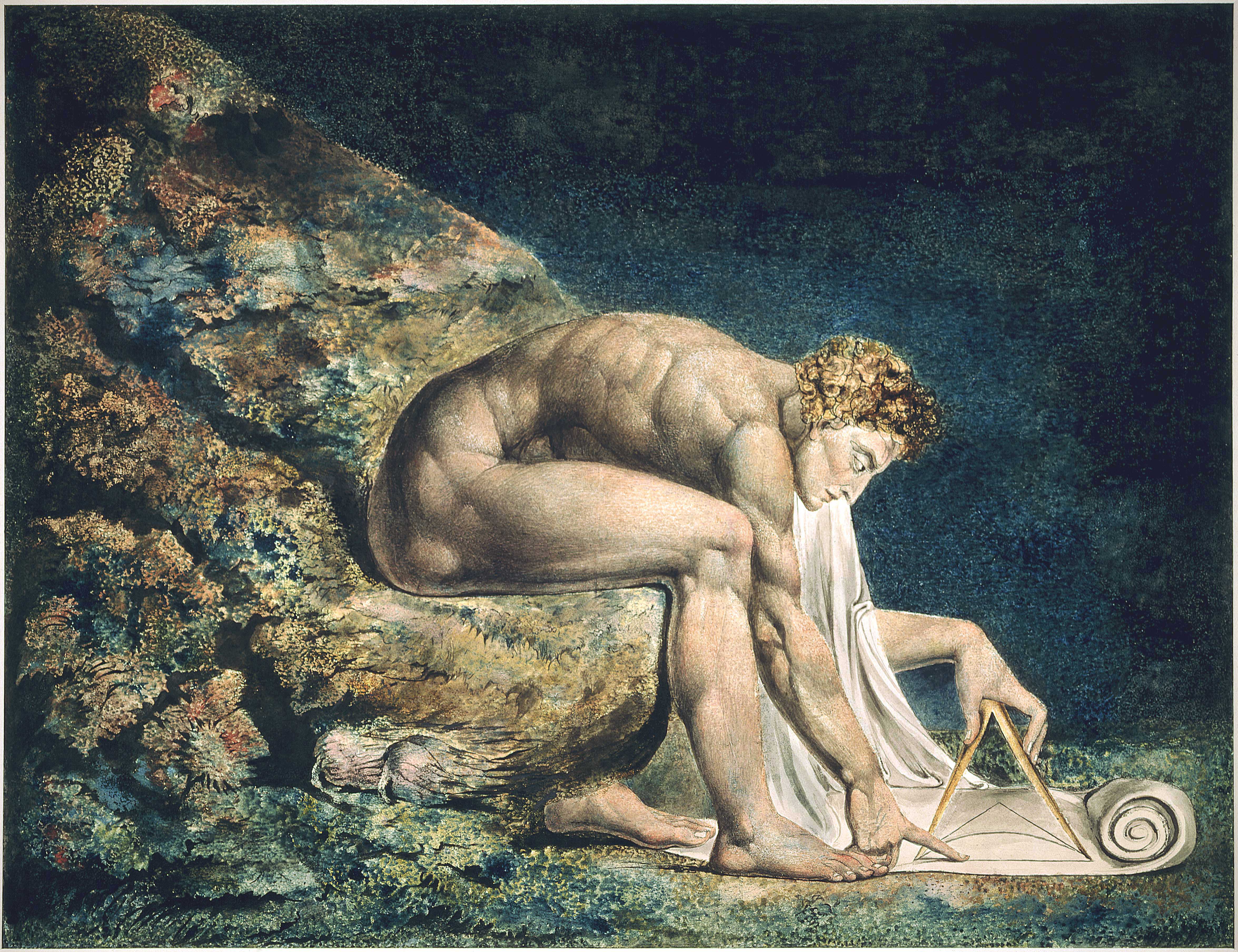
- Willian Blake (Newton);

Brazilians:
- Almeida Júnior (O Pintor Belmiro de Almeida);
- Antônio Parreiras (Lusco-Fusco);
- Belmiro de Almeida; 
- Eli Heil;
- Emanuel Araújo;
- Francisco Brennand;
- Geraldo de Barros;
- Helio Oiticica;
- Iberê Camargo;
- Manabu Mabe;
- Nelson Leirner;
- Rubem Valentim;
- Tomie Ohtake;
- Wesley Duke Lee;

Anonymous:
- Alhambra Mosaic Tiles;
- Animal Head (Oseberg ship burial);
- Apollo Belvedere;
- Apulu de Veii;
- Artemision Bronze;
- Book of Kells;
- Bronzi di Riace;
- Der Löwenmensch vom Hohlenstein-Stade;
- Diskobolos;
- Essen Madonna;
- E-temen-nigur(u);
- Évangeliare d'Ebbon;
- Galata Morente;
- Gero-Kreuz;
- Golden Lyre of Ur;
- Gruppo del Laocoonte;
- Kroisos Kouros;
- Lindisfarne Gospels;
- Lioness Devouring a Boy (Phoenician);
- Pergamon Altar;
- Pietà Roettgen;
- Purse Cover (Sutton Hoo ship burial);
- Ram in a Thicket;
- Three Goddesses (Parthenon);
- Toreador Fresco;
- Venus of Willendorf;
- Vièrge à l'enfant de Jeanne d'Evreux;
- Winchester Psalter;

Arquitecture:
- Basilica di San Marco;
- Basilica di San Vitale;
- Basilique Cathédrale de Saint-Denis;
- Battistero degli Ortodossi;
- Catacombe dei Santi Marcellino e Pietro;
- Cathédrale Notre-Dame de Chartres;
- Cathédrale Notre Dame de Paris;
- Catedral de Santiago de Compostela;
- Cattedrale di Monreale;
- Centre Georges Pompidou;
- Chateau de Versailles;
- Church of the Dormition (Daphni) (mosaics);
- Fagus Fabrik;
- Fort Peck Dam;
- Francesco Borromini;
- Frank Lloyd Wright;
- Giacomo della Porta;
- Guggenheim Museum (Bilbao);
- Guggenheim Museum (New York);
- Hagia Sophia;
- Hong Kong and Shanghai Bank;
- Igreja de São Roque;
- Leon Battista Alberti;
- Lois and Richard Rosenthal Center for Contemporary Art;
- Manhatta;
- Masjid-i Shah;
- Mausoleo di Galla Placidia;
- Mausoleo di Santa Constanza;
- Mezquita-Catedral de Córdoba;
- Mosteiro dos Jerônimos;
- Pantheon;
- Qubbat As-Sakhrah;
- Rietveld Schröder House;
- Sainte-Chapelle;
- Salisbury Cathedral;
- Santa Maria Maggiore;
- Seagram Building;
- Villa Savoye;
- Villard de Honnecourt;

Thursday, November 25, 2010

Refining the concepts of power, desire and seduction — interview with J. Baudrillard’ smile (1929-2007), by C. Aires (182-?-19--?)

Found with with an umbrella & the following "Warning": "Who was C. Aires? We are not going to deny here the alleged affinity of some of our previous works with murky and supernatural speculations, but what follows bellow is not unrelated to the well-known “seven notebooks”, “manuscripts with very stiff cover”, etc. Clearly enough, Esaú e Jacó was entitled "the last". Check with the immortals of the Brazilian Academy of Letters (there is only one, who is legion, all the others being left out, including Jorge Luis Borges). Actually, we have no reason to date this interview as after March 2007. The interview was found together with the unpublished fat-as-always photograph of Baudrillard we were also indecently publicizing. Where, though, is something we passionately let others now to ask. Indeed, we stop reading Baudrillad after we realize Deleuze didn't like him, which proves the futility of our philosophy and sophistry, the frailty (if not the weakness, and wickedness) of our  own character!!"

"C. A. – Foucault’s conception of power is supposed to be an improvement in relation to older conceptions. It is certainly different from any classical understanding of power. You have maintained, however, that the concrete result of Foucault’s original and rigorous analyses is to devoid the concept of power of any meaning by developing its logic to the most. Do you believe this should be taken as a compliment?
J. B. S. – Yes. I believe so. First of all, because this deflationary movement would be true of any original and rigorous analysis of any concept whatsoever. You see that my own position, if taken as outright criticism, would be devoid of any meaning in the same way, and this is why you asked your question. It has been said that if I would like to forget him, he would not even bother to remember me. And I take this comment as a compliment as well.
C. A. – Accordingly you relate to him symbolically?
J. B. S. – Yes. I believe so. He might have taken my comments as something rather outrageous. Indeed I accused him of sticking with the concept (of power) when he should not. But to keep spinning around an empty centre, like a vortex, might be the best way to point towards what I call seduction. Foucault would not bother to remember me because he had already forgotten himself. We did not relate consciously, we did not actually talk to each other, but while disappearing we connected symbolically, quite independently from what we said. This happens to any person, including the most despicable. 
C. A. – How seduction is supposed to be different from desire?
J. B. S. – If you desire something you are got into a movement. Desire is not the movement itself. The movement is what structure desire. It (the movement) might be called, again, power, or even law. Of course, power and law must be understood not merely as what represses. They are rather productive forces; they are what enable things to become visible. They enable one to see x as different from y, and to desire x as such. In order to desire and to be desired you need power and law. Not only you, but everything (I suppose no one is taking this personally). And seduction would be something like following this movement (of power and law) utterly spread. It would be something like short-circuiting all its paths. It would be the culmination and cancelation of the many desires (instituted by power and law), and perhaps their realization, but in a way we are not able to imagine.
C. A. – Do you believe seduction ever really happens? Is it cyclical?
J. B. S. – It might be happening right now, when you ask me this question, when you listen to my answer, when a reader read this interview, but we would not notice. We should not be able to notice if it really happens. And it might happen many times indeed, but we wouldn’t be able to say if it is always the same or something different. This is a mistake I made in some of my books. I said seduction was cyclical, but we have no means to know that.
C. A. – How to lie through your teeth relate to seduction?
J. B. S. – Seduction is rather lying through someone else’s teeth. You make the utmost effort to become someone else, something else, and at the same time to say something. It should not be something strictly false. It does not have to be something false. Actually this point is not really important. What is at issue is that what you say emerges from yourself, but faraway dislocated. Opened in all its voids, that is, from nowhere, utterly spread. It is not what, not even how you say it, but from where you say it. It is a lie only because and to the extent that you say it from a place that is impossible to locate, and you really say it. Space becomes intimate.
C. A. – Are you not speaking through your own teeth?
J. B. S. – (J. B. makes a smile, then explains…) The fatal mistake of most if not all people intending to improve or radically transform society, help minorities or conserve majorities, etc. is that they take Cheshire to be a quite extraordinary character. It is not. In any case, it should not be. Not in real life. I would like to put you a question myself: who was the father of Nativity’s twins? The extinguished or the future person? In a sense both persons are. It is something tricky, because excess per se can not be conveyed, no matter if it happens, and even if it happens.
C. A. – What is the relation between excess and violence? Isn’t your position unethical?
J. B. S. – Now it is you who must be speaking through someone else’s teeth. Like journalists or politicians, when they pretend to speak for the public. What they intend is rather to move people around. And with this we reached the nadir of this interview, but I accept the challenge, however, because there is no other way to face the situation and because I believe in Cheshire and excess. Violence is more like myopia than excess. But the same can be said about (violent) anti-violence. Both have to do with short-sightedness. It is not simply myopia, it is rather little endurance, a quite overspread unhealthy condition. The best way to answer to the problem (of violence, anti-violence and little endurance) is not by outright opposition. I’m not saying you should not do anything. You should find a way to get smaller, disappear, wait for deflection, as when you feel any pain. Women, gay, old people, Susan Boyle, rats and cockroach — the earth — must have always been there like men, as men, Nicole Kidman, in a noisy silence, ages before they got emancipated. If you want people to produce less garbage you must first realize that everything is garbage from the beginning. Plastic is Nature’s inner nature revealed, that is, perennial expense (dépense). As any revelation, as anything emancipated, it is also little endurance, and violent. What is not violent, without being anti-violent as well, is excess in its invisible, little deflected, intimacy."